

The Second Punic War
Images

Second Punic War Battles




The Seeds of Conflict
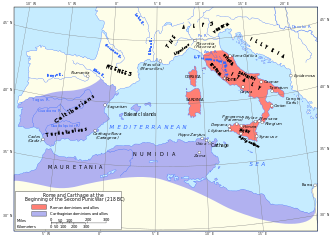
The Second Punic War did not erupt in a vacuum; it was a direct consequence of unresolved tensions and shifting power dynamics following the First Punic War (264-241 BC). Carthage, having lost Sicily and paid a hefty indemnity, sought to recoup its losses and reassert its influence. This led to significant expansion in Iberia, where Hannibal, son of Hamilcar Barca, honed his military skills and built a formidable army. The siege and capture of Saguntum in 219 BC, a city allied with Rome, served as the casus belli.
Rome, viewing Carthaginian resurgence in Iberia as a direct threat to its own burgeoning power, declared war, initiating a conflict that would test the very foundations of both republics and determine the future geopolitical landscape of the Mediterranean.
Hannibal's Italian Campaign
Hannibal's decision to invade Italy overland via the Alps in 218 BC remains one of history's most audacious military maneuvers. This strategy bypassed Roman naval superiority and brought the war directly to the Italian peninsula, catching Rome completely off guard. His subsequent victories at the Trebia (218 BC), Lake Trasimene (217 BC), and most devastatingly, Cannae (216 BC), where he annihilated a Roman army of unprecedented size, showcased his tactical brilliance and the effectiveness of his combined arms approach, particularly his cavalry.
The Battle of Cannae, in particular, led to widespread defections among Rome's Italian allies, threatening the integrity of the Roman confederation. Despite controlling much of southern Italy for over a decade, Hannibal lacked the siege capabilities and consistent reinforcements needed to capture Rome itself, resulting in a strategic stalemate.
Rome's Resilience
The Second Punic War was as much a testament to Roman resilience and adaptability as it was to Carthaginian military prowess. Faced with existential threats, Rome implemented extraordinary measures to replenish its legions, including enrolling slaves and those below the traditional property qualifications. The adoption of the 'Fabian strategy,' characterized by avoiding direct pitched battles and focusing on attrition and harassment, proved effective in containing Hannibal's advances in Italy.
Simultaneously, Rome waged a crucial campaign in Iberia, establishing a foothold in 218 BC. Despite initial setbacks, Roman forces, under commanders like Publius Cornelius Scipio (later Africanus), gradually gained the upper hand, culminating in the capture of Carthago Nova and the eventual expulsion of Carthaginian forces by 206 BC. This success in Iberia was vital, denying Carthage crucial resources and manpower.
The Final Act
With the Iberian front secured and Hannibal's army depleted in Italy, Rome shifted its focus to North Africa. In 204 BC, Scipio launched an invasion of Carthaginian territory, a bold move that forced Carthage to recall Hannibal from Italy to defend their homeland. The climactic confrontation occurred at the Battle of Zama in 202 BC.
Scipio, having studied Hannibal's tactics and incorporating Numidian cavalry allies, decisively defeated the Carthaginian forces. This victory was the final blow, compelling Carthage to sue for peace. The ensuing treaty imposed severe terms: loss of all overseas territories, significant territorial concessions in Africa, a massive war indemnity, and strict limitations on Carthage's ability to wage war independently, effectively ending its status as a major power and cementing Rome's hegemony.
Legacy and Long-Term Consequences
The Second Punic War was a watershed moment in ancient history. Its conclusion marked the definitive end of Carthaginian power as a peer competitor to Rome and ushered in an era of Roman dominance in the Western Mediterranean. The immense human and material costs profoundly impacted both societies, but Rome's ability to absorb losses, adapt its military and political strategies, and ultimately achieve victory demonstrated its inherent strengths.
The war's outcome paved the way for Rome's further expansion across the Mediterranean and beyond, laying the groundwork for the Roman Republic's transformation into an empire. The strategic lessons learned, the territorial gains, and the psychological impact of defeating Hannibal profoundly shaped Roman identity and its future imperial ambitions, setting the stage for centuries of Roman rule.
Go deeper
Frequently Asked Questions
What was the Second Punic War?+
Why did Hannibal invade Italy?+
How did Rome defeat Hannibal at Cannae?+
What was the Fabian strategy?+
What happened at the Battle of Zama?+
Based on content from Wikipedia · Licensed under CC BY-SA 4.0