

Réunion
Images

Fin de réunion du groupe de contacts ADP




Opens Google Maps in new tab
Geological Marvel
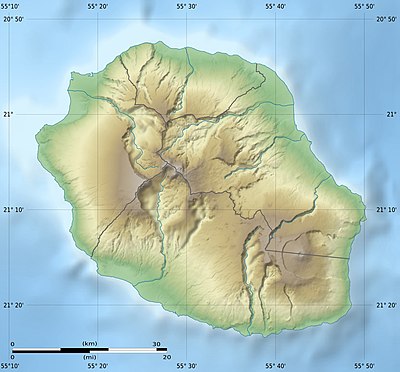
Réunion, situated in the southwestern Indian Ocean approximately 679 kilometers east of Madagascar, is a geological marvel born from intense volcanic activity. As part of the Mascarene Islands, its landscape is dominated by two major shield volcanoes: the extinct Piton des Neiges, the highest point in the Indian Ocean at 3,070.5 meters (10,074 ft), and the highly active Piton de la Fournaise. Piton de la Fournaise is one of the world's most frequently erupting volcanoes, offering a dynamic and sometimes hazardous environment.
Its frequent effusive eruptions, characterized by lava flows rather than explosive blasts, contribute to the island's ongoing geological evolution and provide a unique natural spectacle. The volcanic origins have sculpted a dramatic topography, featuring steep caldera walls, deep canyons like the Cirque de Mafate, and fertile soils that support a rich, endemic flora and fauna. The island's climate is tropical maritime, with high humidity and significant rainfall, particularly on the eastern, windward side, fostering lush rainforests and contributing to erosion that further shapes the dramatic terrain.
This unique interplay of volcanic forces and tropical climate creates a landscape of exceptional natural beauty and scientific interest.
A Tapestry of Peoples
Réunion's human history is a narrative of successive waves of migration and cultural amalgamation. Uninhabited until the 17th century, it was first settled by French colonists who established a plantation economy centered on sugarcane. The labor demands of these plantations led to the forced migration of enslaved people from East Africa (Malagasy and Mozambican peoples) and later, indentured laborers from India (Tamils), China, Southeast Asia (Vietnam), and other regions.
This diverse influx created a complex social hierarchy and a rich cultural mosaic. Over generations, these distinct groups intermarried and interacted, forging a unique Creole identity. Today, the population is predominantly of mixed descent, a living embodiment of this historical synthesis.
While French is the sole official language, Réunion Creole, a vibrant creolized French, is the lingua franca, reflecting the island's multilingual past. This cultural fusion is evident in its music, cuisine, religious practices, and social customs, making Réunion a fascinating case study in post-colonial cultural development and identity formation.
Economic Landscape
Historically, Réunion's economy was heavily reliant on agriculture, with sugarcane cultivation and sugar production being the primary drivers for centuries. This monoculture system profoundly influenced the island's social structure and development. However, in recent decades, the economy has undergone significant diversification.
While sugarcane cultivation persists, its economic dominance has waned. The service sector has emerged as the largest contributor to the GDP, driven largely by tourism and public administration. Réunion's dramatic natural landscapes, including its volcanoes, hiking trails, and coastal areas, attract a growing number of international and domestic tourists, stimulating growth in hospitality, transportation, and retail.
As an overseas department of France, public spending and administration also form a substantial part of the economy. The island imports a significant portion of its goods, and its integration into the European Union market influences its trade patterns. Efforts are ongoing to foster local industries and reduce economic dependence on imports and public subsidies.
Geopolitical Position
Réunion's geopolitical status is unique: it is an overseas department and region of France, making it an integral part of the French Republic and, by extension, the European Union. This status, formalized in 1946, grants its citizens the same rights and responsibilities as those in mainland France. Consequently, Réunion is one of the EU's outermost regions, situated far from the European continent but subject to EU law and utilizing the Euro as its currency.
This integration provides access to EU funding and markets but also presents challenges related to its geographical remoteness and higher cost of living. Its strategic location in the Indian Ocean necessitates a significant French military presence, underscoring its importance for French strategic interests in the region. The island serves as a key administrative and logistical hub, connecting France to its territories and interests in the Indian Ocean, and participating in regional cooperation initiatives.
Educational Framework
The educational system in Réunion mirrors that of mainland France, adhering to the national curriculum and pedagogical standards. Compulsory education begins at age three with école maternelle (preschool) and continues through primary school (école élémentaire) and secondary school (collège and lycée). The goal is to ensure equitable access to quality education for all students, fostering academic achievement and preparing them for higher education or vocational pathways.
Réunion hosts several institutions of higher learning, including campuses of French universities and specialized vocational training centers, allowing students to pursue tertiary education locally. This commitment to education is crucial for the island's socio-economic development, aiming to build a skilled workforce capable of contributing to its diversified economy and addressing the unique challenges of an outermost region. The educational framework also plays a role in reinforcing French national identity while acknowledging and integrating the island's distinct Creole culture and history.
See also
Frequently Asked Questions
Where is Réunion and what is it?+
Why are there volcanoes on Réunion?+
How does the weather help make Réunion’s forests and mountains?+
Where did the people of Réunion come from and what languages do they speak?+
What jobs do people do in Réunion now?+
Based on content from Wikipedia · Licensed under CC BY-SA 4.0