

Royal Air Force
Images

RAF Merlin HC3A Helicopter of No28 Sqn
![Red Flag 12-2 [Image 2 of 29]](https://live.staticflickr.com/7141/6790946693_e73dc4161d_n.jpg)



![Red Flag-Alaska provides aerial refueling [Image 3 of 8]](https://live.staticflickr.com/5303/5686706593_3f8df97fb8_n.jpg)


Defining the RAF's Mandate and Strategic Doctrine
The Royal Air Force (RAF) stands as the United Kingdom's primary air and space force, extending its operational reach across the UK, its overseas territories, and Crown Dependencies. Its fundamental mission is to provide the capabilities necessary to ensure the security and defense of the nation, encompassing counter-terrorism efforts and supporting the government's foreign policy objectives, particularly in promoting international peace and security.
The RAF articulates its mission as delivering an 'agile, adaptable and capable Air Force that, person for person, is second to none, and that makes a decisive air power contribution in support of the UK Defence Mission.' This strategic vision is underpinned by their definition of air power: 'the ability to project power from the air and space to influence the behaviour of people or the course of events.' This broad definition highlights the RAF's role not just in combat, but in deterrence, diplomacy, and shaping global dynamics through its technological and operational prowess.
Technological Sophistication and Operational Reach
The modern RAF operates a diverse and technologically advanced fleet, characterized by 'leading-edge' fixed-wing aircraft. These are meticulously categorized by their roles: fighter and strike platforms for offensive and defensive operations; airborne early warning and control (AEW&C) systems that provide critical situational awareness; intelligence, surveillance, target acquisition, and reconnaissance (ISTAR) assets for gathering vital information; signals intelligence (SIGINT) platforms for electronic warfare; maritime patrol aircraft for oceanic defense; air-to-air refueling (AAR) tankers that extend the range and endurance of other aircraft; and strategic and tactical transport aircraft for logistical support.
While the majority of rotary-wing aircraft fall under the tri-service Joint Aviation Command to support ground forces, the RAF's fixed-wing capabilities are central to its independent operational reach. Most personnel and assets are UK-based, but significant global deployments are maintained, including ongoing operations over Iraq and Syria, and at long-established overseas bases like Ascension Island, Cyprus, Gibraltar, and the Falkland Islands, demonstrating a truly global footprint.
Historical Significance and Transformative Impact
The genesis of the RAF on April 1, 1918, marked a pivotal moment in military history, consolidating the Royal Flying Corps (RFC) and the Royal Naval Air Service (RNAS) into the world's first independent air force. Emerging from the crucible of World War I, it was, at the time, the largest air force globally. Its subsequent contributions have been instrumental in shaping British military history.
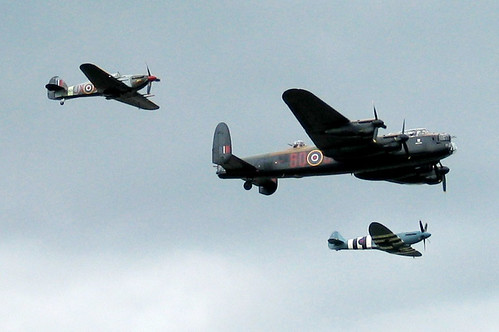
Most notably, during World War II, the RAF's pivotal role in the Battle of Britain secured air superiority over the Luftwaffe, a critical factor in preventing a German invasion. Furthermore, the RAF spearheaded the Allied strategic bombing campaign, demonstrating the profound impact air power could have on the course of a global conflict. This legacy continues to inform its strategic thinking and operational planning, emphasizing the enduring importance of air and space capabilities in modern warfare and defense.
The RAF's Role in Contemporary Defense and Security
The RAF's mission extends far beyond traditional combat roles. It is a key enabler for the UK's defense objectives, providing flexible and responsive capabilities that can be deployed rapidly to address emerging threats. Whether it's providing humanitarian aid, conducting complex joint operations with allies, or maintaining a constant watch over national airspace, the RAF is at the forefront.
Its integration with other services, such as the Royal Navy's Fleet Air Arm and the British Army's Army Air Corps, ensures a cohesive and multi-domain approach to defense. The RAF's commitment to innovation, exemplified by its adoption of advanced technologies and its exploration of space-based capabilities, positions it to meet the evolving challenges of the 21st century, reinforcing its status as a world-class air and space power.
Go deeper
Frequently Asked Questions
What is the Royal Air Force?+
When was the RAF created?+
What kinds of planes does the RAF fly?+
Where does the RAF operate around the world?+
Why is the RAF important in history?+
Based on content from Wikipedia · Licensed under CC BY-SA 4.0