

Surveillance: The Secret Watchers!
Images

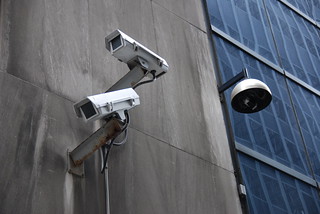
Caméra vidéo de surveillance




Defining the Watchful Eye
Surveillance, at its core, is the deliberate and systematic observation and monitoring of individuals, populations, or locations. Its primary objective is information-gathering, which then serves various purposes: influencing behavior, managing populations, or directing actions. This practice is not confined to state actors; it is a tactic employed by diverse entities, including governments for law enforcement and national security, corporations for market intelligence and loss prevention, criminal organizations for operational planning, and even non-governmental groups for specific objectives.
The intent behind surveillance dictates its ethical standing and societal acceptance, ranging from public safety initiatives to intrusive data harvesting. Understanding the purpose is crucial to evaluating its legitimacy and impact.
A Chronicle of Observation
The practice of surveillance has a long and varied history, predating modern technology by millennia. Early forms involved human observation, such as sentinels on city walls or spies in enemy camps, focused on immediate threats and strategic intelligence. The advent of the printing press, telegraph, and later, photography, expanded the reach and speed of information gathering.
The 20th century witnessed a dramatic acceleration with the development of electronic eavesdropping, wiretapping, and closed-circuit television (CCTV). The digital revolution of the late 20th and early 21st centuries has been the most transformative, enabling mass surveillance through the internet, mobile devices, and sophisticated data analytics. This evolution has shifted surveillance from targeted operations to pervasive, often automated, global networks.
The Imperative and the Inconvenience
The significance of surveillance in contemporary society is undeniable, underpinning critical functions of governance and security. For governments, it is an indispensable tool for maintaining public order, combating terrorism, and safeguarding national interests. Law enforcement agencies rely heavily on surveillance to investigate criminal activities, gather evidence, and apprehend suspects.
In the corporate world, surveillance aids in protecting assets, preventing fraud, and understanding consumer trends. However, this pervasive monitoring raises profound ethical questions, particularly concerning the erosion of privacy. Civil liberties advocates frequently criticize surveillance for its potential to stifle dissent, enable discrimination, and create a chilling effect on free expression, leading to ongoing debates about the balance between security and liberty.
Mechanisms of Monitoring
The methods employed in surveillance are as diverse as its applications. Traditional techniques include human intelligence (HUMINT), where operatives gather information through direct interaction or observation, and signals intelligence (SIGINT), which involves intercepting communications. Modern surveillance heavily relies on technology.
CCTV cameras, equipped with advanced analytics like facial recognition, are ubiquitous in public and private spaces. Electronic surveillance encompasses wiretapping, email monitoring, and tracking online activities through cookies and metadata. Furthermore, the increasing commodification of personal data means intelligence agencies can often acquire vast datasets from commercial providers, enabling surveillance on an unprecedented scale.
This technological sophistication allows for both overt monitoring and covert operations.
Surveillance in Practice
Surveillance manifests in numerous real-world scenarios. Governments engage in mass surveillance programs, collecting data on citizens and non-citizens alike for national security purposes, often through partnerships with telecommunications and internet companies. Law enforcement agencies deploy surveillance teams and technology to monitor criminal suspects, often requiring legal authorization like warrants.
Corporations use surveillance for internal security, monitoring employee activity, and for marketing, analyzing customer behavior to tailor products and services. Espionage, a form of covert and typically illegal surveillance, is conducted by state actors against other states to gain strategic advantages. The distinction between overt, legal surveillance and covert, potentially illegal espionage is a critical legal and ethical boundary, though often blurred in practice.
Go deeper
Frequently Asked Questions
What is surveillance?+
Why do governments use surveillance?+
How do CCTV cameras help with surveillance?+
Where can we see surveillance in everyday life?+
Are there any worries about privacy with surveillance?+
Based on content from Wikipedia · Licensed under CC BY-SA 4.0