

Richmond, Virginia
Images

Richmond, Virginia


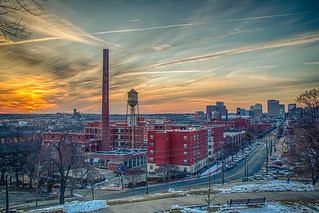


From Indigenous Lands to Colonial Capital
Richmond's origins are deeply rooted in the ancestral lands of the Powhatan Confederacy, a powerful alliance of Native American tribes who thrived in the region for centuries. The strategic location on the James River, particularly at the fall line where navigation shifted from river to portage, made it a desirable spot. English colonists, initially from Jamestown, recognized its potential, with early attempts at settlement occurring between 1609 and 1611.
However, it was the formal founding in 1737 that set Richmond on its path to prominence. Its designation as the capital of the Colony and Dominion of Virginia in 1780, supplanting Williamsburg, was a pivotal moment, placing it at the heart of colonial governance. This era was marked by revolutionary fervor; Richmond was the stage for Patrick Henry's impassioned 'Give me liberty or give me death!' speech in 1775 at St.
John's Church, a defining moment in the push for independence. Furthermore, it was here that Thomas Jefferson drafted the Virginia Statute for Religious Freedom, a foundational document for religious liberty in the United States. The city's strategic importance continued into the 19th century, tragically becoming the capital of the Confederate States of America during the Civil War, a period that left indelible marks on its landscape and psyche.
The James River's Embrace
Richmond's identity is intrinsically linked to the James River and its unique geographical position at the fall line. This natural boundary, where the Piedmont region meets the Coastal Plain, created rapids and waterfalls that historically powered industry and influenced settlement patterns. Situated approximately 91 miles west of Williamsburg and 92 miles south of Washington, D.C., Richmond occupies a central position within Virginia's transportation network.
Its integration into major interstate highways, including I-95 and I-64, and its surrounding loop highways like I-295, solidify its role as a critical transit hub. This connectivity has fostered significant suburban growth, with communities like Midlothian, Chesterfield, and Glen Allen expanding outwards. The Richmond metropolitan area now encompasses over 1.37 million residents, ranking it as the third-most populous metro area in Virginia and the 44th-largest in the United States.
This expansive reach highlights Richmond's enduring influence as an economic and cultural center for a vast region.
Pioneering Progress
Richmond's history is punctuated by remarkable innovations and cultural achievements. At the turn of the 20th century, the city was at the forefront of urban modernization by establishing one of the world's first successful electric streetcar systems. This advanced public transportation network facilitated efficient movement for residents, contributing to the city's growth and demonstrating its early adoption of technological progress.
Beyond technological advancements, Richmond holds a profound legacy in African American history. The Jackson Ward neighborhood, once lauded as the 'Black Wall Street of America' and the 'Harlem of the South,' served as a vibrant epicenter of Black commerce, culture, and community. Despite systemic segregation and discrimination, Jackson Ward flourished, showcasing Black entrepreneurship and resilience.
This historical significance underscores Richmond's complex social fabric, where periods of immense struggle and discrimination are interwoven with narratives of extraordinary achievement and cultural vitality.
The Pillars of Power
In contemporary times, Richmond's economy is robust, driven primarily by the sectors of law, finance, and government. As the state capital, its downtown core is densely populated with federal, state, and local governmental agencies, forming the administrative backbone of Virginia. Prominent legal and banking institutions further solidify its position as a financial and professional services hub.
The economic influence extends significantly into the broader metropolitan area, which is home to numerous Fortune 500 companies. These include major players like Performance Food Group, Altria, CarMax, and Dominion Energy, contributing substantially to regional employment and economic output. Richmond also possesses a unique distinction within the U.S. judicial system: it is one of only a dozen cities nationwide to host both a U.S. Court of Appeals and a Federal Reserve Bank.
This concentration of high-level governmental and financial institutions underscores Richmond's critical role in the nation's economic infrastructure and legal framework, positioning it as a city of enduring national importance.
See also
Based on content from Wikipedia · Licensed under CC BY-SA 4.0