

Rajasthani Languages
Images

Language region maps of India 2 two
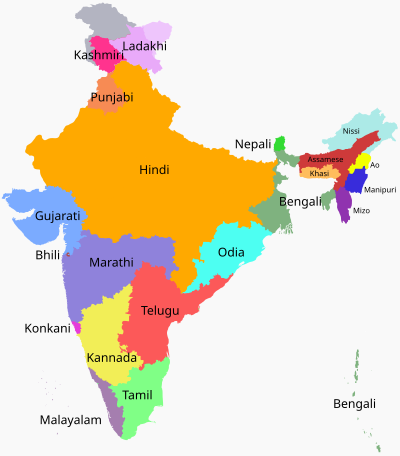


Classification and Geographic Dissemination of Rajasthani
The Rajasthani languages constitute a group of Western Indo-Aryan languages spoken predominantly in the Indian state of Rajasthan and its surrounding regions, including parts of Haryana, Gujarat, and Madhya Pradesh. Their linguistic influence extends into Pakistan, particularly in the Bahawalpur division of Punjab and adjacent areas of Sindh.
This geographical spread is not static; significant internal migrations, notably by the Marwari community, have dispersed these languages across India, where they serve as a crucial medium for intra-community communication. Furthermore, Rajasthani languages have a presence in Nepal, indicating their reach beyond the immediate subcontinent. This wide dissemination highlights the historical mobility of populations and the enduring nature of linguistic ties.
Historical Trajectory and Linguistic Evolution
The genesis of Rajasthani languages can be traced to the Prakrit and Apabhramsha stages of Indo-Aryan linguistic evolution. Over centuries, these languages underwent significant phonetic, morphological, and syntactic changes, differentiating them from other Indo-Aryan branches. The term 'Rajasthani' itself is often used to denote a literary standard, frequently modeled on the Marwari dialect, which boasts a rich corpus of historical literature, including poetry, ballads, and chronicles.
The development of this literary tradition played a pivotal role in standardizing and preserving the language, even as vernacular dialects continued to flourish and diverge across different regions of Rajasthan.
Socio-Cultural Significance and Identity Formation
Rajasthani languages are far more than mere communication tools; they are integral to the cultural identity and social cohesion of millions. They serve as the primary vehicle for transmitting traditions, folklore, religious practices, and historical narratives across generations. For communities like the Marwaris, their language acts as a unifying force, facilitating social networks and economic interactions even when dispersed.
The continued use of Rajasthani in daily life, arts, and cultural festivals reinforces a sense of belonging and collective identity, making linguistic preservation a key aspect of cultural continuity in a rapidly changing world.
Internal Diversity and the Concept of a Unified 'Rajasthani'
While often referred to collectively as 'Rajasthani,' this designation encompasses a spectrum of distinct languages and numerous dialects, each with its unique phonological and lexical features. Major Rajasthani languages include Marwari, Mewari, Dhundhari, Hadoti, and Mewati, among others. The intelligibility between these varieties can range from high to low, posing challenges for conceptualizing a single, unified Rajasthani language.
The literary language, often based on Marwari, serves as a bridge but does not negate the rich internal diversity. Understanding this dialectal variation is crucial for appreciating the full linguistic landscape of the region.
Contemporary Relevance and Preservation Efforts
In contemporary India, the status of Rajasthani languages is complex. While spoken by a significant population, they have historically faced challenges in gaining official recognition and inclusion in educational curricula compared to major national languages. However, there is a growing awareness of their cultural importance, leading to increased efforts in documentation, promotion, and revitalization.
Initiatives by scholars, cultural organizations, and community leaders aim to ensure the survival and flourishing of these languages, recognizing their invaluable contribution to India's linguistic and cultural mosaic. The digital age also presents new opportunities for language preservation and dissemination.
See also
Frequently Asked Questions
What are Rajasthani languages and where are they spoken?+
Why is Marwari often used as a literary standard?+
How did Rajasthani languages develop over time?+
Are all Rajasthani dialects easy to understand with each other?+
Why is it important to keep Rajasthani languages alive?+
Based on content from Wikipedia · Licensed under CC BY-SA 4.0