

Prince Louis of Wales
Images

Console late 18th century


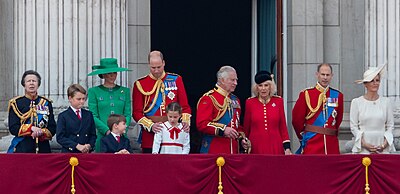

The Youngest Heir Apparent
Prince Louis Arthur Charles, born on April 23, 2018, is the third child and youngest son of William, Prince of Wales, and Catherine, Princess of Wales. His birth marked a significant moment, not just for the immediate family but for the continuity of the British monarchy. As the great-grandson of Queen Elizabeth II and grandson of the current monarch, King Charles III, Prince Louis is deeply embedded within the fabric of the royal family.
His lineage traces back through centuries of British monarchs, connecting him to a long and complex history. The birth of a new royal child often generates considerable public interest, symbolizing hope and the enduring nature of the institution. His position as the youngest sibling also shapes his early experiences within the family dynamic, offering a different perspective compared to his elder siblings, Prince George and Princess Charlotte.
Navigating the Succession
Prince Louis occupies the fourth position in the line of succession to the British throne. This means that should the current monarch, King Charles III, and his direct heirs-Prince William, Prince George, and Princess Charlotte-all be unable to ascend to the throne, Prince Louis would become the next sovereign. The Act of Settlement 1701 and subsequent modifications, including the Succession to the Crown Act 2013, govern this order, ensuring a clear and stable transition of power.
While the prospect of Prince Louis becoming king is a distant one, his place in the succession is a fundamental aspect of his identity and future responsibilities. The concept of succession has been a cornerstone of monarchical systems for millennia, providing a framework for governance and national continuity. Understanding this order is crucial to comprehending the structure and significance of the British monarchy.
A Royal Residence
Prince Louis resides within the United Kingdom, an archipelago nation with a rich and diverse geography. The UK comprises England, Scotland, Wales, and Northern Ireland, each possessing distinct landscapes, climates, and cultural identities. The climate is generally temperate maritime, characterized by mild temperatures, frequent rainfall, and variable sunshine.
Royal residences, such as Kensington Palace in London, serve as the primary family home, offering a blend of historical grandeur and modern security. This environment provides Prince Louis with access to the nation's heritage, from ancient castles and historic sites to the vibrant cultural hubs of its cities. His upbringing is likely to be a carefully managed balance between private family life and public engagements, preparing him for the unique demands of royal service within this historic realm.
The Evolving Role of Young Royals in the Modern Era
As a young member of the royal family, Prince Louis's life is increasingly shaped by the evolving expectations placed upon modern royals. While still a child, his public appearances are closely watched, and he represents a new generation within the monarchy. The role of the British royal family has shifted significantly over the centuries, moving from absolute power to a more symbolic and ceremonial function.
Today, royals are expected to engage with the public, support charitable endeavors, and act as ambassadors for the nation. Prince Louis's future will likely involve a continuation of these duties, adapting to the changing social and political landscape. His education and upbringing will be geared towards preparing him to fulfill these responsibilities with grace and effectiveness, contributing to the monarchy's relevance in the 21st century.
Beyond the Crown
Prince Louis's education is a critical component in preparing him for his future role, whatever it may entail. Like his siblings, he is expected to attend prestigious educational institutions. The curriculum for young royals typically includes a strong emphasis on history, literature, languages, and civics, alongside traditional academic subjects.
This rigorous education aims to equip them with the knowledge and critical thinking skills necessary to understand complex global issues and engage with diverse populations. Beyond formal schooling, royal children often receive specialized training in areas such as public speaking, diplomacy, and the history of the monarchy. While his path is largely predetermined by his position in the line of succession, the specific nature of his future duties will be shaped by the evolving role of the monarchy and his own developing interests and aptitudes.
The aim is to foster a well-rounded individual capable of serving the nation effectively.
See also
Frequently Asked Questions
What is Prince Louis of Wales?+
When was Prince Louis born?+
How does Prince Louis fit into the line of succession?+
Who are Prince Louis's parents?+
What will Prince Louis do when he grows up?+
Based on content from Wikipedia · Licensed under CC BY-SA 4.0