

President of South Africa
Images

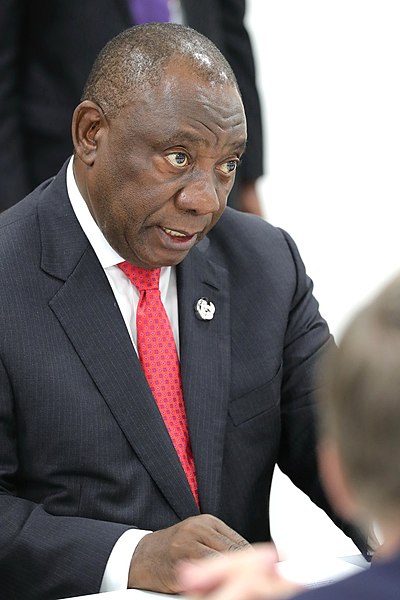
Cyril Ramaphosa - President of South Africa - 2018 (cropped)




Constitutional Mandate and Executive Authority
The President of South Africa is constitutionally vested with the dual roles of head of state and head of government, embodying the executive authority of the Republic. This position is paramount, as the president directs the executive branch, which is responsible for the implementation of national legislation and policy. Furthermore, the president serves as the commander-in-chief of the South African National Defence Force (SANDF), wielding ultimate authority over the nation's military apparatus.
This comprehensive power structure underscores the president's central role in national governance, security, and international representation. The office's influence extends to appointing ministers, overseeing government departments, and shaping the nation's policy agenda. The historical context of the presidency, particularly the transition from the apartheid era's State Presidency to the current democratic model, highlights the evolution of executive power in South Africa.
Electoral Mechanics and Parliamentary Scrutiny
The election of the President of South Africa is a process deeply intertwined with the legislative branch. The president is elected by the National Assembly, the lower house of Parliament, typically being the leader of the political party that commands a majority of seats. This electoral mechanism ensures that the president generally enjoys significant legislative backing, facilitating the passage of their policy initiatives.
The Constitution imposes a strict term limit, restricting any individual to a maximum of two five-year terms. This provision is a crucial safeguard against the concentration of power and promotes democratic renewal. The requirement for the president to be a member of the National Assembly at the time of election, followed by an immediate resignation of their seat, signifies a clear separation of legislative and executive functions during their tenure, allowing for focused governance.
Historical Transitions and Key Figures
The evolution of the South African presidency is marked by significant historical shifts. Between 1961 and 1994, the head of state held the title of State President, a role that differed considerably from the current executive presidency. The watershed moment arrived with the first multiracial election on April 27, 1994, which ushered in a new constitutional order. Nelson Mandela became the first president elected under this new constitution, a symbolic and transformative leader who guided the nation through its initial post-apartheid years.
His presidency was instrumental in fostering reconciliation and establishing democratic institutions. The subsequent presidencies, including that of Cyril Ramaphosa who assumed office in 2018 following Jacob Zuma's resignation, have continued to navigate the complexities of governing a diverse and developing nation.
Checks, Balances, and Accountability
While the president wields considerable power, the South African system of government incorporates robust mechanisms for accountability and checks and balances. The president is not above the law and can be removed from office through a motion of no-confidence passed by the National Assembly, or through an impeachment trial if found to have committed serious misconduct. The interim constitution (1994-1996) even included provisions for a Government of National Unity, where a deputy president from the largest opposition party held a significant role, fostering broader political inclusion.
Although this specific arrangement for the deputy presidency has evolved, the principle of ensuring diverse representation and oversight remains a cornerstone of South African governance, reflecting a commitment to democratic principles and the prevention of authoritarianism.
See also
Frequently Asked Questions
What does the President of South Africa do?+
How is the President chosen?+
How long can someone be President?+
Who was the first President after apartheid?+
Can the President be removed from office?+
Based on content from Wikipedia · Licensed under CC BY-SA 4.0