

Pomeranian Voivodeship
Images

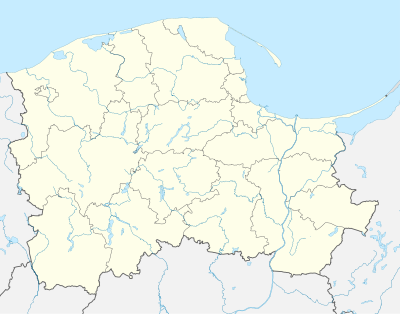
Pomeranian Voivodeship administrative map


Geopolitical Significance and Landscape Diversity
Pomeranian Voivodeship occupies a strategically vital position in northwestern Poland, serving as a crucial gateway to the Baltic Sea. Its geography is defined by a diverse landscape, ranging from extensive coastlines with sandy beaches and peninsulas like the Hel Peninsula and the Vistula Spit, to inland areas featuring lakes, forests, and rolling hills. The province's northern border is the Baltic Sea, providing access to international maritime routes.
To the west, it borders West Pomeranian Voivodeship; to the south, Greater Poland and Kuyavian-Pomeranian Voivodeships; and to the east, Warmian-Masurian Voivodeship. Notably, it shares a short land border with Russia's Kaliningrad Oblast on the Vistula Spit, adding a unique geopolitical dimension. The majority of the voivodeship lies within the historic region of Pomerania, with its eastern sections forming part of Powiśle.
This includes Pomerelia, the easternmost part of Pomerania, encompassing subregions like Kashubia and Kociewie, while the western part around Słupsk belongs to Farther Pomerania. This complex historical and geographical mosaic shapes the region's identity and its interactions with neighboring territories.
A Palimpsest of Historical Eras
The establishment of Pomeranian Voivodeship on January 1, 1999, marked a significant administrative reform, consolidating the former voivodeships of Gdańsk, Elbląg, and Słupsk. However, the region's history extends far beyond this recent reorganization. It is deeply rooted in the medieval period, with Gdańsk (Danzig) being one of Poland's oldest and most important Hanseatic League cities, founded by Mieszko I in the 10th century.
The area has been a crossroads of cultures and powers, experiencing periods of Polish, Teutonic, Prussian, and German influence. The imposing Malbork Castle, a UNESCO World Heritage site, stands as a testament to the power of the Teutonic Knights, who made it their capital. The region also holds profound significance for Polish national identity, being the birthplace of Józef Wybicki, the author of the Polish national anthem, commemorated at the Museum of the National Anthem in Będomin.
The architectural heritage, from Gothic cathedrals like St. Mary's Church in Gdańsk to Renaissance and Baroque palaces, reflects this layered history.
Cultural Richness and Regional Identity
Pomeranian Voivodeship is a vibrant center of Polish culture, with the Tricity conurbation (Gdańsk, Gdynia, Sopot) serving as a major cultural, commercial, and educational hub. Gdańsk, with its meticulously restored historic Old Town, is a visual feast of Gothic, Renaissance, and Baroque architecture, attracting tourists and scholars alike. Beyond the urban centers, the region is characterized by its distinct cultural subregions.
Kashubia, in particular, is known for its unique language, traditions, and folklore, representing a strong regional identity within Poland. The Kashubian people have maintained their distinct cultural heritage for centuries, contributing to the rich tapestry of Pomeranian Voivodeship. The region's cultural landscape is further enhanced by numerous historical landmarks, museums, and a lively arts scene, making it a compelling destination for those interested in history and cultural exploration.
Economic Drivers
The economy of Pomeranian Voivodeship is significantly driven by its strategic coastal location. The major seaports of Gdańsk and Gdynia are critical nodes in international trade, facilitating the import and export of goods and contributing substantially to Poland's economy. These ports are not only centers for cargo handling but also for shipbuilding and repair industries.
Beyond maritime activities, the voivodeship boasts a diversified industrial base, including manufacturing, food processing, and advanced technologies. Tourism is another vital sector, capitalizing on the region's attractive coastline, historical sites like Malbork Castle, and the appeal of the Tricity. The Hel Peninsula and the Vistula Spit are popular summer destinations, drawing visitors for their natural beauty and recreational opportunities. The presence of major universities and research institutions in cities like Gdańsk also fosters innovation and supports a skilled workforce, contributing to the region's economic dynamism and resilience.
Governance and Educational Landscape
Pomeranian Voivodeship operates under Poland's decentralized administrative system. The provincial government, led by a Voivode appointed by the Prime Minister and an elected Regional Assembly (Sejmik), is responsible for regional development, infrastructure, and public services. The capital city, Gdańsk, serves as the administrative center. Education is a cornerstone of the region's development, with a robust network of educational institutions.
The Tricity area is home to several prominent universities, including the University of Gdańsk, Gdańsk University of Technology, and Medical University of Gdańsk, which are centers of research and higher learning. These institutions play a crucial role in educating the future workforce, driving innovation, and contributing to the region's intellectual capital. The emphasis on education, from primary schools to advanced research facilities, underscores the voivodeship's commitment to progress and development.
See also
Frequently Asked Questions
What is the Pomeranian Voivodeship?+
Where is the Pomeranian Voivodeship located?+
Why is the Pomeranian Voivodeship special?+
What are some famous places in the Pomeranian Voivodeship?+
What is Kashubia and why is it important?+
Based on content from Wikipedia · Licensed under CC BY-SA 4.0