

West Pomeranian Voivodeship
Images

Załęże (West Pomeranian Voivodeship) - church in the morning
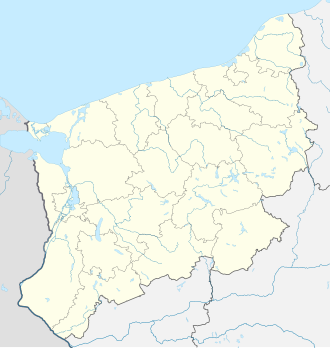


Geopolitical and Environmental Landscape
West Pomeranian Voivodeship occupies a strategically vital position in northwestern Poland, characterized by its extensive northern coastline along the Baltic Sea and its western border with Germany. This dual interface-maritime and international-shapes its economic, political, and cultural dynamics. The region’s geography is diverse, featuring coastal plains, glacial landforms, significant forest cover (contributing to its ecological importance and timber industry), and numerous lakes, including the large Lake Dąbie.
The climate is temperate maritime, moderated by the Baltic Sea, resulting in milder winters and cooler summers compared to continental Poland, influencing agricultural potential and tourism seasons. Its proximity to major European transport routes, both sea lanes and land corridors, positions it as a crucial transit zone. The environmental management of its coastal areas and forests is a key concern, balancing economic development with ecological preservation.
Historical Context and Administrative Evolution
The current West Pomeranian Voivodeship was established on January 1, 1999, as part of a major administrative reform that reorganized Poland into 16 voivodeships. It was formed by consolidating the former Szczecin and Koszalin Voivodeships with portions of Gorzów, Piła, and Słupsk Voivodeships. This consolidation aimed to create larger, more economically viable administrative units capable of effective regional development and governance.
Historically, the Pomeranian region has a complex past, having been part of various states and duchies, including Polish, Prussian, and German territories, leading to a rich, albeit sometimes contested, cultural heritage. The legacy of these historical divisions is still visible in the region’s demographics, urban planning, and cultural identity. Understanding this administrative restructuring is key to grasping Poland’s modern regional governance framework.
Socio-Cultural Fabric and Demographics
The population of West Pomeranian Voivodeship, numbering approximately 1.68 million people, is predominantly ethnically Polish and speaks Polish. However, its history as a borderland and a region with significant post-war resettlement means it has a diverse demographic composition. The cultural landscape is influenced by its maritime heritage, with traditions and festivals often revolving around the sea, fishing, and naval history. Szczecin, the capital, serves as the region's primary cultural and educational center, hosting universities, theaters, museums, and art galleries that reflect both local and national artistic expressions.
The region’s identity is shaped by its unique geographical position as a bridge between Poland and Western Europe, fostering a dynamic interplay of traditions and modern influences. Rural areas maintain distinct agricultural traditions, while urban centers are hubs of contemporary Polish life.
Economic Drivers and Development
The economy of West Pomeranian Voivodeship is significantly driven by its strategic location. Maritime transport and logistics are paramount, with the Port of Szczecin being one of Poland’s largest and most important seaports, facilitating substantial international trade. The region also possesses a strong agricultural sector, benefiting from fertile soils and favorable climatic conditions for crop production and animal husbandry. Forestry is another key industry, given the extensive forest cover.
The tourism sector is increasingly important, capitalizing on the Baltic coastline, national parks, and historical attractions. Manufacturing, particularly in sectors like shipbuilding, food processing, and machinery, contributes significantly to employment and economic output. The voivodeship actively seeks foreign investment to further develop its infrastructure and diversify its economic base, leveraging its position as a gateway to both Scandinavian and Central European markets.
Governance and Educational Landscape
West Pomeranian Voivodeship is governed by the Regional Assembly (Sejmik) and the regional executive board (Zarząd Województwa), headed by the Voivode, who is appointed by the central government. This structure is part of Poland's decentralized administrative system, granting regional authorities responsibilities in areas such as regional development, transport, culture, and environmental protection. The voivodeship actively participates in European Union funding programs to support its development initiatives.
Educationally, the region hosts a range of institutions, from primary and secondary schools to higher education facilities. Szczecin is home to several universities, including the Pomeranian Medical University and the West Pomeranian University of Technology, which are crucial for research, innovation, and providing a skilled workforce for the region's key industries. These educational institutions play a vital role in the socio-economic development and future prospects of West Pomeranian Voivodeship.
Go deeper
Based on content from Wikipedia · Licensed under CC BY-SA 4.0