

Platanus: The Amazing Planetrees!
Images

Platanus
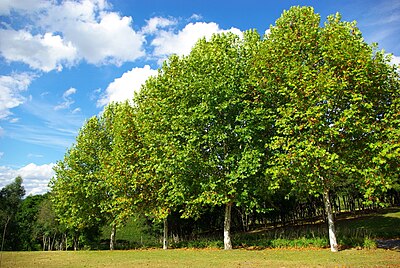


The Striking Dichotomy of Platanus Bark
The genus Platanus is immediately recognizable by its highly distinctive bark, a result of rapid cambial activity and differential growth rates. Unlike the uniform fissured or smooth bark of many tree species, Platanus exhibits exfoliating bark that peels away in large, irregular plates, revealing a mosaic of lighter underbark. This phenomenon, known as exfoliation or flaking, is particularly pronounced in species like the American sycamore (Platanus occidentalis) and the London plane (Platanus x acerifolia).
The peeling is attributed to the tree's ability to produce a large volume of wood quickly, leading to internal pressures that cause the outer bark to split and slough off. This adaptation not only contributes to the tree's striking visual appeal but also serves a protective function, shedding diseased or insect-infested tissues and preventing the buildup of epiphytic growth. The color variations, ranging from creamy white to olive green and brown, are due to the underlying tissues and the presence of pigments, making each tree a unique, dynamic canvas.
Ecological Niches and Evolutionary Resilience
Planetrees are native to temperate regions of the Northern Hemisphere, with major species found in North America (e.g., P. occidentalis, P. racemosa, P. wrightii) and Eurasia (e.g., P. orientalis). Their natural habitats are predominantly riparian zones – riverbanks, floodplains, and moist alluvial soils. This preference for waterlogged conditions highlights their adaptation to environments that many other tree species cannot tolerate.
Their extensive root systems help stabilize riverbanks, mitigating erosion, and their large stature provides significant canopy cover, influencing microclimates and supporting diverse understory vegetation. Fossil records indicate that Platanus is an ancient genus, with evidence dating back to the Cretaceous period, suggesting a long evolutionary history and a remarkable capacity for adaptation. This resilience has allowed them to persist through significant environmental changes over geological time.
The 'Buttonball' Dispersal Mechanism and Genetic Diversity
The reproductive structures of Platanus are as unique as their bark. The genus produces dense, spherical infructescences, commonly referred to as 'buttonballs' or 'head-like clusters.' Each ball is composed of numerous individual fruits, each containing a single seed topped with a tuft of fine hairs (coma). Upon maturation, these balls disintegrate, releasing hundreds of seeds that are effectively dispersed by wind and water.
This efficient dispersal mechanism allows planetrees to colonize new areas, particularly along watercourses, and contributes to gene flow within and between populations. The London plane (Platanus x acerifolia), a hybrid between P. orientalis and P. occidentalis, is particularly noteworthy for its widespread cultivation and its ability to reproduce both sexually and vegetatively, further enhancing its ecological and horticultural success.
Platanus in the Anthropocene
In the modern era, Platanus species, especially the London plane, have become indispensable components of urban landscapes worldwide. Their remarkable tolerance to pollution (including sulfur dioxide and heavy metals), compacted soils, drought stress, and physical damage makes them exceptionally well-suited for street tree planting. They act as vital green infrastructure, mitigating the urban heat island effect through shade and evapotranspiration, improving air quality by sequestering carbon dioxide and filtering particulate matter, and managing stormwater runoff.
The genus's ability to thrive in these challenging anthropogenic environments underscores its ecological plasticity. Furthermore, their longevity ensures that they provide these ecosystem services for decades, if not centuries, contributing significantly to the sustainability and livability of urban areas. Their continued presence highlights the critical role of urban forestry in ecological restoration and human well-being.
See also
Frequently Asked Questions
What makes planetree bark so special?+
Why do planetrees have fluffy seed balls that float?+
Where do planetrees usually grow?+
How do planetrees help cities?+
Why is the London plane tree popular in cities?+
Based on content from Wikipedia · Licensed under CC BY-SA 4.0