

Pearl
Images
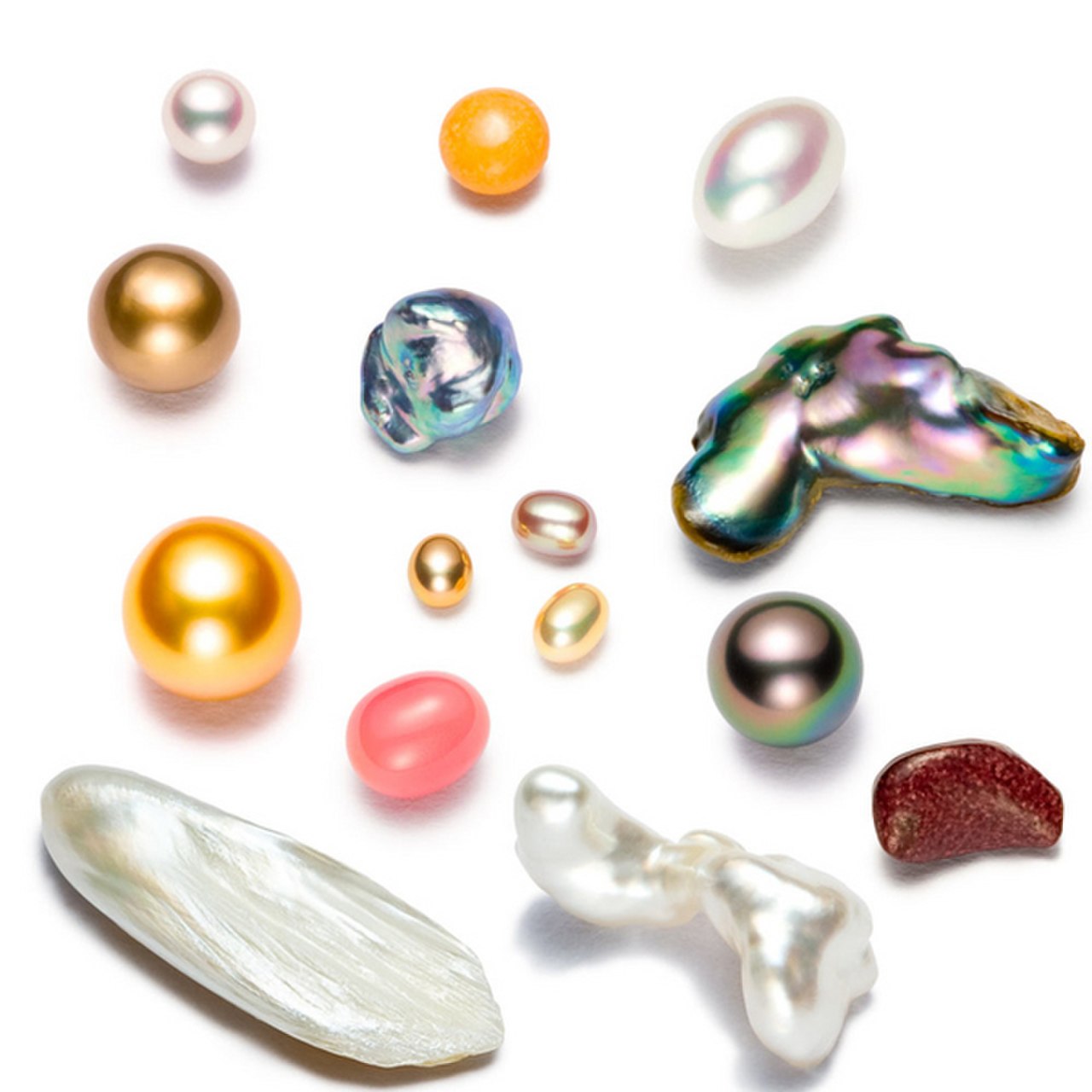
Pearl


The Biomineralization Marvel
Pearls are a prime example of biomineralization, a process where living organisms produce minerals. Specifically, pearls are formed within the mantle tissue of mollusks, primarily oysters and mussels, as a defense mechanism against foreign intrusions. When an irritant, such as a parasite or a piece of shell, enters the mantle cavity, the mollusk's epithelial cells begin to secrete layers of nacre.
Nacre is a composite material primarily composed of aragonite (a crystalline form of calcium carbonate) and a small amount of organic matrix (conchiolin). This matrix acts as a scaffold, guiding the growth of aragonite platelets in a brick-and-mortar structure. Each layer is deposited concentrically, creating the characteristic spherical or irregular shape.
The lustrous, iridescent quality of pearls, known as 'orient,' arises from the way light diffracts and reflects off these microscopic layers, creating a shimmering effect that is unique to pearls. While most shelled mollusks can produce calcareous concretions, only certain species, particularly those in the Pinctada genus for saltwater pearls and various freshwater mussels, produce nacreous pearls of gem quality.
From Natural Rarity to Cultured Abundance
For centuries, pearls were exclusively 'natural pearls,' harvested from wild oysters. Their extreme rarity and the perilous nature of pearl diving made them among the most valuable commodities. The discovery and refinement of pearl culturing techniques in the early 20th century, pioneered by figures like Mikimoto Kōkichi in Japan, revolutionized the industry.
Culturing involves surgically implanting a nucleus (often a bead made from shell) and a piece of mantle tissue into a host oyster. The oyster then coats the nucleus with nacre, forming a cultured pearl. This process, while requiring human intervention, still relies on the mollusk's natural ability to produce nacre.
Freshwater pearl culturing, which often uses only mantle tissue to induce pearl formation, became widespread later. These advancements dramatically increased the supply of pearls, making them more accessible, though natural pearls still command premium prices due to their inherent rarity and historical significance.
Pearls as Symbols
Throughout history, pearls have been imbued with profound cultural and symbolic meaning across diverse civilizations. In ancient Rome, they were associated with wealth and status, while in many Asian cultures, pearls symbolize wisdom, purity, and serenity. Their association with the moon and water further enhances their mystique.
Beyond their aesthetic appeal, pearls have been historically valued for perceived medicinal properties, with powdered pearls used in traditional remedies for ailments ranging from skin conditions to digestive issues. In modern times, pearls continue to be a staple in fine jewelry, representing elegance, sophistication, and timeless beauty. They are often gifted to mark significant life events, such as graduations, weddings, and anniversaries, reinforcing their status as enduring symbols of preciousness and milestone achievements.
The Spectrum of Pearls
The world of pearls is far more diverse than the classic image of a perfectly round white sphere. Pearls are classified by their shape, size, color, luster, and surface quality. Round pearls are the most valuable, but baroque pearls, with their unique and often artistic shapes, are highly prized by collectors and designers for their individuality.
Colors range from the familiar white and cream to exotic shades of pink, lavender, gold, green, and the highly coveted black (often Tahitian pearls). Luster is arguably the most critical factor in a pearl's beauty, referring to the intensity and sharpness of light reflected from its surface. Surface characteristics, such as blemishes or inclusions, also affect value.
Beyond jewelry, pearls have historically been used in cosmetics and even as pigments in paints, showcasing their multifaceted utility derived from their unique physical and chemical properties.
Go deeper
Frequently Asked Questions
What is a pearl?+
How do pearls get their shiny sparkle?+
What is the difference between natural and cultured pearls?+
Where do pearls come from?+
Why are pearls special to people?+
Based on content from Wikipedia · Licensed under CC BY-SA 4.0