

Patricia Routledge
Images

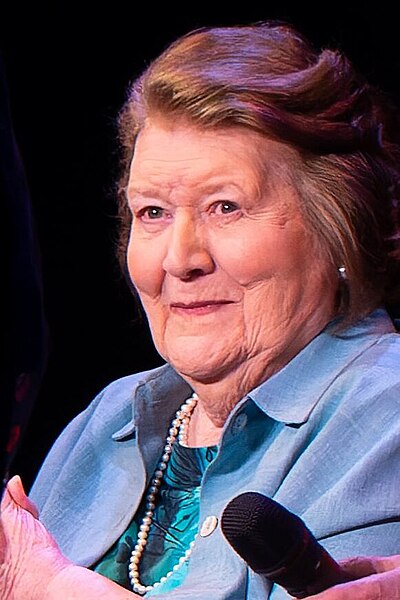
GylesDamesPalladium050323 (21 of 74) (52728573415)

Foundations in Classical Training and Early Triumphs
Dame Patricia Routledge's journey into the performing arts was built upon a solid foundation of classical training and an early dedication to her craft. Her professional debut at the Liverpool Playhouse in 1952 marked the beginning of a career that would span over six decades. This initial foray into professional theatre was crucial, honing her skills and exposing her to the rigors of stage performance.
Her subsequent move to London's prestigious West End in 1959 solidified her reputation as a formidable talent. The pinnacle of her early stage career arrived with her Broadway debut in 1966, culminating in her winning the Tony Award for Best Actress in a Musical in 1968 for her role in 'Darling of the Day.' This award is a significant recognition of her vocal prowess and dramatic interpretation in a demanding musical theatre context. Further cementing her status, she received the Olivier Award for Best Actress in a Musical in 1988 for her performance in 'Candide' at The Old Vic, demonstrating her sustained excellence and versatility in the highly competitive world of musical theatre.
Mastering the Art of Character
While her theatrical achievements are undeniable, Patricia Routledge achieved widespread international recognition through her television work, particularly in the 1980s and 1990s. She became a sought-after performer for television monologues and character-driven series, showcasing her ability to captivate audiences with nuanced portrayals. Her collaborations with Alan Bennett and Victoria Wood were pivotal.
Appearing in Bennett's 'A Woman of No Importance' and as Kitty in Victoria Wood's sketch comedy series 'As Seen on TV' (1985–1986) highlighted her sharp comedic timing and observational humor. Her performance in Alan Bennett's 'Talking Heads: A Lady of Letters' (1988) earned her a BAFTA TV Award nomination for Best Actress, underscoring her dramatic depth. However, it was her iconic role as Hyacinth Bucket in the BBC sitcom 'Keeping Up Appearances' (1990–1995) that cemented her status as a television legend.
Routledge's portrayal of the socially aspiring, often absurd, Hyacinth was a masterclass in character comedy, earning her two BAFTA nominations and making the character a global phenomenon. Her ability to imbue Hyacinth with a peculiar blend of pathos and pretension made the character unforgettable and enduringly popular.
Versatility Beyond Comedy
Patricia Routledge's career demonstrates a remarkable breadth of talent, extending far beyond her most famous comedic roles. She proved her capability in more serious and investigative genres, notably starring as the titular character in the television series 'Hetty Wainthropp Investigates' (1990, 1996–1998). As Hetty, a no-nonsense, middle-aged amateur detective, Routledge brought intelligence, warmth, and a dry wit to the role, solving crimes with a unique blend of intuition and common sense.
This series showcased her ability to carry a show with a compelling, character-led narrative. Her contributions to film, though less frequent, include notable appearances in 'To Sir, with Love' (1967) and 'Don't Raise the Bridge, Lower the River' (1968), further illustrating her adaptability across different media. In recognition of her profound impact on the arts and her dedicated charitable work, Patricia Routledge was appointed a Dame Commander of the Order of the British Empire (DBE) in 2017.
This honor signifies her status as a national treasure, celebrated for a lifetime of artistic achievement and public service.
Enduring Influence and Artistic Legacy
The enduring appeal of Patricia Routledge's work lies in her profound understanding of character and her impeccable execution. Her ability to transition seamlessly between the heightened reality of musical theatre, the sharp wit of television comedy, and the compelling narrative of detective dramas speaks to her exceptional range as an artist. The public's overwhelming affection for her was evident when she was voted Britain's favourite actress in 1996, a testament to the deep connection she forged with audiences.
Her performances, particularly as Hyacinth Bucket, have become cultural touchstones, analyzed for their comedic brilliance and social commentary. Routledge's career serves as an inspiration, demonstrating the power of dedication, versatility, and a genuine passion for performance. Her legacy is not merely in the awards she won or the characters she played, but in the lasting joy and memorable moments she provided to millions, solidifying her place as one of Britain's most cherished actresses.
See also
Frequently Asked Questions
Who is Patricia Routledge?+
What is Patricia Routledge best known for?+
Did Patricia Routledge win any awards?+
What TV shows did Patricia Routledge act in besides "Keeping Up Appearances"?+
Did Patricia Routledge act in movies?+
Based on content from Wikipedia · Licensed under CC BY-SA 4.0