

Oxygen
Images
Oxygen
The Ubiquitous Chalcogen
Oxygen, with the symbol O and atomic number 8, is a member of the chalcogen group in the periodic table. It is a highly reactive nonmetal and a potent oxidizing agent, readily forming oxides with nearly all other elements. This reactivity is fundamental to its prevalence; it is the most abundant element in Earth's crust, constituting nearly half its mass in various oxide forms, including water, carbon dioxide, and silicate minerals.
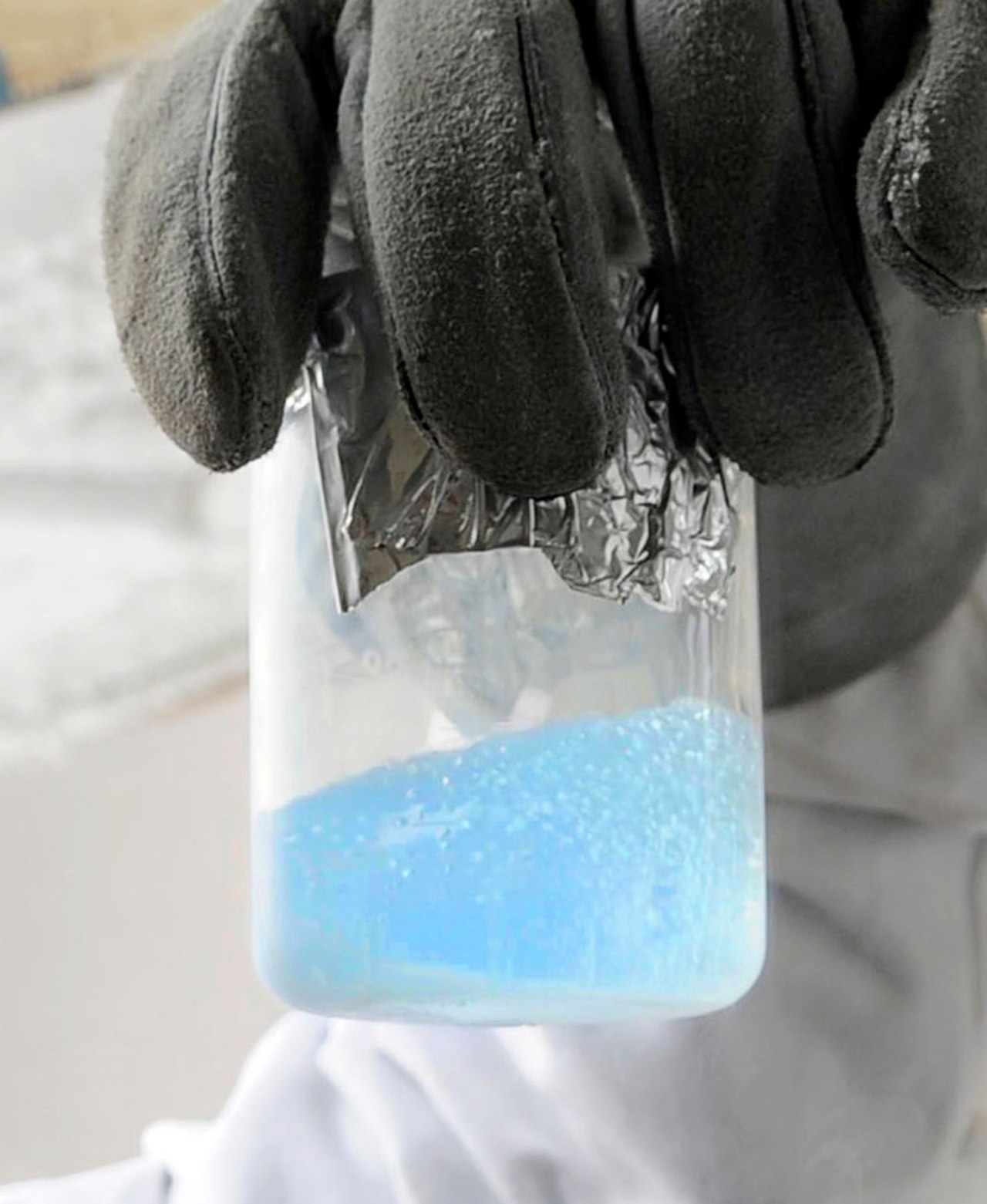
Beyond Earth, it ranks as the third-most abundant element in the universe, surpassed only by hydrogen and helium. At standard temperature and pressure, oxygen exists as dioxygen (O2), a diatomic gas essential for aerobic life. This molecular form is colorless and odorless, a stark contrast to its powerful chemical nature.
The Engine of Life
Oxygen is indispensable for the survival of all eukaryotic organisms, including plants, animals, fungi, and algae. It serves as the terminal electron acceptor in cellular respiration, a metabolic pathway that efficiently extracts chemical energy from organic molecules derived from food. This process involves the reaction of oxygen with these molecules, releasing substantial amounts of ATP (adenosine triphosphate), the energy currency of cells, and producing carbon dioxide and water as byproducts.
Furthermore, oxygen atoms are integral components of major biomolecules such as proteins, nucleic acids, carbohydrates, and lipids. They also form the inorganic matrix of bones and teeth. Water, a compound rich in oxygen, constitutes the majority of the mass in most living organisms, underscoring oxygen's foundational role in the very structure of life.
A Stratospheric Sentinel
Oxygen's allotropic forms play critical roles. While dioxygen (O2) sustains aerobic life, a much rarer triatomic allotrope, ozone (O3), forms a vital protective layer in the lower stratosphere. This ozone layer acts as a powerful shield, absorbing the majority of the sun's harmful ultraviolet (UV) radiation, particularly the high-energy UVB and UVC wavelengths.
By mitigating this ionizing radiation, the ozone layer protects the biosphere from DNA damage, mutations, and other detrimental effects. Conversely, ozone present at ground level is a corrosive air pollutant, a byproduct of photochemical smog, and poses risks to respiratory health and ecosystems.
A Chronicle of Discovery and Understanding
The isolation of oxygen occurred before 1604 by Michael Sendivogius. However, its independent discovery is commonly attributed to Carl Wilhelm Scheele around 1773 and Joseph Priestley in 1774. Priestley's work, published first, led to him often receiving primary credit, though he termed oxygen 'dephlogisticated air' and did not recognize it as a distinct element.
The pivotal recognition came in 1777 when Antoine Lavoisier identified oxygen as a chemical element and accurately elucidated its role in combustion and respiration. Lavoisier's work fundamentally shifted scientific understanding and laid the groundwork for modern chemistry, moving away from phlogiston theory.
Industrial Applications and Modern Relevance
Oxygen's potent oxidizing properties make it invaluable in numerous industrial processes. It is crucial for the production of steel, where it's used to remove impurities from iron. In metal fabrication, high-purity oxygen is employed in brazing, welding, and cutting operations due to the intense heat it generates.
Its role extends to propulsion systems, serving as a key component in rocket propellants. Medically, oxygen therapy is a life-saving treatment for respiratory distress and hypoxemia. Furthermore, oxygen is a critical element in life-support systems for aviation, submarines, spaceflight, and diving, enabling human survival in environments where atmospheric oxygen is insufficient or absent.
Its continuous replenishment in the atmosphere, primarily through photosynthesis, highlights the delicate balance of Earth's biogeochemical cycles.
Go deeper
Based on content from Wikipedia · Licensed under CC BY-SA 4.0