

Ouroboros: The Snake That Eats Its Tail!
Images

Ouroboros


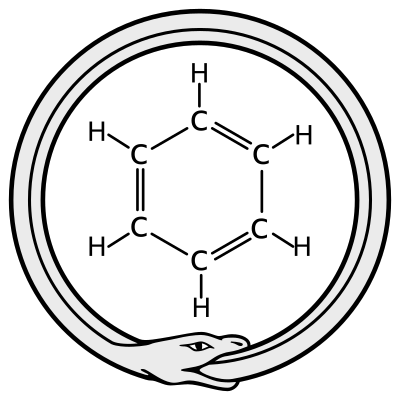


The Serpent of Self-Creation and Cosmic Cycles
The Ouroboros, derived from Greek words meaning 'tail-devourer,' is one of humanity's oldest and most pervasive symbols. Its iconic image of a serpent or dragon forming a circle by consuming its own tail is a potent metaphor for cyclical existence, the eternal return, and the fundamental unity of all things. This symbol transcends mere representation; it embodies a philosophical and spiritual concept of self-sufficiency and perpetual motion.
It suggests a closed system where the end is the beginning, a continuous process of creation, destruction, and recreation. In this context, the Ouroboros is not just a passive image but an active agent of cosmic order, representing the universe’s inherent ability to regenerate and sustain itself through an unending cycle of transformation. Its circular form is a visual representation of infinity, a concept that has captivated thinkers and mystics across millennia.
A Tapestry of Origins
The Ouroboros's lineage traces back to the earliest civilizations. Its most ancient manifestations are found in ancient Egyptian funerary texts, notably the Book of the Dead, where it symbolized the sun god Ra's journey through the underworld and his daily rebirth, representing the cyclical nature of time and the cosmos. The symbol then migrated into the Hellenistic world, appearing in Greek magical papyri and Gnostic texts.
In Gnosticism, it often represented the primordial unity of the universe before creation, or the cyclical nature of spiritual reincarnation. It was also a significant emblem in Hermeticism, a philosophical and religious tradition that profoundly influenced Western esotericism. The Ouroboros's journey through these diverse cultural and intellectual landscapes highlights its enduring power to convey complex ideas about existence and the divine.
The Alchemical Heart
Perhaps the most significant adoption of the Ouroboros was within the practice of alchemy. For alchemists, the Ouroboros was not merely a symbol of cycles but a profound representation of the 'Great Work' – the process of spiritual and material transformation. It embodied the concept of 'solve et coagula' (dissolve and coagulate), the idea that matter must be broken down and then reformed into a higher state.
The serpent eating its tail symbolized the unity of opposites, the reconciliation of opposing forces necessary for transformation, and the self-contained nature of the alchemical process. It suggested that the ultimate goal, the Philosopher's Stone, was not an external object but an internal realization, a state of perfect balance and unity achieved through a cyclical, self-referential journey of purification and refinement. The Ouroboros became a visual shorthand for the entire alchemical quest.
Nature's Mirror
The enduring fascination with the Ouroboros is perhaps amplified by its uncanny reflection in the natural world. While not a common behavior, certain snake species, particularly rat snakes, have been documented exhibiting a form of auto-cannibalism, where they attempt to consume their own tails. The precise reasons for this behavior remain a subject of scientific inquiry, with theories ranging from defensive responses to disorientation or even a misguided attempt to regulate body temperature.
Regardless of the biological explanation, these instances provide a tangible, albeit unsettling, connection between the ancient symbolic representation and observable animal behavior. This biological parallel lends a certain primal resonance to the Ouroboros, suggesting that its conceptual power might be rooted in deep-seated observations of the natural world and its inherent cycles of life and death.
Echoes in Modern Thought
The Ouroboros continues to resonate in contemporary thought, extending its influence beyond historical and esoteric contexts. In psychology, Carl Jung identified the Ouroboros as a potent archetype representing the integration of the conscious and unconscious, the cyclical nature of the psyche, and the process of individuation. He saw it as a symbol of wholeness and the overcoming of dualities.
In art and literature, the Ouroboros motif appears in various forms, often symbolizing themes of infinity, self-reference, and the cyclical nature of narratives or artistic creation. Its enduring presence in diverse fields underscores its fundamental capacity to articulate complex ideas about existence, transformation, and the interconnectedness of all phenomena, proving that this ancient serpent remains a relevant and powerful symbol for understanding the human condition.
See also
Frequently Asked Questions
What does the Ouroboros symbol look like?+
Why do people think the Ouroboros is special?+
Where did the Ouroboros first appear?+
How did alchemists use the Ouroboros?+
Do real snakes ever eat their tails?+
Based on content from Wikipedia · Licensed under CC BY-SA 4.0