

Polaris: The Star That Stays Put!
Images
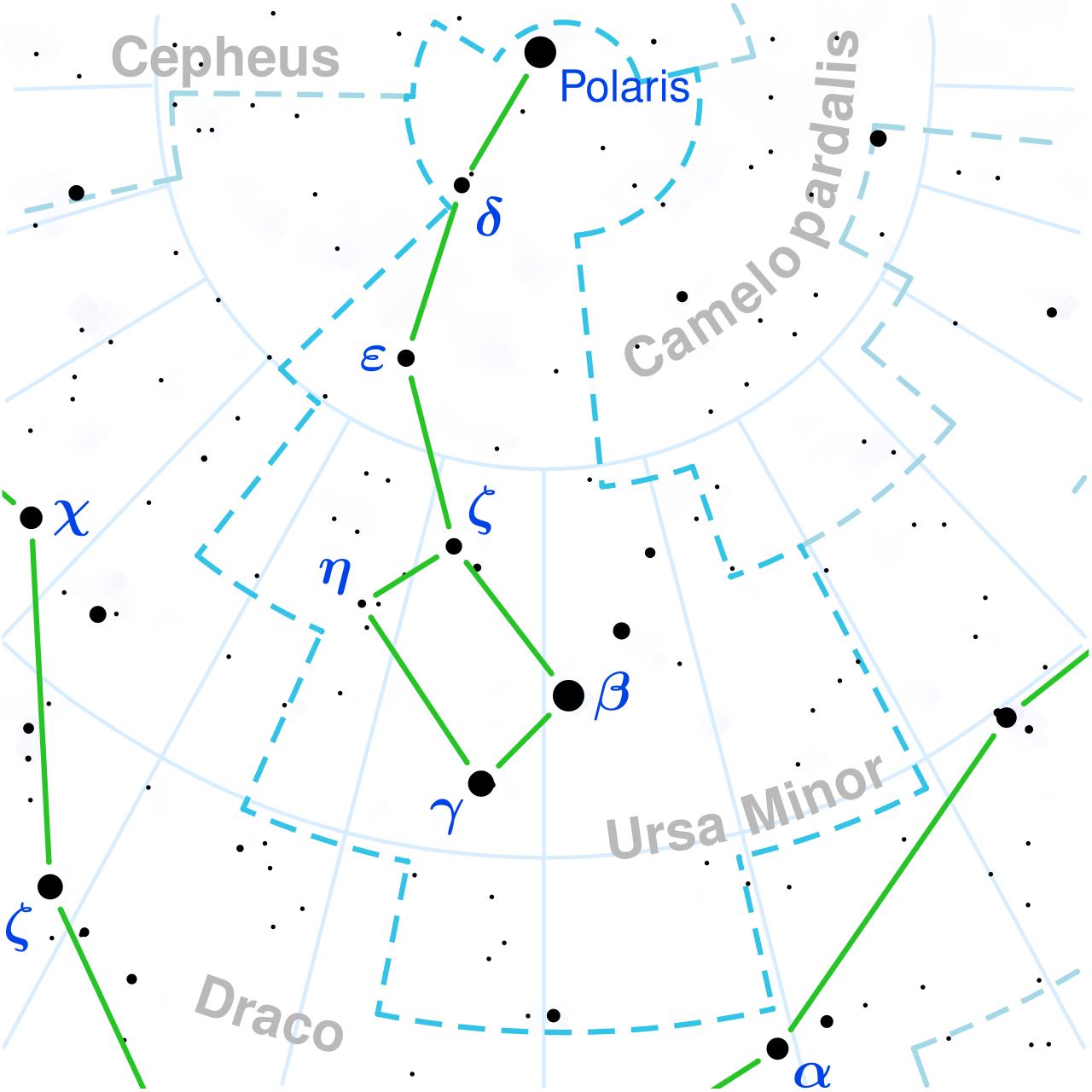
Polaris


The Pole Star
Polaris, designated Alpha Ursae Minoris, serves as the current northern pole star, a role it has fulfilled for centuries. Its proximity to the north celestial pole, less than a degree away, means it remains virtually stationary in the night sky as the Earth rotates. This stability has rendered it indispensable for celestial navigation, providing a reliable reference point for determining true north.
Ancient mariners and modern aviators alike have utilized Polaris to orient themselves, calculate latitude, and maintain course across vast distances. The apparent magnitude of Polaris, fluctuating around 1.98, ensures its visibility to the naked eye, solidifying its status as a primary navigational aid. Its significance extends beyond mere direction-finding; it represents a constant in the dynamic celestial sphere, a predictable marker in the seemingly chaotic dance of stars.
Unraveling the Polaris System
Contrary to its appearance as a solitary point of light, Polaris is a complex triple star system. The primary component, Polaris Aa, is a yellow supergiant, a star in a later stage of its life cycle. It is accompanied by a close companion, Polaris Ab, and the pair is believed to be in a wider orbit with Polaris B.
The discovery of Polaris B in the late 18th century by William Herschel marked the initial step in understanding its composite nature. The confirmation of the inner binary system, Aa/Ab, occurred in the early 20th century. Studying these stellar interactions provides valuable insights into binary star evolution, mass transfer, and the dynamics of stellar systems, contributing to our broader understanding of stellar astrophysics.
Polaris as a Cepheid Variable
Polaris holds profound importance in astrophysics as the nearest Cepheid variable star. Cepheid variables are crucial for establishing the cosmic distance ladder because their intrinsic luminosity is directly related to their pulsation period. By observing the period of brightness variation in a Cepheid, astronomers can deduce its absolute magnitude.
Comparing this to its apparent magnitude allows for a precise calculation of its distance. Polaris's proximity makes it a foundational calibrator for this method. While its variability is subtle compared to other Cepheids, its distance, refined by missions like Hipparcos and Gaia (yielding values around 432-446.5 light-years), provides a critical anchor point for measuring distances to more remote galaxies and understanding the scale of the universe.
The Shifting North Star
The role of Polaris as the North Star is a temporary phenomenon dictated by the Earth's axial precession. This slow, conical wobble of the Earth's rotational axis, with a period of approximately 26,000 years, causes the position of the celestial pole to shift over millennia. Currently, Polaris is remarkably well-aligned with the north celestial pole.
However, this alignment will not last indefinitely. In roughly 13,000 years, Vega will become the North Star. This understanding of precession is vital for historical astronomy, allowing researchers to determine the orientation of the sky in ancient times and interpret historical astronomical records accurately.
It underscores the dynamic, ever-changing nature of our cosmic perspective.
Go deeper
Frequently Asked Questions
What is Polaris and why does it stay in the same place?+
How do sailors and pilots use Polaris to find directions?+
Why is Polaris called a Cepheid variable and why is that important?+
What does Polaris look like to us?+
Will Polaris always be the North Star?+
Based on content from Wikipedia · Licensed under CC BY-SA 4.0