

Narita International Airport
Images

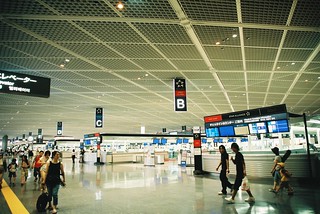
Narita International Airport Terminal 1 (NRT/RJAA) Domestic Check-In Counter




The Genesis and Expansion of a Global Gateway
Narita International Airport (NRT), initially conceived as New Tokyo International Airport, stands as a testament to Japan's post-war economic ambitions and its integration into the global community. Established to alleviate pressure on the increasingly congested Haneda Airport, Narita was strategically located 60 kilometers east of central Tokyo to provide ample space for future expansion and to mitigate urban noise pollution.
The airport's current footprint spans 1,137 hectares, with ambitious plans to expand to nearly 2,300 hectares, underscoring its role as a continuously evolving international gateway. This expansion is crucial for accommodating the projected growth in air travel and cargo, ensuring Narita remains competitive in the global aviation landscape. Its development reflects a long-term vision for Japan's connectivity and economic prowess, positioning it as a critical node in international trade and tourism.
Operational Dynamics
The operational efficiency of Narita International Airport is underpinned by its robust infrastructure, particularly its extensive runway system. The main runway, measuring a remarkable 4,000 meters (13,123 feet), is one of the longest in Japan, a critical feature for handling the diverse range of aircraft, from wide-body long-haul jets to cargo planes. This length ensures sufficient takeoff and landing distances, enhancing safety and operational flexibility.
Narita serves as a primary international hub for major carriers like Japan Airlines and All Nippon Airways, as well as a significant base for numerous low-cost carriers and cargo airlines. This diverse operational profile necessitates sophisticated air traffic management systems to ensure seamless movement of aircraft, efficient gate allocation, and timely departures and arrivals, all while managing the complexities of international flight schedules.
The Sanrizuka Struggle
The development of Narita International Airport is inextricably linked to the controversial 'Sanrizuka Struggle,' a protracted conflict arising from the government's land acquisition policies. The airport's construction involved the expropriation of land from local residents, often without their full consent or adequate consultation, leading to widespread protests and legal battles that continued for decades. This historical context has profoundly shaped the airport's operational framework.
The direct proximity of residential neighborhoods to the runways has necessitated stringent noise abatement measures. The most significant of these is the airport's mandatory closure from midnight to 6:00 AM, a unique restriction aimed at minimizing noise disturbance for the surrounding communities. This policy highlights the ongoing challenge of balancing large-scale infrastructure development with the rights and well-being of local populations.
Global Standing and Economic Significance
Narita International Airport's commitment to operational excellence and passenger experience has earned it significant international acclaim. In 2022, it was recognized by Skytrax as the fourth-best airport globally, a prestigious ranking that underscores its high standards in service quality, cleanliness, and overall passenger satisfaction. As the principal international gateway for the Greater Tokyo Area, Narita plays an indispensable role in Japan's economy.
It facilitates inbound tourism, supports international business activities, and serves as a vital conduit for global trade through its substantial cargo operations. Its position as a major hub for both passenger and freight traffic solidifies its importance not only for Japan but also for the broader Asia-Pacific region's economic connectivity.
See also
Based on content from Wikipedia · Licensed under CC BY-SA 4.0