

Murray Springs Clovis Site
Images

Murray Springs Clovis Site




The Clovis Frontier
Located in southern Arizona near the San Pedro River, the Murray Springs Clovis Site stands as a testament to the sophisticated hunting and processing capabilities of early North American inhabitants. Dating back approximately 11,000 years before present, this site was not merely a temporary camp but a significant locus for the exploitation of megafauna. Archaeological investigations have identified five distinct buried animal kill and processing locations, indicating a systematic and large-scale operation.
The presence of numerous bone fragments and butchering marks on these ancient giants, which included species now extinct, provides invaluable data on the dietary habits and subsistence strategies of the Clovis people. This site offers a rare, detailed glimpse into how these early human groups managed and utilized the abundant large game resources of the Pleistocene epoch, demonstrating a profound understanding of animal behavior and resource management.
Lithic Mastery
Beyond its significance in megafauna procurement, Murray Springs is equally renowned for its extensive evidence of Clovis lithic technology. The site served as a major workshop where stone tools were manufactured and refined. Archaeologists have recovered a substantial quantity of stone debitage, unfinished tools, and finished artifacts, including the characteristic Clovis fluted points.
This concentration of tool-making materials allows for detailed analysis of their knapping techniques, raw material selection, and the chaîne opératoire – the sequence of actions involved in tool production. The efficiency and skill displayed in crafting these tools, essential for hunting, butchering, and other daily tasks, underscore the technological prowess of the Clovis culture. Studying these artifacts helps us understand the spread of Clovis technology across the continent and its role in human adaptation.
A Window into Paleo-Indian Life
The Murray Springs Clovis Site holds immense scientific importance for paleo-environmental and paleo-cultural reconstructions. Its unique preservation conditions have allowed for the detailed study of faunal assemblages and associated human activities. The site contributes significantly to our understanding of the Clovis period, a critical phase in the peopling of the Americas.
By analyzing the spatial distribution of kill sites, processing areas, and tool manufacturing zones, researchers can infer social organization, group size, and the movement patterns of these ancient populations. The site's location within the San Pedro Riparian National Conservation Area highlights the importance of preserving such critical archaeological resources for ongoing research and public education about our shared human heritage.
Ecological Context
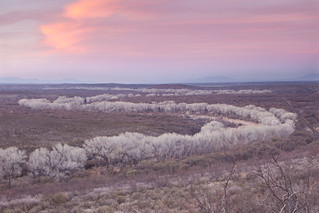
The Murray Springs site's ecological setting in the San Pedro River valley is crucial to understanding its role as a Clovis hunting camp. This riparian corridor would have attracted large herbivores, making it an ideal location for Clovis hunters to establish a base for processing their kills. The presence of water and abundant game would have supported larger groups of people for extended periods.
The archaeological evidence suggests a dynamic interaction between humans and the Pleistocene megafauna within this specific environment. Understanding the paleoecology of the San Pedro Valley allows us to better interpret the subsistence strategies employed at Murray Springs and the broader ecological pressures and opportunities faced by early human populations in the Southwest.
See also
Frequently Asked Questions
What is the Murray Springs Clovis Site?+
How old is the Murray Springs Clovis Site?+
What kind of animals did the Clovis people hunt at Murray Springs?+
What tools did the Clovis people make at Murray Springs?+
Why is the Murray Springs Clovis Site important for scientists?+
Based on content from Wikipedia · Licensed under CC BY-SA 4.0