

Munich
Images
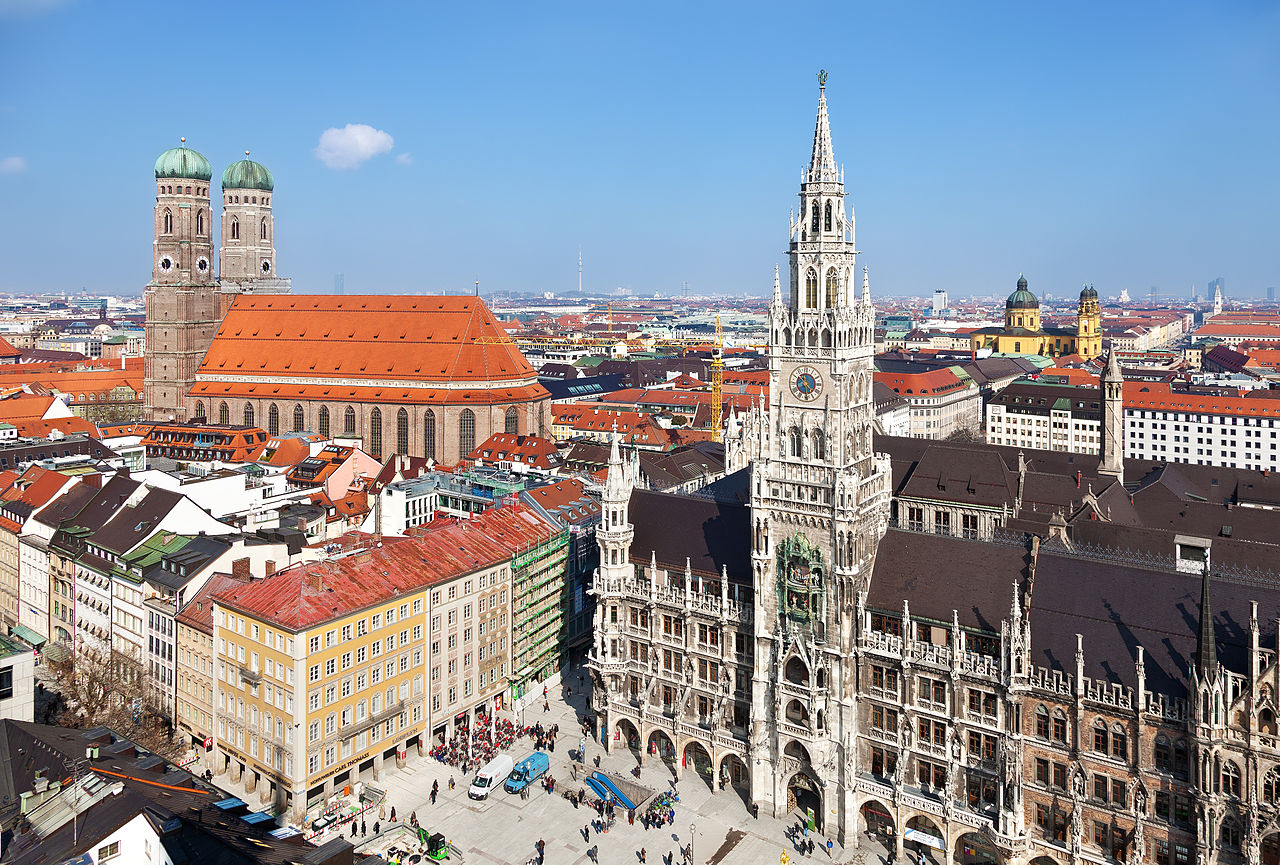
Munich
Geographical Foundations and Climatic Influences
Munich's strategic location in the Bavarian plateau, approximately 520 meters (1,700 feet) above sea level, profoundly influences its character and development. Situated in southern Germany, it benefits from proximity to the Alps, which not only provide a stunning backdrop but also impact regional weather patterns, contributing to a temperate continental climate. Munich experiences four distinct seasons, with average January temperatures around 0°C (32°F) and July temperatures averaging 19°C (66°F).
The city receives moderate rainfall throughout the year, supporting its lush green spaces, most notably the expansive Englischer Garten. The Isar River, originating in the Alps, flows through the city, historically serving as a vital water source and transport route, and today offering significant recreational value. This favorable geography has historically facilitated trade and agriculture, laying the groundwork for Munich's economic prosperity and its status as a major European hub.
A Chronicle of Power, Artistry, and Resilience
Munich's historical trajectory is a rich narrative of political power, artistic flourishing, and profound societal shifts. Founded in 1158 by Henry the Lion, its early growth was driven by its strategic position on salt trade routes. The city rose to prominence as the capital of the Duchy of Bavaria, later becoming an Electorate and eventually the Kingdom of Bavaria under the long-reigning Wittelsbach dynasty.
This era, spanning over seven centuries, saw Munich transformed into a magnificent cultural capital, adorned with Baroque and Rococo palaces, churches, and theaters. The 19th century, in particular, was a period of significant architectural and artistic development under King Ludwig I. However, Munich's history is also marked by darker chapters, including its role as the birthplace of the Nazi Party and its devastating experiences during World War II.
The city's post-war reconstruction and subsequent economic resurgence highlight its remarkable resilience and capacity for renewal, culminating in its hosting of the 1972 Summer Olympics.
The Enduring Spirit of Bavarian Culture
Munich is a city that fiercely preserves its unique Bavarian identity while embracing global influences. The cultural fabric is woven with deep-rooted traditions, most famously celebrated during Oktoberfest, the world's largest folk festival. This annual event draws millions to experience traditional music, dance, Bavarian attire (Dirndl and Lederhosen), and, of course, the renowned local beers served in massive steins.
Beyond Oktoberfest, Munich's cultural landscape is exceptionally rich, featuring world-class museums like the Deutsches Museum (science and technology) and the Alte Pinakothek (Old Masters painting), alongside numerous theaters and opera houses. The city's numerous beer gardens are integral to its social life, serving as communal gathering places. The Münchners themselves are often characterized by a blend of Gemütlichkeit (coziness and conviviality) and a strong sense of civic pride, contributing to Munich's reputation as a highly livable and welcoming city.
Economic Prowess and Innovation Hub
Munich stands as one of Europe's most dynamic economic centers, characterized by its strong industrial base, robust service sector, and burgeoning innovation ecosystem. It is a global leader in automotive manufacturing, with BMW Group's headquarters and extensive production facilities forming a cornerstone of the city's economy. The financial services sector is also highly significant, with numerous major banks and insurance companies operating from Munich, contributing to its status as a key financial hub.
Furthermore, Munich is a preeminent center for information technology and high-tech industries, attracting significant investment and fostering a vibrant startup scene. The presence of leading research institutions, such as the Max Planck Society and the Fraunhofer Society, fuels innovation and technological advancement across various fields. This diverse economic structure, coupled with a highly skilled workforce and excellent infrastructure, including one of Europe's busiest airports, underpins Munich's sustained economic growth and high standard of living.
Governance and Civic Life
As the capital of Bavaria, Munich plays a crucial role in the administration and governance of the state. The city operates under a federal system, with its own municipal government responsible for local affairs. The Oberbürgermeister (Lord Mayor) serves as the head of the city government, elected by the citizens.
The City Council (Stadtrat) is the legislative body, responsible for making key decisions on urban planning, public services, and local policies. Munich's governance emphasizes citizen participation and aims to provide high-quality public services, including efficient public transportation, extensive green spaces, and a comprehensive social welfare system. The city's administrative structure is designed to manage its large population and complex urban environment effectively, ensuring its continued development as a prosperous and well-organized metropolis.
Educational Landscape and Knowledge Creation
Munich is a leading center for education and research, boasting a comprehensive and high-quality academic landscape. The Ludwig Maximilian University of Munich (LMU) and the Technical University of Munich (TUM) are among the most prestigious universities in Germany and Europe, renowned for their excellence in a wide range of disciplines, from humanities and social sciences to engineering and natural sciences. These institutions attract a significant number of international students and researchers, contributing to Munich's global academic standing.
Beyond these major universities, the city hosts numerous other higher education institutions, including specialized colleges and academies. Munich is also home to a vast network of research institutes, including those affiliated with the Max Planck Society and the Fraunhofer Society, which are at the forefront of scientific discovery and technological innovation. This strong emphasis on education and research fosters a culture of lifelong learning and drives the city's economic competitiveness.
Go deeper
Frequently Asked Questions
What is Munich famous for?+
Why do people celebrate Oktoberfest in Munich?+
Where does the Isar River come from?+
How many seasons does Munich have and what are the temperatures?+
What happened to Munich during World War II and what did it do after?+
Based on content from Wikipedia · Licensed under CC BY-SA 4.0