

Miles Davis
Images
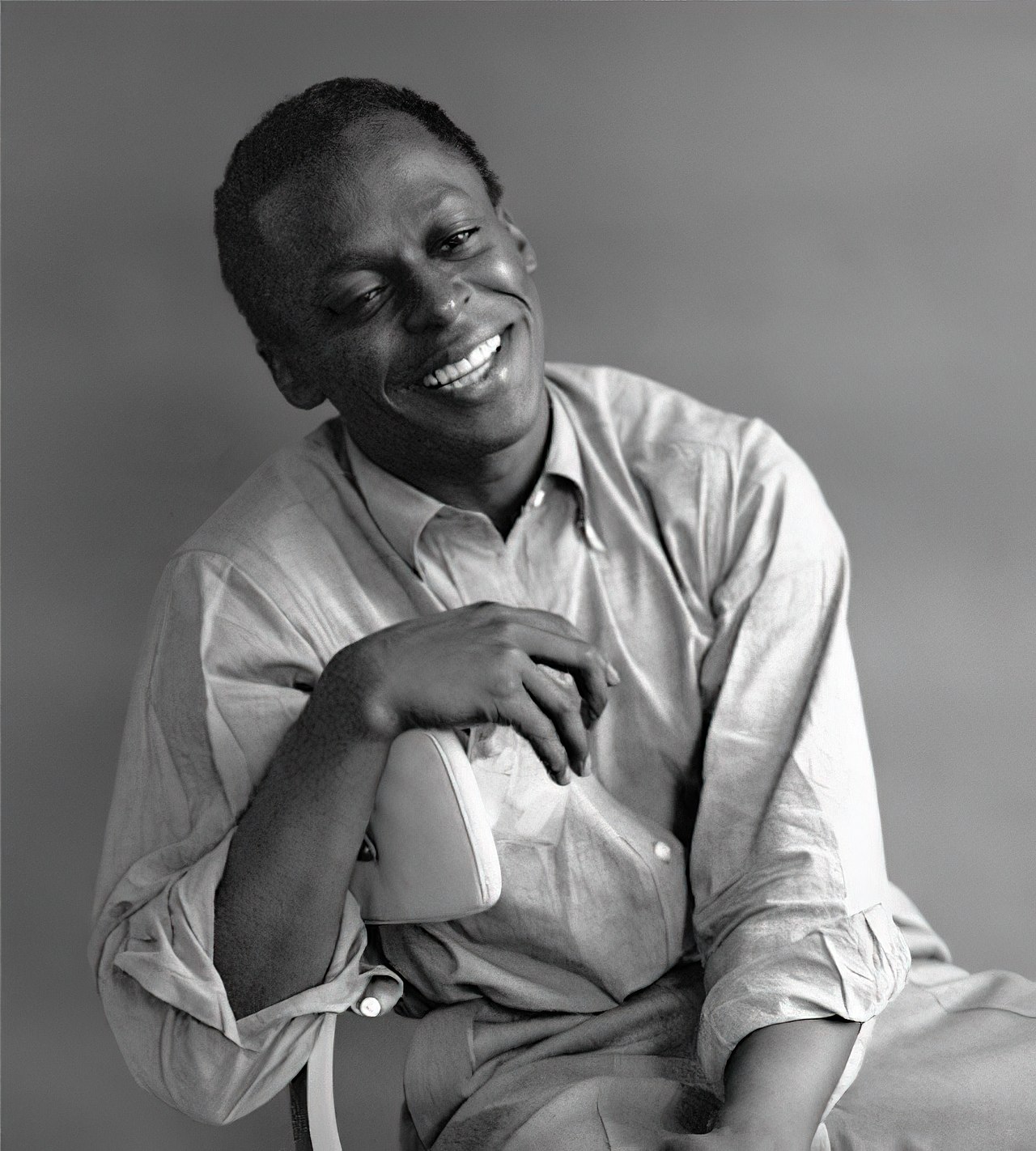
Miles Davis
Formative Years and the Bebop Crucible
Born Miles Dewey Davis III on May 26, 1926, in Alton, Illinois, and raised in the affluent environment of East St. Louis, his musical journey began with the trumpet in his early teens. His father, a dentist, encouraged his musical pursuits, providing him with instruments and lessons.
Davis's prodigious talent led him to New York City to attend the prestigious Juilliard School of Music, a decision driven by a desire for formal training. However, the structured academic environment soon felt restrictive compared to the vibrant, improvisational energy of the burgeoning bebop scene. Davis left Juilliard to immerse himself in the city's jazz clubs, quickly becoming a protégé of alto saxophonist Charlie Parker.
From 1944 to 1948, he honed his skills as a member of Parker's quintet, absorbing the complex harmonic language and rapid tempos that characterized bebop, while simultaneously developing his own distinctive, more lyrical trumpet voice.
The Birth of Cool and the Hard Bop Renaissance
Following his tenure with Parker, Davis sought to move beyond bebop's intensity. In 1949 and 1950, he led a nonet that recorded the 'Birth of the Cool' sessions for Capitol Records. This music featured intricate arrangements by Gil Evans and Gerry Mulligan, incorporating elements of classical music and a more subdued, nuanced tone that laid the groundwork for the 'cool jazz' movement.
The early 1950s proved to be a challenging period for Davis, marked by a severe heroin addiction that hampered his career. Despite these personal struggles, he continued to record for Prestige Records, producing seminal works that helped define 'hard bop.' This style retained bebop's energy but infused it with the soulful influences of blues and gospel music. A triumphant performance at the 1955 Newport Jazz Festival signaled his recovery and artistic resurgence, leading to a pivotal long-term contract with Columbia Records.
Modal Exploration and the Quintet's Golden Age
Davis's tenure at Columbia Records marked a period of extraordinary creativity and commercial success. His first album for the label, ' 'Round About Midnight' (1955), featured his first great quintet, including saxophonist John Coltrane and bassist Paul Chambers. This ensemble became one of the most celebrated in jazz history.
Throughout the late 1950s and early 1960s, Davis masterfully balanced ambitious orchestral collaborations with Gil Evans, such as the evocative 'Sketches of Spain' (1960), with the raw power of his working bands. His 1959 album 'Kind of Blue' is a landmark achievement, widely regarded as the definitive statement of 'modal jazz.' By improvising over scales (modes) rather than complex chord progressions, Davis and his band created a sound of unparalleled spaciousness and emotional depth. The ensemble evolved, with musicians like Ron Carter, Herbie Hancock, and Tony Williams joining, forming another legendary quintet that would pioneer the 'post-bop' genre with albums like 'E.S.P.' (1965) and 'Miles Smiles' (1967).
Electric Fusion and the Reimagining of Popular Music
In the late 1960s and early 1970s, Davis embarked on his most radical and controversial period: electric jazz fusion. Influenced by rock, funk, and the emerging electronic music landscape, he incorporated electric instruments and studio effects, pushing the boundaries of jazz further than ever before. Albums like 'In a Silent Way' (1969) and the groundbreaking 'Bitches Brew' (1970) fused jazz improvisation with the rhythmic drive and sonic textures of rock and funk.
This era, characterized by dense, often cacophonous soundscapes and ever-changing lineups featuring musicians like John McLaughlin and Joe Zawinul, alienated some traditionalists but captivated a new audience and significantly boosted jazz's commercial appeal. After a five-year hiatus in the late 1970s due to health issues, Davis returned in the 1980s, embracing contemporary pop and rock sounds on albums like 'Tutu' (1986). Though critically divisive, this period brought him unprecedented mainstream recognition.
Miles Davis died on September 28, 1991, leaving an indelible legacy as one of the most influential and innovative musicians of the 20th century, a true architect of modern music.
Go deeper
Frequently Asked Questions
Who was Miles Davis?+
What is the album 'Kind of Blue'?+
Why did Miles Davis leave Juilliard?+
What is cool jazz and how did Miles Davis help?+
What is electric jazz fusion and what albums did he make?+
Based on content from Wikipedia · Licensed under CC BY-SA 4.0