

Jazz Fusion
Images
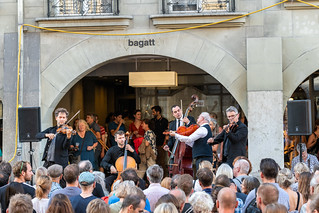
Vołosi (POL) Klassik World Jazz Fusion


The Genesis of Jazz-Rock Synthesis
Jazz fusion, often termed jazz-rock, emerged as a pivotal development in late 1960s popular music, representing a deliberate and often audacious fusion of disparate musical traditions. Musicians, many of whom had grown up immersed in both the sophisticated harmonic language and improvisational ethos of jazz and the visceral energy of rock and roll, funk, and R&B, sought to bridge these seemingly distinct worlds. This era saw jazz musicians, influenced by the burgeoning electric instrument revolution in rock, begin to incorporate amplified instruments like the electric guitar, electric bass, and various electronic keyboards (electric pianos, organs, and early synthesizers) into their ensembles.
Pioneers like Miles Davis, with albums such as 'In a Silent Way' and 'Bitches Brew,' were instrumental in popularizing this new sound, demonstrating that jazz could embrace electrification and rock rhythms without sacrificing its core improvisational spirit. This marked a significant departure from the acoustic traditions that had largely defined jazz for decades, opening up a vast new sonic palette.
Architectures of Sound
The structural complexity of jazz fusion arrangements is remarkably diverse, reflecting the genre's experimental nature. Some pieces are characterized by minimalist, groove-based vamps, often anchored to a single chord or a short, repeating harmonic progression. These serve as fertile ground for extended improvisations, allowing soloists to explore melodic and rhythmic ideas within a relatively stable framework.
Conversely, many fusion compositions exhibit a high degree of sophistication, drawing parallels with progressive rock. These works might feature intricate, evolving chord progressions, unconventional time signatures (e.g., 7/8, 11/4), polyrhythms, and elaborate counterpoint, where multiple independent melodic lines are interwoven. Regardless of the arrangement's complexity, improvisation remains a cornerstone, a direct lineage from traditional jazz.
These improvised sections can vary significantly in length and intensity, providing a dynamic and often unpredictable element to the music, making each performance a unique artistic statement.
The Electric Palette
The sonic identity of jazz fusion is intrinsically linked to its instrumentation, which marked a significant departure from earlier jazz styles. While traditional jazz instruments such as trumpets, saxophones, trombones, and clarinets often remained integral, their role and sound were frequently recontextualized within an amplified framework. The electric guitar, with its capacity for distortion, sustain, and a wide array of effects pedals, became a dominant voice, capable of both searing solos and textural soundscapes.
Electric pianos (like the Fender Rhodes and Wurlitzer) and Hammond organs provided rich, often percussive or sustained harmonic textures, distinct from the acoustic piano. Synthesizers, in their early development, offered unprecedented possibilities for creating novel timbres and electronic sounds. The electric bass guitar, with its punchy attack and ability to lay down driving, syncopated lines, replaced the acoustic double bass as the primary low-end instrument for many fusion ensembles, contributing a powerful rhythmic foundation that resonated with rock and funk sensibilities.
Evolution and Legacy
While the 1970s are often considered the golden age of jazz fusion, the genre's influence and evolution continued unabated. The decade's intense experimentation paved the way for further stylistic diversification in the 1980s and beyond. One significant offshoot was the development of smooth jazz, which retained some of fusion's harmonic and instrumental characteristics but emphasized a more polished, radio-friendly sound with less emphasis on complex improvisation.
Concurrently, many artists continued to explore the more adventurous and experimental edges of fusion, pushing harmonic boundaries and incorporating influences from world music, electronic dance music, and avant-garde jazz. The legacy of jazz fusion lies not just in its specific recordings but in its broader impact on musical pedagogy and practice. It demonstrated that genre boundaries are fluid and that cross-pollination of musical ideas can lead to innovation.
Today, the spirit of fusion persists in contemporary artists who seamlessly blend jazz improvisation with elements of hip-hop, electronic music, rock, and global sounds, proving that the quest for new sonic territories remains a vital force in music.
Go deeper
Frequently Asked Questions
What is jazz fusion?+
Who helped start jazz fusion?+
Why do jazz fusion musicians use electric instruments?+
How is jazz fusion different from traditional jazz?+
What is improvisation in jazz fusion?+
Based on content from Wikipedia · Licensed under CC BY-SA 4.0