Miguel Ángel

Delve into the profound artistic genius of Miguel Ángel, whose unparalleled skill in sculpture, painting, and architecture defined the High Renaissance and left an indelible mark on Western art.

Images

Miguel Ángel López en el podio del Tour de Suiza 2016
Miguel Ángel López en el podio del Tour de Suiza 2016

openverse
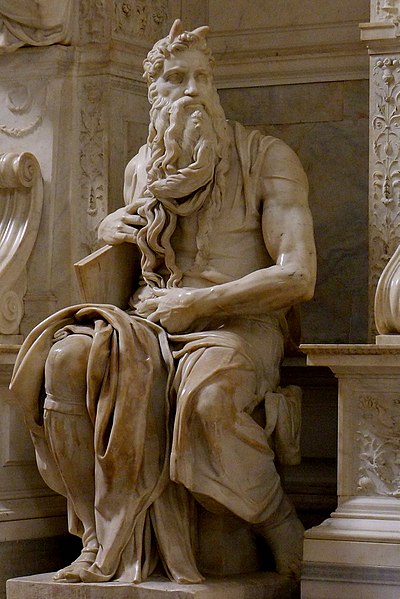
<div class='fn'> <div style='font-weight:bold;display:inline-block;'><div style='display:inline-block' dir='ltr' lang='en'><i>Moses <a href='https://www.wikidata.org/wiki/Q1989744#P1476' title='Edit this at Wikidata'><img alt='Edit this at Wikidata' src='https://upload.wikimedia.org/wikipedia/commons/thumb/8/8a/OOjs_UI_icon_edit-ltr-progressive.svg/10px-OOjs_UI_icon_edit-ltr-progressive.svg.png' decoding='async' width='10' height='10' style='vertical-align: text-top' srcset='https://upload.wikimedia.org/wikipedia/commons/thumb/8/8a/OOjs_UI_icon_edit-ltr-progressive.svg/15px-OOjs_UI_icon_edit-ltr-progressive.svg.png 1.5x, https://upload.wikimedia.org/wikipedia/commons/thumb/8/8a/OOjs_UI_icon_edit-ltr-progressive.svg/20px-OOjs_UI_icon_edit-ltr-progressive.svg.png 2x' data-file-width='20' data-file-height='20'></a></i></div></div><div style='display: none;'>title QS:P1476,en:'Moses <a href='https://www.wikidata.org/wiki/Q1989744#P1476' title='Edit this at Wikidata'><img alt='Edit this at Wikidata' src='https://upload.wikimedia.org/wikipedia/commons/thumb/8/8a/OOjs_UI_icon_edit-ltr-progressive.svg/10px-OOjs_UI_icon_edit-ltr-progressive.svg.png' decoding='async' width='10' height='10' style='vertical-align: text-top' srcset='https://upload.wikimedia.org/wikipedia/commons/thumb/8/8a/OOjs_UI_icon_edit-ltr-progressive.svg/15px-OOjs_UI_icon_edit-ltr-progressive.svg.png 1.5x, https://upload.wikimedia.org/wikipedia/commons/thumb/8/8a/OOjs_UI_icon_edit-ltr-progressive.svg/20px-OOjs_UI_icon_edit-ltr-progressive.svg.png 2x' data-file-width='20' data-file-height='20'></a>'</div> <div style='display: none;'>label QS:Len,'Moses <a href='https://www.wikidata.org/wiki/Q1989744#P1476' title='Edit this at Wikidata'><img alt='Edit this at Wikidata' src='https://upload.wikimedia.org/wikipedia/commons/thumb/8/8a/OOjs_UI_icon_edit-ltr-progressive.svg/10px-OOjs_UI_icon_edit-ltr-progressive.svg.png' decoding='async' width='10' height='10' style='vertical-align: text-top' srcset='https://upload.wikimedia.org/wikipedia/commons/thumb/8/8a/OOjs_UI_icon_edit-ltr-progressive.svg/15px-OOjs_UI_icon_edit-ltr-progressive.svg.png 1.5x, https://upload.wikimedia.org/wikipedia/commons/thumb/8/8a/OOjs_UI_icon_edit-ltr-progressive.svg/20px-OOjs_UI_icon_edit-ltr-progressive.svg.png 2x' data-file-width='20' data-file-height='20'></a>'</div> <div style='display: none;'>label QS:Lit,'Mosè'</div> <div style='display: none;'>label QS:Lyue,'摩西 (米高安哲羅)'</div> <div style='display: none;'>label QS:Lfr,'Moïse'</div> <div style='display: none;'>label QS:Leu,'Moises'</div> <div style='display: none;'>label QS:Ltr,'Musa’nın Hükmü'</div> <div style='display: none;'>label QS:Lel,'Ο Μωυσής του Μιχαήλ Άγγελου'</div> <div style='display: none;'>label QS:Lru,'Моисей'</div> <div style='display: none;'>label QS:Lfa,'موسی'</div> <div style='display: none;'>label QS:Lde,'Moses'</div> <div style='display: none;'>label QS:Lpt,'Moisés'</div> <div style='display: none;'>label QS:Lca,'penelope'</div> <div style='display: none;'>label QS:Lhy,'Մովսես (Միքելանջելո)'</div> <div style='display: none;'>label QS:Lzh,'梅瑟 (米开朗基罗)'</div> <div style='display: none;'>label QS:Lda,'Moses'</div> <div style='display: none;'>label QS:Lsl,'Mojzes (Michelangelo)'</div> <div style='display: none;'>label QS:Lja,'モーゼ像 (ミケランジェロ)'</div> <div style='display: none;'>label QS:Lko,'모세'</div> <div style='display: none;'>label QS:Lid,'Musa'</div> <div style='display: none;'>label QS:Lsv,'Mose'</div> <div style='display: none;'>label QS:Lpl,'Mojżesz'</div> <div style='display: none;'>label QS:Luk,'Мойсей'</div> <div style='display: none;'>label QS:Lnl,'Mozes'</div> <div style='display: none;'>label QS:Les,'Moisés de Miguel Ángel'</div> <div style='display: none;'>label QS:Lhe,'משה'</div> <div style='display: none;'>label QS:Lfi,'Mooses'</div> <div style='display: none;'>label QS:Lgl,'Moisés'</div> <div style='display: none;'>label QS:Lar,'منحوتة قبر يوليوس الثاني'</div> </div>
Miguel Ángel López Nicolás
Inauguración del museo Miguel Ángel Martínez
Miguel Ángel García, Feb. 2014 (1)
Miguel Ángel Granados Chapa
Miguel Ángel Félix Gallardo
Miguel Ángel Rodríguez Echeverría
EL DAVID DI MICHELANGELO, UNA VISIÓ MOLT PARTICULAR ('El David de Miguel Ángel, una visión muy particular', 'David of Michelangelo, a very peculiar view' )
Miguel Ángel Angulo
Miguel Ángel Gañán's Tessellation Cube
Coat of arms of Miguel Ángel Ayuso Guixot (cardinal)

From Florentine Apprenticeship to Artistic Sovereignty

Michelangelo Buonarroti (1475-1564) emerged from the vibrant artistic milieu of Florence, Italy, to become one of history's most revered artists. His early training under Domenico Ghirlandaio and subsequent tutelage in the Medici gardens exposed him to classical antiquity and humanist ideals, profoundly shaping his artistic vision. Unlike many contemporaries who specialized, Michelangelo excelled across multiple disciplines-sculpture, painting, and architecture-demonstrating a rare polymathic talent.

His early sculptures, such as the Bacchus and the Pietà, already showcased a mastery of form, emotion, and technical virtuosity that set him apart. The Pietà, in particular, with its delicate rendering of Mary's grief and Christ's repose, established his reputation as a sculptor of unparalleled skill, capable of imbuing cold marble with profound human sentiment and theological depth.

The Sistine Chapel

The commission to paint the Sistine Chapel ceiling (1508-1512) by Pope Julius II was a monumental challenge that Michelangelo initially resisted, considering himself primarily a sculptor. However, his execution of this vast fresco cycle is arguably his most iconic achievement. Working under arduous conditions, often lying on scaffolding, he created a breathtaking panorama of biblical narratives, from the Creation to the Flood.

The sheer scale, complexity, and emotional intensity of the figures, particularly the iconic 'Creation of Adam,' revolutionized fresco painting. This work not only showcased his artistic genius but also his profound understanding of theology and human anatomy, creating a visual testament to divine power and the human condition that continues to inspire awe and scholarly analysis centuries later.

The Enduring Power of Form and Emotion

Miguel Ángel's significance extends beyond mere technical brilliance; his art possesses a profound psychological and spiritual resonance. His sculptures, like the colossal Statue of David, are not just anatomically perfect but are imbued with a potent sense of inner resolve and heroic potential, becoming potent symbols of Florentine civic pride and Renaissance humanism. His figures often exhibit a powerful musculature and dynamic poses, reflecting his deep understanding of the human form, which he saw as a vessel for divine spirit.

This ability to convey intense emotion and spiritual depth through physical representation is a hallmark of his work, making his art eternally relevant and capable of speaking to universal human experiences across different eras and cultures.

Architectural Vision and Lasting Legacies

Beyond his celebrated paintings and sculptures, Miguel Ángel made significant contributions to architecture, most notably his design for the dome of St. Peter's Basilica in Rome. This colossal dome, completed after his death, is a crowning achievement of Renaissance architecture, symbolizing the grandeur and spiritual authority of the Catholic Church.

His architectural work often mirrored the dynamism and monumental scale of his other creations, demonstrating a holistic approach to artistic expression. His influence permeated subsequent generations of artists and architects, solidifying his status as a pivotal figure whose innovations in composition, form, and emotional expression fundamentally shaped the trajectory of Western art and culture.

Beyond the Brush and Chisel

Miguel Ángel's influence transcended his immediate artistic output, impacting the very definition of artistic genius and the role of the artist in society. His relentless pursuit of perfection and his profound engagement with classical themes and Christian narratives set a new standard for artistic ambition. His works became benchmarks against which future artists measured themselves, and his innovative techniques, particularly in fresco and marble carving, were studied and emulated for centuries.

The concept of the artist as a divinely inspired genius, capable of creating works of profound beauty and meaning, was largely solidified by his example, making him a foundational figure in the history of art and a enduring symbol of human creative potential.

See also

Was this helpful?
W

Based on content from Wikipedia · Licensed under CC BY-SA 4.0