

Microstructure: The Tiny Building Blocks of Everything!
Images

Microstructure


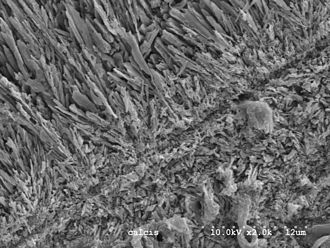


The Microscopic Realm
Microstructure refers to the structural characteristics of a material at a microscopic scale, typically observable with an optical microscope at magnifications exceeding 25x. This encompasses features such as grain size and shape, the arrangement of different phases within a material, and the presence and distribution of defects like pores, dislocations, and inclusions. The study of microstructure is fundamental to materials science and engineering because these microscopic features exert a profound influence on a material's macroscopic physical and mechanical properties.
For metals, ceramics, polymers, and composites, controlling microstructure is paramount to achieving desired performance characteristics, including strength, toughness, ductility, hardness, wear resistance, and resistance to corrosion or fatigue. The ability to observe and analyze microstructure has evolved significantly, from early optical microscopy to advanced techniques like scanning electron microscopy (SEM) and transmission electron microscopy (TEM) for even finer details.
A Historical Evolution
The understanding of material structure has evolved dramatically over centuries. Early civilizations worked with materials empirically, developing techniques for metalworking and ceramics without a deep theoretical understanding of their internal makeup. The scientific revolution and the invention of the microscope in the 17th century marked a turning point, allowing for the direct observation of microscopic features.
Early metallurgists like Henry Clifton Sorby pioneered the use of microscopy to study the structure of metals, revealing the existence of grains and phases. This laid the groundwork for the development of materials science as a distinct discipline in the late 19th and early 20th centuries. Advances in physics, particularly quantum mechanics, further enabled the understanding of atomic-level structures (crystal structure) and their relationship to microstructure, leading to the sophisticated material design capabilities we have today.
The Structure-Property Paradigm
The relationship between microstructure and material properties is governed by fundamental physical principles. For crystalline materials, grain boundaries act as barriers to dislocation movement, thus increasing strength and hardness (Hall-Petch effect). The size, shape, and distribution of reinforcing phases in composite materials significantly affect their load-bearing capacity and fracture toughness.
Pores, or voids, act as stress concentrators and crack initiation sites, drastically reducing mechanical integrity. Conversely, specific microstructural arrangements, such as the presence of multiple phases with differing properties, can be engineered to enhance toughness by impeding crack propagation. For example, in some steels, the careful control of phase transformations during heat treatment creates microstructures that offer an exceptional balance of strength and ductility, crucial for automotive and aerospace applications.
Understanding these mechanisms allows for predictive material design and optimization.
Hierarchical Structures
Materials science recognizes a hierarchy of structures, each influencing the one above it. At the most fundamental level is the crystal structure, which describes the ordered arrangement of atoms. Below the resolution of optical microscopes lies the nanostructure, encompassing features on the nanometer scale, such as nanoparticles or nanoscale grains.
Microstructure, as defined by optical microscopy, bridges the gap between nanostructure and the macroscopic properties we observe. Beyond microstructure, larger-scale features like macroscopic defects or composite layup also play a role. The interplay between these hierarchical levels is critical.
For instance, the atomic arrangement within a crystal (crystal structure) dictates its fundamental mechanical behavior, while the way these crystals pack into grains (microstructure) influences how dislocations move and how the material deforms under load. Nanostructure can further refine these properties, offering enhanced strength or novel electronic behaviors.
Applications and Future Frontiers
The deliberate manipulation of microstructure is central to modern engineering. In aerospace, lightweight alloys with optimized microstructures are essential for fuel efficiency and performance. In biomedical engineering, biocompatible ceramics and polymers with tailored microstructures are used for implants and prosthetics.
The development of advanced manufacturing techniques like additive manufacturing (3D printing) allows for unprecedented control over microstructure during fabrication, enabling the creation of complex geometries with novel property profiles. Future research focuses on designing materials with 'smart' microstructures that can adapt to changing environmental conditions, self-heal damage, or exhibit unique energy storage capabilities. The ongoing exploration of nanoscale phenomena and their integration into macroscopic material design promises continued innovation across all technological sectors.
Go deeper
Frequently Asked Questions
What is microstructure and why is it important?+
How do scientists look at microstructure?+
Why do grain boundaries make a metal stronger?+
What happens if a material has many pores or holes?+
How can changing the microstructure help make better cars or airplanes?+
Based on content from Wikipedia · Licensed under CC BY-SA 4.0