

Mario Andretti
Images

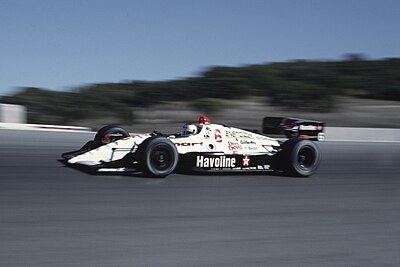
Mario Andretti - 1998 Goodwood Festival of Speed (15774337651)



From Displacement to Dominance
Mario Gabriele Andretti's life story is one of resilience and extraordinary talent. Born in Montona, Kingdom of Italy, in 1940, his early years were marked by the upheaval of the Istrian–Dalmatian exodus. This displacement led his family to emigrate to Nazareth, Pennsylvania, in 1955, a pivotal moment that would redirect his destiny towards the burgeoning American motorsport scene.
It was in this new homeland that Mario, alongside his twin brother Aldo, discovered their shared passion for racing. Beginning on the challenging dirt tracks, they honed their raw driving skills, a foundation that would prove invaluable as they ascended through the ranks. By 1964, Mario was competing in the demanding USAC Championship Car series, setting the stage for a career that would redefine racing excellence and demonstrate the power of perseverance against adversity.
The Quintessential Racer
What truly sets Mario Andretti apart is his unparalleled versatility across the most demanding forms of motorsport. He is not merely a winner; he is a champion in virtually every category he entered. His 1978 Formula One World Drivers' Championship with Lotus stands as a monumental achievement, a testament to his ability to compete and win at the highest international level.
Yet, his prowess extended far beyond F1. He secured four IndyCar National Championship titles and captured the iconic Indianapolis 500 in 1969, a race considered the 'Greatest Spectacle in Racing.' Furthermore, he conquered the fiercely competitive stock car world by winning the Daytona 500 in 1967, often referred to as the 'Super Bowl of NASCAR.' His three victories in the grueling 12 Hours of Sebring endurance race underscore his exceptional stamina, strategic acumen, and ability to perform under extreme pressure over extended periods, making him a truly complete racing driver.
Formula One's Global Stage
Mario Andretti's foray into Formula One, the pinnacle of global motorsport, was marked by immediate impact and sustained success. His debut in 1968 at the United States Grand Prix saw him achieve a remarkable pole position, signaling his potential. Over 14 seasons, he amassed 12 Grand Prix victories, competing for legendary teams such as Lotus and Ferrari.
His crowning achievement came in 1978 when he secured the World Drivers' Championship, becoming only the second American to achieve this prestigious title. This victory was not just personal glory; it was a significant moment for American motorsport on the international stage. Andretti's ability to adapt to different cars, tracks, and racing philosophies within Formula One showcased his profound understanding of racing dynamics and his exceptional talent for extracting maximum performance from cutting-edge machinery.
An Enduring Influence
Mario Andretti's impact transcends his own driving achievements, extending into the creation of a formidable racing dynasty. His sons, Michael and Jeff, followed in his footsteps, with Michael achieving significant success, including a CART title in 1991, and later becoming a team owner. This familial legacy has kept the Andretti name at the forefront of motorsport for decades.
Even after retiring from full-time competition in IndyCar in 1994, Mario remained an active and influential figure. His record as the oldest IndyCar winner at 53 in 1993 is a testament to his enduring skill and competitive spirit. His continued involvement, including his upcoming role on the board of directors for a Formula One team, demonstrates his lifelong dedication to the sport and his commitment to shaping its future, solidifying his position as a true icon whose influence continues to resonate.
The Mechanics of Speed
While Mario Andretti's driving skill was paramount, his success was also intertwined with the evolution of racing technology. Formula One cars, for instance, are marvels of engineering, designed for extreme speed and aerodynamic efficiency. They feature powerful V6 turbo-hybrid engines that can produce over 1,000 horsepower, allowing them to accelerate from 0 to 60 mph in under 2.5 seconds.
The chassis are constructed from lightweight yet incredibly strong carbon fiber composites, enabling precise handling and cornering speeds that defy gravity. IndyCars share similar principles of high performance and aerodynamic downforce, though with specific regulations that differentiate them. Stock cars, like those in NASCAR, are built with powerful V8 engines and robust chassis, designed for close-quarters racing on oval tracks.
Andretti's ability to master these diverse machines, each with its unique handling characteristics and performance envelopes, highlights his exceptional adaptability and deep understanding of vehicle dynamics.
See also
Frequently Asked Questions
What makes Mario Andretti a special race car driver?+
How did Mario Andretti start racing?+
Which big races did Mario Andretti win?+
Did Mario Andretti have a family that also raced?+
When did Mario Andretti stop racing full time?+
Based on content from Wikipedia · Licensed under CC BY-SA 4.0