

Makalu: The Awesome Mountain!
Images
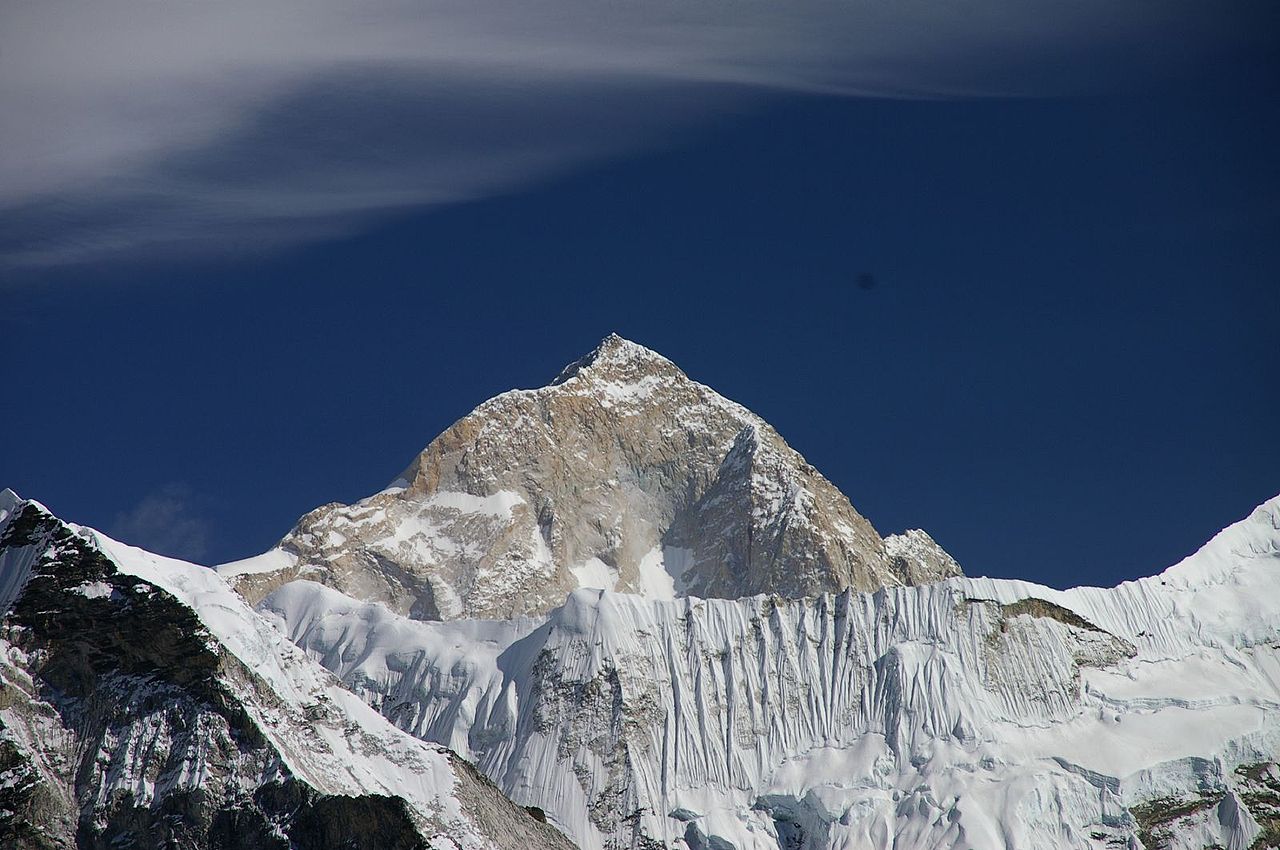
Makalu


Makalu's Apex
Makalu, designated with the scientific classification of an 'eight-thousander,' stands as the fifth-highest mountain on Earth, its summit reaching an imposing 8,485 meters (27,838 feet) above sea level. Situated within the formidable Mahalangur Himalayas, a sub-range of the greater Himalayan chain, Makalu occupies a strategic position on the international border between Nepal and the Tibet Autonomous Region of China.
Its geographical proximity to Mount Everest, located approximately 19 kilometers (12 miles) to the northwest, places it within one of the planet's most concentrated zones of extreme elevation. What distinguishes Makalu is its iconic morphology: a near-perfect, four-sided pyramid. This sharp, angular profile is a result of complex geological processes and subsequent glacial erosion, setting it apart from the more rounded or jagged summits common in the region.
Its isolation as a peak, rather than part of a continuous ridge, further accentuates its dramatic presence against the sky.
The Makalu Massif
The Makalu massif is not solely defined by its main summit; it encompasses significant subsidiary peaks that contribute to its formidable scale and mountaineering complexity. Approximately three kilometers to the north-northwest of the main summit lies Kangchungtse, often referred to as Makalu II. This prominent subsidiary peak reaches an elevation of 7,678 meters (25,190 feet), presenting its own substantial climbing challenge.
Further to the north-northeast, separated by a broad plateau, is Chomo Lonzo, a peak that attains 7,804 meters (25,604 feet). Kangchungtse and Chomo Lonzo are linked by a narrow, high-altitude saddle at approximately 7,200 meters (23,600 feet), forming a challenging traverse for experienced mountaineers. These associated peaks and the intricate ridge systems connecting them create a vast and imposing mountain complex, offering diverse routes and objectives for high-altitude climbers.
The Allure and Peril of Ascending Makalu
Makalu represents one of the ultimate challenges in high-altitude mountaineering. Its ascent is notoriously difficult, demanding exceptional physical conditioning, advanced technical climbing skills, and profound mental resilience. The mountain's steep, exposed faces, propensity for severe weather, and the extreme physiological stress of operating at such altitudes combine to create a high-risk environment.
Unlike some of its more frequently climbed neighbors, Makalu's technical demands and remoteness mean it attracts a more select group of climbers, typically those with extensive experience on other eight-thousanders. The thin air necessitates the use of supplemental oxygen for most climbers, and the routes often involve navigating treacherous icefalls, sheer rock walls, and knife-edge ridges. The successful ascent of Makalu is a testament to human endurance and mastery over one of nature's most formidable environments.
Geological Genesis and Climatic Sculpting of Makalu
The majestic form of Makalu is deeply rooted in the dramatic geological history of the Indian subcontinent's collision with the Eurasian Plate. This ongoing tectonic convergence, which began tens of millions of years ago, is responsible for the uplift of the entire Himalayan range. Makalu's pyramidal shape is not merely a product of this immense compressional force but also a result of prolonged and intense erosion by glaciers, wind, and freeze-thaw cycles.
These powerful natural agents have carved and sculpted the uplifted rock mass over millennia, sharpening its edges and defining its iconic silhouette. The mountain's location also subjects it to the monsoon weather systems, which bring heavy snowfall and contribute to avalanche risk, further shaping its dynamic landscape. Makalu's existence is a continuous interplay between deep geological time and the relentless forces of climate and weather.
Makalu's Place in the Pantheon of Peaks
As the fifth-highest mountain on Earth, Makalu holds a significant place in the global mountaineering community and in the study of extreme environments. Its status as an 'eight-thousander' places it among the elite peaks that define the limits of human exploration. While Mount Everest garners the most public attention, Makalu is revered by climbers for its aesthetic beauty and technical difficulty.
Its unique pyramidal form makes it a subject of interest for geologists and geographers studying mountain formation and erosion processes. Furthermore, Makalu serves as a critical indicator of the health of high-altitude ecosystems and the impacts of climate change on these sensitive regions. Its continued presence challenges humanity's drive for exploration while reminding us of the immense power and grandeur of the natural world.
See also
Frequently Asked Questions
What is Makalu?+
How tall is Makalu?+
Where is Makalu located?+
Why does Makalu look like a pyramid?+
What makes climbing Makalu hard?+
Based on content from Wikipedia · Licensed under CC BY-SA 4.0