

Lydia: Land of Shiny Gold!
Images
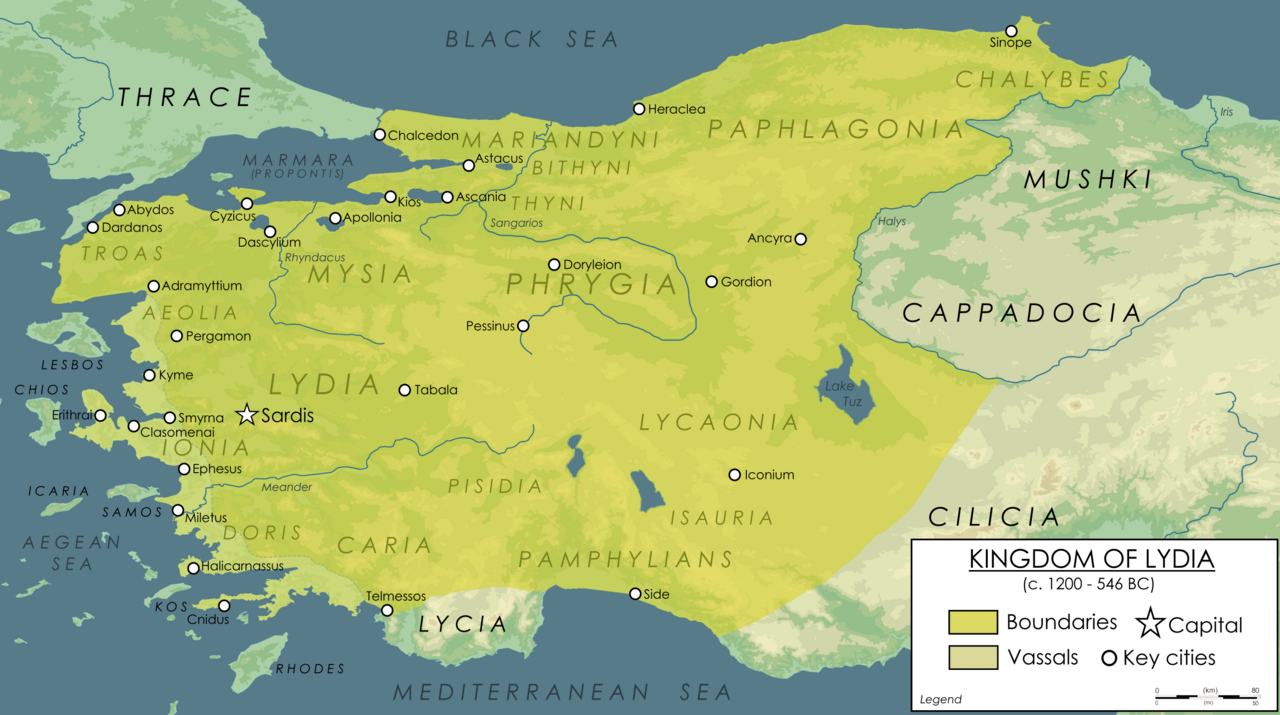
Lydia
The Lydian Innovation
The Lydian kingdom, situated in western Anatolia during the 7th and 6th centuries BCE, stands as a monumental figure in economic history, primarily for its revolutionary introduction of coinage. Prior to this innovation, societies relied on barter or the use of unstandardized precious metals, which presented significant challenges in terms of valuation, portability, and divisibility. The Lydians, leveraging the natural abundance of electrum-a naturally occurring alloy of gold and silver found in the Pactolus and Hermus rivers-began minting coins.
These were not merely lumps of metal but were stamped with official seals, signifying guaranteed weight and purity. This standardization was the critical leap forward, transforming a commodity into a true medium of exchange. This invention facilitated trade, reduced transaction costs, and laid the groundwork for the development of more complex financial instruments and markets.
The Lydian coinage system was so effective that it was rapidly adopted and adapted by neighboring cultures, most notably the Greeks, who further refined the concept and spread it throughout the Mediterranean world.
The Reign of Croesus and the Zenith of Lydian Prosperity
The reign of King Croesus (circa 560–546 BCE) represents the apogee of Lydian power and affluence. Croesus, whose name became synonymous with immense wealth, presided over a kingdom strategically positioned to control vital overland trade routes connecting the Aegean coast with the interior of Asia. The Lydians' mastery of coinage, particularly their production of high-quality gold and silver staters, fueled this economic dominance. Their capital, Sardis, was a cosmopolitan hub, a testament to their commercial success and cultural sophistication.
Historical accounts, such as those by Herodotus, describe the Lydians as the first to establish permanent retail shops and the first to use gold and silver for coinage. This economic prowess enabled significant investment in infrastructure, monumental architecture, and a powerful military. However, this very wealth also made Lydia a prime target for expansionist empires, ultimately leading to its conquest by Cyrus the Great of Persia in 546 BCE, an event that marked the end of Lydian independence but not the enduring legacy of its economic innovations.
Enduring Impact
The invention of coinage by the Lydians was far more than a simple convenience; it was a fundamental catalyst for economic and social development. By providing a universally accepted and easily divisible medium of exchange, Lydian coins dramatically lowered the friction in trade, enabling greater specialization of labor and fostering the growth of urban centers and complex economies. This facilitated the accumulation of capital, which in turn funded further innovation, exploration, and the development of sophisticated administrative and governmental structures.
The concept of money as we understand it-a store of value, a unit of account, and a medium of exchange-was effectively born in Lydia. Its adoption by the Greeks and subsequent spread across the ancient world profoundly shaped the trajectory of Western civilization, influencing everything from the rise of city-states to the expansion of empires and the development of global commerce. The Lydian legacy is embedded in the very fabric of modern economic systems.
A Crossroads of Culture and Commerce
The Lydian capital, Sardis, was a vibrant metropolis that epitomized the kingdom's prosperity and strategic importance. Situated in a fertile plain and near the Pactolus River, it was a natural nexus for trade routes linking the Aegean Sea to the vast inland territories of Asia. The city was renowned for its magnificent structures, including grand temples, elaborate palaces, and extensive fortifications, reflecting the wealth generated by Lydian commerce.
Archaeological excavations at Sardis have unearthed evidence of a sophisticated urban society, with advanced metallurgy, textile production, and a thriving marketplace. The city served as a melting pot of cultures, influenced by Hittite, Greek, and Persian traditions, yet it retained its distinct Lydian character. The administrative and economic systems developed in Sardis, particularly its pioneering use of coinage, set a precedent that would influence urban development and economic organization for centuries to come, solidifying its place as a crucial site in ancient history.
Go deeper
Frequently Asked Questions
What was special about Lydia?+
How did Lydia make its coins?+
Who was King Croesus?+
Why did other countries copy Lydia's coins?+
What happened to Lydia after it became rich?+
Based on content from Wikipedia · Licensed under CC BY-SA 4.0