

Locusts: The Super Swarmers!
Images

Locust




The Ecology of Transformation
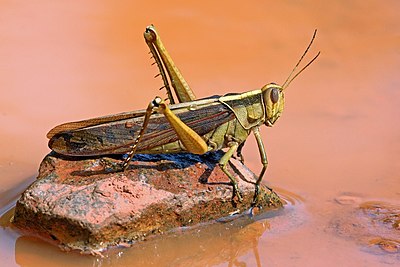
Locusts, belonging to the family Acrididae, are renowned for their remarkable capacity for phase polyphenism, a phenomenon where environmental cues trigger dramatic shifts in behavior, physiology, and morphology. In their solitary phase, locusts are cryptic, avoiding conspecifics and exhibiting individualistic foraging patterns. However, under conditions of increased population density, often following periods of favorable rainfall that lead to abundant vegetation, locusts enter the gregarious phase.
This transformation is initiated by tactile and olfactory stimuli from increased encounters with other locusts. The resulting gregarious locusts are darker in color, more active, and exhibit a strong tendency to aggregate. They develop a migratory urge, forming cohesive bands of nymphs that march across the landscape and eventually develop into massive flying swarms.
This phase change is a critical adaptation that allows locusts to exploit ephemeral resource patches and survive in fluctuating environments, but it also sets the stage for devastating outbreaks.
Geographic Distribution and Outbreak Hotspots
The primary regions susceptible to locust outbreaks are characterized by arid and semi-arid climates that experience cyclical rainfall patterns. These include the 'recruitment areas' or 'outbreak zones' across North Africa, the Sahel, the Middle East, and parts of Southwest Asia. Key species like the Desert Locust (Schistocerca gregaria) have a vast range, stretching from West Africa to India.
Other significant species include the African migratory locust (Locusta migratoria migratorioides) and the Red locust (Nomadacris septemfasciata). Outbreaks often originate in remote areas where monitoring is challenging. Favorable conditions, such as prolonged drought followed by significant rainfall, can lead to a surge in locust populations.
These populations then migrate, often following prevailing winds, and can spread across hundreds of thousands of square kilometers, impacting multiple countries and requiring coordinated international responses.
Voracious Consumption and Socioeconomic Repercussions
Locusts are polyphagous herbivores with an insatiable appetite, capable of consuming nearly any green vegetation they encounter. A single swarm, which can comprise billions of individuals and cover vast areas, represents an immense biomass with a correspondingly enormous food requirement. Estimates suggest that a swarm covering 100 square kilometers can consume up to 100 metric tons of vegetation per day, equivalent to the food intake of 2,500 people or 10,000 elephants.
The impact of such consumption on agriculture is catastrophic. Locust plagues can decimate staple crops, cash crops, and pastureland, leading to severe food shortages, famine, and economic devastation for agrarian communities. The cost of controlling locust outbreaks, including monitoring, spraying, and recovery efforts, can run into hundreds of millions of dollars annually, highlighting their significant global economic and humanitarian impact.
Ecological Significance and Modern Management Strategies
While locusts are a natural component of their ecosystems, their potential for large-scale destruction necessitates sophisticated management strategies. Understanding the ecological triggers for swarming, such as rainfall patterns, vegetation availability, and population dynamics, is crucial for early warning systems. International organizations like the Food and Agriculture Organization of the United Nations (FAO) play a vital role in coordinating monitoring and control efforts across affected regions.
Modern management relies on a combination of ground surveys, remote sensing (satellite imagery), and meteorological data to predict outbreak areas. Control methods include the application of insecticides, often applied as ultra-low volume (ULV) sprays to minimize environmental impact, and increasingly, the use of biopesticides derived from naturally occurring pathogens like the fungus Metarhizium acridum. Integrated pest management approaches aim to suppress locust populations before they reach plague proportions, thereby safeguarding food security and livelihoods.
See also
Frequently Asked Questions
What makes locusts change from being alone to forming big swarms?+
Why do locusts eat so much food when they swarm?+
Where do locust swarms usually start?+
How big can a locust swarm be and how much food does it eat?+
How do people try to stop locust swarms from hurting crops?+
Based on content from Wikipedia · Licensed under CC BY-SA 4.0