

Leo von Caprivi
Images

Bismarck en zijne opvolgers (originele titel op object), RP-P-1919-109X


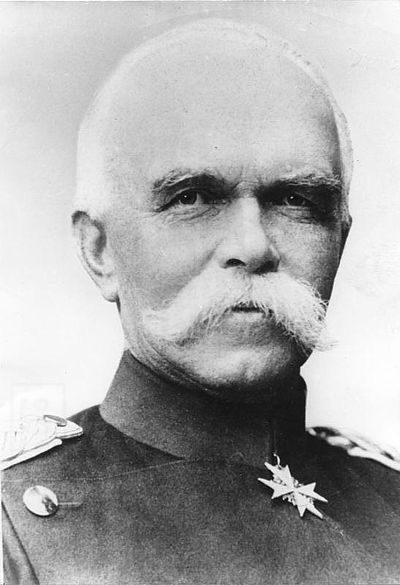


The General's Mandate
Upon succeeding Otto von Bismarck in March 1890, Leo von Caprivi inherited a German Empire at a critical juncture. As a respected general with a background in military administration, Caprivi brought a different style of leadership to the chancellorship. His initial mandate, influenced by Kaiser Wilhelm II's desire for a 'New Course,' involved reassessing Germany's intricate web of alliances and its burgeoning industrial economy.
Unlike Bismarck's pragmatic, often Machiavellian, approach to foreign policy, Caprivi sought a more straightforward and less entangled diplomatic strategy. His military discipline and strategic thinking were applied to the complex machinery of state, aiming to modernize and streamline governance. However, stepping into the shoes of the 'Iron Chancellor' meant facing immense expectations and the deeply entrenched political structures that Bismarck had meticulously built over decades.
Caprivi's tenure, though relatively short, would be defined by his attempts to steer Germany in new directions, often against powerful conservative forces.
Economic Modernization and Agrarian Backlash
Caprivi's domestic policy was heavily focused on fostering industrial and commercial expansion, recognizing Germany's growing manufacturing prowess. He actively pursued bilateral treaties aimed at reducing tariff barriers, a policy that aligned with a broader European trend towards freer trade. This approach was intended to stimulate German exports and integrate the nation more deeply into the global economy.
The benefits were tangible for urban centers and industrial sectors, leading to increased production and employment. However, this liberal economic agenda directly challenged the interests of Germany's powerful agrarian elite, particularly the Junkers. These conservative landowners viewed the influx of cheaper foreign agricultural products as a direct threat to their livelihoods and social standing.
The ensuing conflict between industrial and agrarian interests became a defining feature of Caprivi's chancellorship, highlighting the deep divisions within German society and the political challenges of modernization.
The Geopolitical Reorientation
Perhaps the most consequential aspect of Caprivi's chancellorship was his radical departure from Bismarck's foreign policy. He chose not to renew the Reinsurance Treaty with the Russian Empire, a cornerstone of Bismarck's strategy to isolate France and maintain peace. This decision, driven by a desire to avoid entanglement and potentially improve relations with Great Britain, is widely considered by historians to be a grave strategic error.
It effectively pushed Russia into the arms of France, creating the very Franco-Russian alliance Bismarck had worked so hard to prevent. Caprivi's attempts to forge a closer relationship with Great Britain also proved unsuccessful. His overtures were met with skepticism, and Britain, feeling rebuffed, began to strengthen its ties with other powers, notably Japan and France.
This diplomatic miscalculation significantly altered the European balance of power and contributed to the complex geopolitical landscape that would eventually lead to World War I.
A Complex Legacy
Despite the controversies surrounding his foreign policy and trade agreements, Leo von Caprivi's legacy is multifaceted. He is often commended for his refusal to continue Bismarck's repressive policies against socialists. By not renewing the anti-socialist laws, Caprivi demonstrated a willingness to allow for greater political pluralism and dissent, a progressive stance for the era.
Furthermore, he oversaw a significant reorganization of the German military, enhancing its efficiency and readiness. This military reform was crucial for maintaining Germany's position as a major European power. His downfall was ultimately precipitated by the agrarian backlash against his trade policies, which prioritized industrial growth over the concerns of the landed aristocracy.
Caprivi remains a pivotal figure, representing a period of transition and significant, albeit contested, change in German history.
See also
Based on content from Wikipedia · Licensed under CC BY-SA 4.0