

Lamborghini Huracán: The Speedy Storm Car!
Images

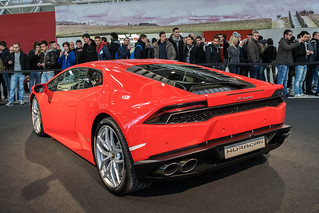
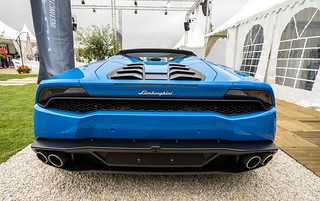
Lamborghini Huracán LP 610-4





The Genesis of the Hurricane
The Lamborghini Huracán, a name that evokes raw power and untamed energy, emerged in 2014 as the successor to the highly successful Gallardo. Lamborghini, a marque synonymous with extreme automotive artistry, aimed to create a vehicle that not only matched but surpassed its predecessor's legacy. The development process was a meticulous fusion of cutting-edge technology and the brand's distinctive, aggressive aesthetic.
Its online reveal in December 2013 built anticipation, culminating in its global debut at the 2014 Geneva Motor Show. This strategic rollout ensured maximum impact, positioning the Huracán as a formidable contender in the hypercar segment. The choice of the name 'Huracán,' meaning hurricane in Spanish, was deliberate, reflecting the car's intended performance characteristics: swift, powerful, and utterly captivating.
Architectural Prowess
At the core of the Huracán's exceptional dynamics lies its sophisticated mid-engine, rear-wheel-drive (or all-wheel-drive) architecture. This placement of the V10 engine directly behind the driver and passenger is a hallmark of high-performance sports cars, offering a critical advantage in weight distribution. By centralizing the heaviest component, Lamborghini engineers achieved an almost perfect 42/58 front-to-rear weight bias in some configurations.
This near-ideal balance is paramount for agility, enabling the Huracán to exhibit remarkable responsiveness during cornering and acceleration. The chassis is constructed using a hybrid technology, combining aluminum and carbon fiber, which provides immense structural rigidity while keeping the overall weight down. This lightweight yet strong foundation is crucial for maximizing performance and handling characteristics.
Beyond Velocity
The Lamborghini Huracán transcends its role as a mere mode of transportation; it is a cultural icon and a testament to automotive innovation. Its striking design, characterized by sharp lines and a low-slung profile, is instantly recognizable and embodies the aggressive spirit of Lamborghini. Technologically, the Huracán introduced advancements that have influenced subsequent supercar designs, from its sophisticated electronic stability control systems to its adaptive suspension.
It represents the pinnacle of what can be achieved when performance, design, and engineering converge. For enthusiasts and aspiring engineers, the Huracán serves as a benchmark, showcasing the relentless pursuit of automotive excellence and the emotional connection that can be forged with a machine. Its enduring appeal lies in its ability to deliver a visceral, exhilarating driving experience that few other vehicles can match.
Evolution of the Storm
Since its introduction, the Huracán has seen continuous evolution, with Lamborghini consistently refining its performance and introducing new variants. Each iteration builds upon the foundation of the original model, pushing the boundaries further. For instance, the introduction of the Huracán Performante showcased enhanced aerodynamics and a significant reduction in weight, leading to even more track-focused performance.
Later models, like the Evo and Tecnica, further refined the driving dynamics, engine output, and technological integration. These updates are not merely cosmetic; they represent Lamborghini's commitment to staying at the forefront of supercar technology, incorporating lessons learned from motorsport and customer feedback. This ongoing development ensures that the Huracán remains a relevant and exciting force in the automotive landscape, a true storm of innovation.
The Legacy of the Huracán
The Lamborghini Huracán's decade-long production run, from 2014 to 2024, marks a significant chapter in the company's history and the broader supercar market. It successfully bridged the gap between the Gallardo's approachable performance and the more extreme nature of the Aventador, offering a compelling blend of usability and raw power. Its impact is evident in the way it influenced design trends and performance expectations for its segment.
The Huracán demonstrated that a supercar could be both incredibly fast and remarkably engaging to drive, appealing to a wide range of automotive aficionados. As production concludes, the Huracán leaves behind a legacy of thrilling performance, iconic design, and a testament to Lamborghini's unwavering dedication to crafting extraordinary automobiles that capture the imagination.
See also
Frequently Asked Questions
What does the name "Huracán" mean?+
When was the Lamborghini Huracán first shown to the world?+
Why does the Huracán have a mid-engine design?+
What materials make the Huracán's chassis strong but light?+
How has the Huracán changed over time?+
Based on content from Wikipedia · Licensed under CC BY-SA 4.0