

Kurdish Languages: The Secret Codes of the Kurds!
Images

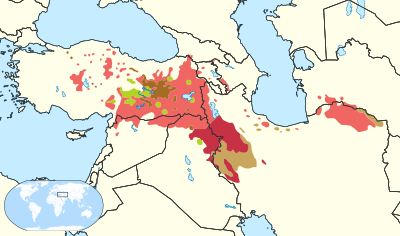
File:Kurdish Language Map.PNG





Linguistic Classification and Internal Diversity
The Kurdish languages form a distinct group within the Northwestern Iranian branch of the Indo-Iranian language family. This classification is based on shared linguistic innovations and historical connections. The primary dialect groups-Kurmanji (Northern Kurdish), Sorani (Central Kurdish), Southern Kurdish, and Laki-exhibit significant internal variation, leading some linguists to classify them as separate languages rather than dialects.
Kurmanji, spoken by the largest number of people, is characterized by its distinct phonology and grammar. Sorani, while sharing many roots, has diverged considerably, particularly in its vocabulary and syntax, and is often considered a bridge between Northern and Southern Kurdish. Southern Kurdish and Laki represent further branches with unique features, reflecting centuries of independent development and regional influences.
Historical Trajectory
The genesis of Kurdish languages can be traced back to ancient Iranian languages, likely diverging from Median or related dialects spoken in the region thousands of years ago. The Proto-Kurdish language would have been spoken by early Kurdish tribes. Over millennia, migrations, interactions with neighboring cultures (such as Armenian, Persian, Arabic, and Turkish), and political fragmentation led to the gradual differentiation of these languages.
Early written evidence of Kurdish literature, such as the poetry of Sharafkhan Bidlisi in the 16th century, provides crucial insights into the state of the language during the medieval period. The modern era has seen further evolution, influenced by standardization efforts and the impact of mass media.
Sociolinguistic Landscape and Identity
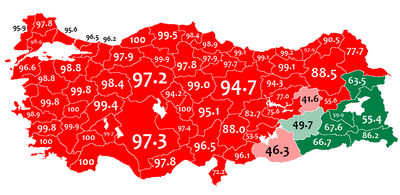
Kurdish languages are central to Kurdish identity and serve as a powerful symbol of cultural resilience in the face of political and social pressures across the Middle East. The languages are spoken by an estimated 30-40 million people, primarily in the contiguous regions of Kurdistan, spanning parts of Turkey, Iraq, Iran, and Syria. However, the sociolinguistic situation varies significantly by country.
In some areas, Kurdish languages have official or recognized status, while in others, they face suppression or marginalization. This has led to complex dynamics of language use, code-switching, and the ongoing efforts to preserve and promote Kurdish linguistic heritage through education, media, and cultural organizations.
Phonological and Grammatical Characteristics
Kurdish languages possess a rich array of phonological features, often including sounds not present in many European languages, such as uvular fricatives (e.g., /χ/ and /ʁ/) and emphatic consonants. The vowel systems can also be complex and vary between dialects. Grammatically, Kurdish languages typically exhibit ergative-absolutive alignment in past tenses, a feature common in many Iranian languages but less so in Indo-European languages like English.
They also feature noun cases, gender distinctions (though often simplified in modern usage), and complex verb conjugations that reflect tense, mood, and person. The lexicon is heavily influenced by historical contact languages, incorporating loanwords from Persian, Arabic, and Turkish.
Writing Systems and Modern Relevance
The Kurdish languages are written using several different scripts, reflecting the diverse political and cultural contexts of their speakers. Kurmanji is predominantly written using the Latin-based Hawar alphabet, developed in the 1930s, which has become widely adopted. Sorani, on the other hand, is written using a modified Arabic script, adapted to accommodate Kurdish phonemes.
Historically, Cyrillic scripts were also used in some Soviet-era publications. The existence of multiple writing systems presents challenges for standardization but also highlights the adaptability and enduring presence of the languages. Today, Kurdish languages are actively used in literature, journalism, broadcasting, and increasingly in academic and educational settings, demonstrating their continued vitality.
See also
Frequently Asked Questions
What are the main Kurdish dialects?+
Why do some people call them separate languages instead of dialects?+
Where are Kurdish languages spoken?+
How did Kurdish languages change over time?+
What makes Kurdish sounds special?+
Based on content from Wikipedia · Licensed under CC BY-SA 4.0