

Škoda Auto: The Car That Went From Bikes to Big Machines!
Images

Škoda Auto Muzeum


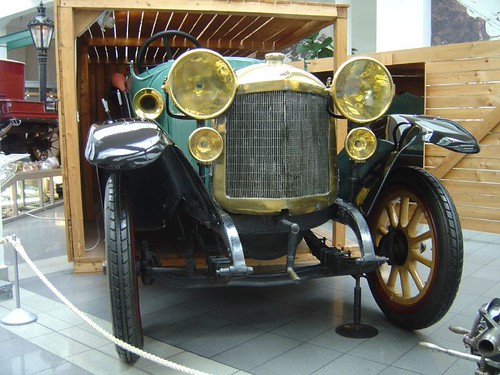


From Laurin & Klement to a National Automotive Icon
The story of Škoda Auto is deeply intertwined with the industrial history of the Czech Republic. Its roots trace back to 1895 with the founding of Laurin & Klement, initially a bicycle manufacturer that soon expanded into motorcycles and then automobiles. The official establishment of Škoda Auto as the successor company in 1925 marked a significant step, consolidating its automotive production under a unified brand.
Headquartered in Mladá Boleslav, Škoda quickly gained a reputation for robust engineering and practical design, producing vehicles that were both reliable and accessible. This early focus on quality and value proposition became a cornerstone of the brand's identity, setting it apart in a competitive European market. The company's ability to adapt and innovate from its early days laid the foundation for its resilience through various economic and political landscapes.
Navigating State Ownership and the Dawn of Privatization
The mid-20th century brought profound changes for Škoda. Following the post-war political shifts, the company was nationalized in 1948, becoming a state-owned enterprise. This period, lasting over four decades, saw Škoda operate within the planned economy of Czechoslovakia.
While production continued, the pace of innovation and global market integration was necessarily constrained compared to Western counterparts. The pivotal moment arrived with the Velvet Revolution in 1989. This ushered in an era of economic liberalization and privatization. Škoda Auto embarked on a gradual privatization process starting in 1991, a complex undertaking that aimed to modernize the company, improve efficiency, and prepare it for international competition.
This transition was crucial for its long-term survival and growth in a rapidly globalizing automotive sector.
Strategic Integration into the Volkswagen Group
The year 2000 marked a transformative milestone as Škoda Auto became a wholly owned subsidiary of the Volkswagen Group. This strategic acquisition was not merely about expanding Volkswagen's portfolio; it was a calculated move to leverage Škoda's established market presence, particularly in Central and Eastern Europe, and its reputation for value. For Škoda, integration into the VW Group provided unparalleled access to cutting-edge research and development, advanced manufacturing technologies, shared platforms, and a vast global sales and service network.
This synergy allowed Škoda to significantly enhance its product offerings, improve quality standards, and achieve economies of scale. Despite being part of a larger conglomerate, Škoda has successfully maintained its distinct brand identity, focusing on 'Simply Clever' solutions and offering a compelling balance of practicality, space, and affordability.
Economic Significance and Competitive Edge
Škoda Auto's impact resonates far beyond its production lines. It stands as a vital pillar of the Czech economy, a major employer, and a significant contributor to export revenues. The company's global reach is extensive, with sales spanning over 100 countries.
The impressive sales volume of 1.25 million units in 2018 underscores its strong market penetration. Furthermore, Škoda's financial performance is a testament to its operational efficiency and strategic positioning. Reporting an operating profit of €1.6 billion in 2017 with a substantial year-on-year increase, and achieving the second-highest profit margin among all Volkswagen AG brands, highlights its remarkable profitability.
This financial success, often achieved with models positioned as value-oriented, demonstrates a highly effective business model that balances cost-consciousness with desirable product attributes, making it a formidable competitor.
Škoda's Future
Looking ahead, Škoda Auto is actively embracing the future of mobility, with a strong focus on electrification and sustainable technologies. As part of the Volkswagen Group's broader electrification strategy, Škoda is investing heavily in developing a range of electric and plug-in hybrid vehicles. This commitment reflects the global shift towards cleaner transportation and the company's dedication to remaining at the forefront of automotive innovation.
The brand continues to build on its 'Simply Clever' philosophy, integrating smart solutions and practical features into its evolving lineup. By combining its historical strengths in engineering and value with a forward-looking approach to technology and sustainability, Škoda is well-positioned to navigate the challenges and opportunities of the modern automotive landscape, ensuring its continued relevance and success for generations to come.
See also
Frequently Asked Questions
What did Škoda Auto start out making before cars?+
When did Škoda Auto become part of the Volkswagen Group?+
Where is Škoda Auto’s main office located?+
How many Škoda cars were sold worldwide in 2018?+
Why is Škoda known for being affordable and practical?+
Based on content from Wikipedia · Licensed under CC BY-SA 4.0