

Kidneys: Your Body's Amazing Filters!
Images
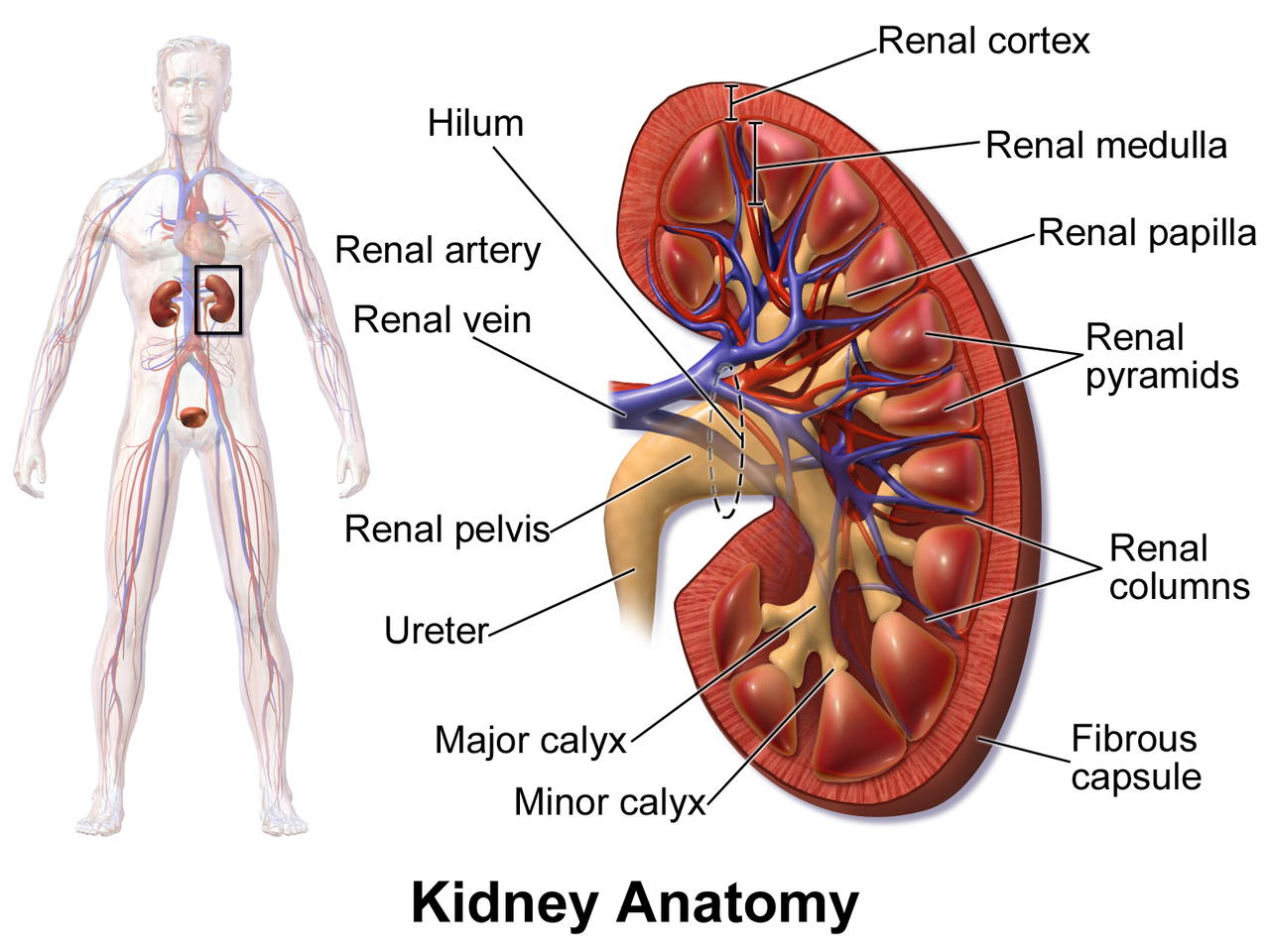
Kidney
Anatomy and Microscopic Marvels
The kidneys, paired retroperitoneal organs, are marvels of biological engineering, each roughly the size of a clenched fist. Their primary function is the meticulous filtration of blood, a process orchestrated by approximately one million microscopic functional units called nephrons within each kidney. Each nephron comprises a glomerulus (a network of capillaries) and a renal tubule.
Blood enters the glomerulus under pressure, forcing water, small solutes, and waste products into Bowman's capsule, initiating the filtration process. As this filtrate travels through the renal tubule, essential substances like glucose, amino acids, and most of the water are selectively reabsorbed back into the bloodstream. Simultaneously, specific waste products and excess ions are secreted from the blood into the tubule.
This dual action of filtration, reabsorption, and secretion ensures the precise regulation of blood composition, volume, and waste removal, a process critical for preventing uremia and maintaining cellular function.
Beyond Filtration
The kidneys' importance extends far beyond their role as filters. They are significant endocrine organs, producing vital hormones that regulate numerous bodily processes. Erythropoietin (EPO) is a key hormone produced by the kidneys that stimulates the bone marrow to produce red blood cells, thus playing a crucial role in oxygen transport and preventing anemia. Kidneys also convert vitamin D into its active form, calcitriol, which is essential for calcium absorption and bone health.
Furthermore, they are central to acid-base balance, excreting excess hydrogen ions and reabsorbing bicarbonate to maintain the blood's pH within a narrow, life-sustaining range. This complex interplay of filtration, hormonal regulation, and metabolic activity underscores the kidneys' indispensable role in maintaining overall physiological stability.
Historical Perspectives
Humanity's understanding of the kidneys has evolved dramatically over millennia. Ancient Greek physicians like Hippocrates recognized their existence and associated them with urine production, though their precise function remained obscure. The Roman physician Galen proposed theories about their role in filtering humors. During the Islamic Golden Age, physicians like Ibn Sina (Avicenna) provided more detailed anatomical descriptions.
The Renaissance brought significant anatomical advancements, with figures like Andreas Vesalius offering more accurate depictions. However, it wasn't until the 19th and 20th centuries that the intricate mechanisms of nephron function, glomerular filtration, and tubular reabsorption were elucidated through the work of scientists like William Bowman and Carl Ludwig. The development of dialysis in the mid-20th century marked a revolutionary advancement, offering a lifeline to individuals with end-stage renal disease and transforming the prognosis for kidney failure.
Homeostatic Control
The kidneys are paramount in maintaining homeostasis, particularly concerning fluid and electrolyte balance and blood pressure regulation. They achieve this through sophisticated feedback mechanisms. The renin-angiotensin-aldosterone system (RAAS), initiated by the kidneys, is a critical hormonal cascade that regulates blood pressure and fluid balance.
When blood pressure drops, the kidneys release renin, which triggers a series of events leading to vasoconstriction and sodium and water retention, thereby increasing blood pressure. Conversely, when blood volume is high, the kidneys excrete more sodium and water. They also meticulously manage electrolyte concentrations, ensuring that levels of sodium, potassium, calcium, and phosphate remain within tight physiological limits, which is vital for neuronal excitability, muscle contraction, and cellular integrity.
This constant fine-tuning is essential for preventing cellular dysfunction and maintaining organ perfusion.
Clinical Relevance and Future Directions
Kidney health is a significant global public health concern, with chronic kidney disease (CKD) affecting millions worldwide. Factors such as diabetes, hypertension, and autoimmune diseases are leading causes of kidney damage. Early detection and management are crucial to slow disease progression and prevent complications like cardiovascular disease, which is highly prevalent in CKD patients. Research continues to explore novel therapeutic strategies, including regenerative medicine approaches using stem cells to repair damaged kidney tissue and advancements in artificial kidney technologies that aim to replicate the complex functions of the natural organ more effectively.
Understanding the intricate workings of the kidney remains a cornerstone of modern medicine, with ongoing efforts to improve diagnosis, treatment, and prevention of kidney-related ailments.
Go deeper
Based on content from Wikipedia · Licensed under CC BY-SA 4.0