

Juruá River
Images

File:Rainforest river Brazil.jpg




Geomorphological Characteristics and Hydrological Significance
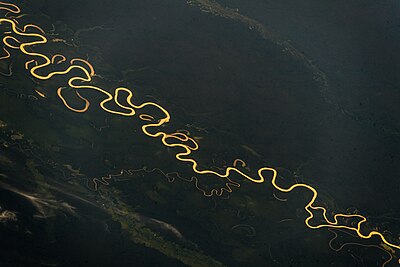
The Juruá River, a significant southern affluent of the Amazon River, presents a fascinating case study in fluvial geomorphology within the context of the vast Amazon basin. Emerging from the Ucayali highlands in east-central Peru, its headwaters are characterized by steeper gradients before transitioning into the expansive, low-lying Amazon depression. As it traverses Brazil, the Juruá develops pronounced sinuosity, a hallmark of mature rivers in alluvial plains.
Its meandering pattern, characterized by extensive oxbow lakes and point bars, is indicative of a low-gradient, sediment-rich system. The river's sluggish flow and tendency to flood are defining features, closely mirroring those of the Purus River, its geographical neighbor. This hydrological regime is intrinsically linked to the Purus várzea ecoregion, a seasonally inundated floodplain forest that thrives on the nutrient deposition from the river's annual flood pulses.
The Juruá's immense length, approximately 3,283 km (2,040 mi), and its role as one of the Amazon's longest tributaries, underscore its substantial contribution to the Amazon's overall discharge and sediment transport, playing a critical role in shaping the deltaic landscape and maintaining the ecological balance of the wider Amazonian watershed.
Navigability, Connectivity, and Socio-Economic Implications
A remarkable aspect of the Juruá River is its extensive navigability. For a substantial distance of 1,133 km (704 mi) upstream from its confluence with the Amazon, the river remains unobstructed and suitable for navigation. This characteristic transforms the Juruá into a vital transportation corridor, facilitating the movement of people and goods within a region that often lacks extensive road infrastructure.
This navigability is crucial for the socio-economic fabric of the communities situated along its banks, enabling access to markets, essential services, and fostering local economies. The river acts as a natural highway, connecting remote settlements and supporting livelihoods dependent on riverine resources. The ability to navigate such a significant portion of its length highlights the Juruá's importance not just as an ecological entity but as a fundamental element of regional connectivity and human development in the Amazon.
Its role in connecting inland areas to the broader Amazonian network is indispensable.
Conservation Strategies
The ecological significance of the Juruá River and its surrounding habitats has spurred dedicated conservation efforts. The establishment of the Médio Juruá Extractive Reserve in 1997, spanning 251,577 hectares (621,660 acres) on the river's left bank, exemplifies a model of sustainable resource management. These reserves are designed to allow local populations to continue traditional livelihoods, such as fishing and gathering forest products, while ensuring the long-term preservation of biodiversity and ecosystem integrity.
Similarly, the Baixo Juruá Extractive Reserve, created in 2001 and covering 187,982 hectares (464,510 acres), further extends this protective framework along the lower reaches of the river. The designation of the lower Juruá River in Brazil as a protected Ramsar site since 2018 represents a significant international recognition of its value as a critical wetland ecosystem. This designation underscores the global importance of the Juruá for biodiversity conservation, particularly for migratory birds and aquatic life, and commits to its wise use and protection under the Ramsar Convention framework.
Biodiversity Hotspot
The Juruá River is the lifeblood of a highly biodiverse region, primarily flowing through the Purus várzea ecoregion. This unique environment is defined by its low elevation and the cyclical inundation patterns dictated by the river's flood pulses. These floods are not merely disruptive events; they are essential ecological processes that transport vital nutrients, replenish soil moisture, and create distinct aquatic and terrestrial habitats.
The várzea forests are adapted to these fluctuating water levels, supporting a rich array of flora and fauna. Adjacent to the várzea lies the Juruá-Purus moist forests ecoregion, a testament to the river's broad ecological influence. This complex mosaic of habitats supports a remarkable diversity of life, including numerous fish species endemic to the Amazon basin, various amphibian and reptile populations, and a wide range of mammals and birds that depend on the riverine and forest ecosystems for survival.
The intricate interplay between the Juruá's hydrology and the surrounding terrestrial environments makes this area a critical biodiversity hotspot within the Amazon.
See also
Based on content from Wikipedia · Licensed under CC BY-SA 4.0