

Iodine
Images
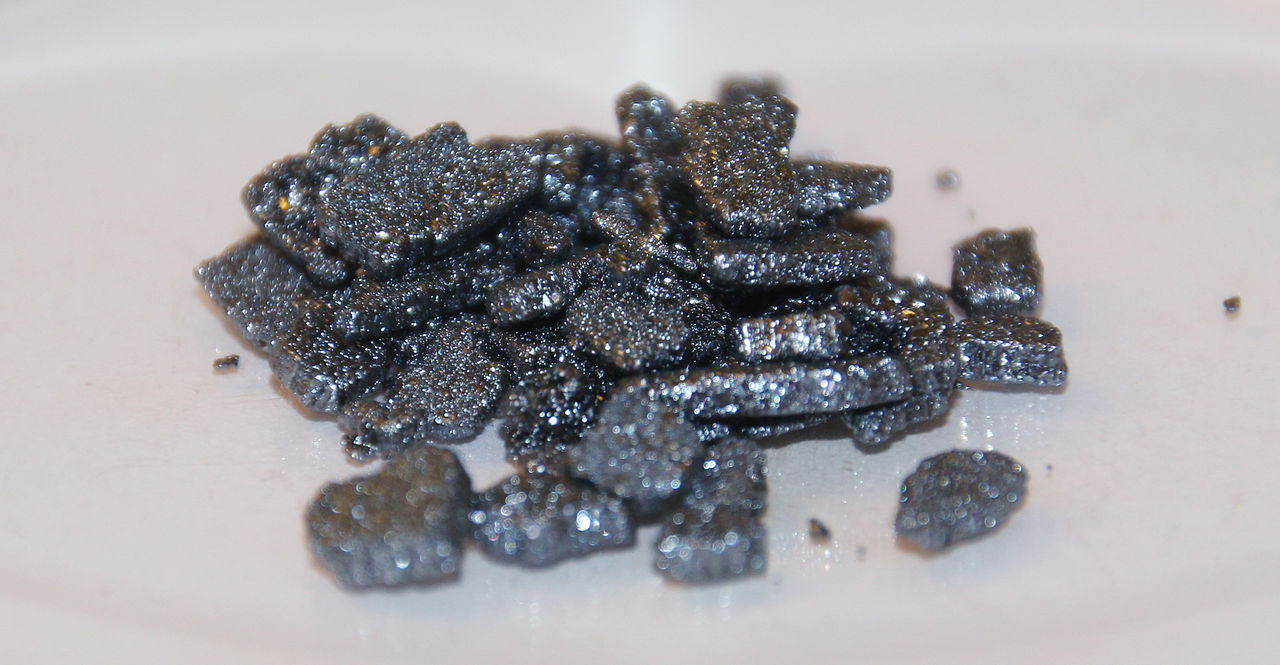
Iodine
The Violet Enigma
Iodine (I, atomic number 53) is a remarkable chemical element, distinguished as the heaviest of the stable halogens. Under standard conditions, it presents as a semi-lustrous, non-metallic solid. Its transition through the physical states is visually striking: it melts at 114 °C (237 °F) into a deep violet liquid and boils at 184 °C (363 °F) to form a violet gas.
This distinctive coloration is the root of its name, derived from the Greek word 'iodes,' meaning 'violet.' The element was first identified in 1811 by French chemist Bernard Courtois during his work with sodium carbonate derived from seaweed ash. Joseph Louis Gay-Lussac later named and characterized it in 1813. As a member of Group 17 (halogens), iodine exhibits characteristic reactivity, though it is less reactive than its lighter counterparts like bromine and chlorine.
Its high atomic mass and electron configuration contribute to its unique chemical behavior and physical properties, including its relatively low melting and boiling points compared to other metals.
The Indispensable Nutrient
Iodine holds a paramount position in human health as the heaviest essential mineral nutrient. Its primary physiological function is indispensable for the synthesis of thyroid hormones, namely thyroxine (T4) and triiodothyronine (T3). These hormones are critical regulators of basal metabolic rate, influencing energy expenditure, growth, and development, particularly of the central nervous system.
Iodine deficiency is a significant global public health issue, affecting approximately two billion people and remaining the leading preventable cause of intellectual disabilities. Conditions arising from iodine deficiency disorders (IDD) range from goiter (enlargement of the thyroid gland) to cretinism (severe cognitive impairment and stunted growth in children born to iodine-deficient mothers). The widespread implementation of iodized salt programs has dramatically reduced the incidence of severe IDD, underscoring iodine's vital importance in preventive medicine and global health initiatives.
Therapeutic and Diagnostic Applications of Iodine
The unique biological affinity of iodine for thyroid tissue has paved the way for sophisticated medical applications. Radioactive isotopes of iodine, such as Iodine-131, are extensively used in both the diagnosis and treatment of thyroid-related conditions. For instance, radioactive iodine uptake scans are crucial for diagnosing hyperthyroidism and assessing thyroid nodules.
More critically, therapeutic doses of Iodine-131 are employed in the management of thyroid cancer and hyperthyroidism. The radioactive iodine is ingested or injected, selectively absorbed by thyroid cells (including cancerous ones), and its emitted radiation destroys these cells. Furthermore, iodine compounds serve as effective radiocontrast agents in medical imaging techniques like X-rays and CT scans.
Their high atomic number allows them to absorb X-rays, thereby enhancing the visibility of blood vessels, organs, and other tissues, enabling precise diagnosis of various pathologies.
Industrial Significance and Global Sourcing
Beyond its biological and medical roles, iodine is a valuable commodity in various industrial processes. It acts as a catalyst in the production of acetic acid, a key component in the manufacturing of plastics like PET (polyethylene terephthalate), and in the synthesis of certain polymers. Its ability to readily form covalent bonds with organic molecules also makes it useful in organic synthesis.
The global supply of iodine is concentrated in a few key regions. Chile, with its vast caliche ore deposits, and Japan, which extracts iodine from underground brine, are the dominant producers. These regions account for the majority of the world's iodine output, supplying the element for its diverse applications worldwide. The careful management of these resources is essential to meet global demand for this critical element.
Go deeper
Based on content from Wikipedia · Licensed under CC BY-SA 4.0