

Intercontinental Ballistic Missile
Images

160220-F-IN231-001


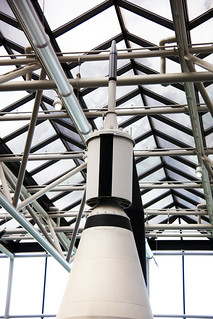

The Apex of Missile Technology
An intercontinental ballistic missile (ICBM) represents the pinnacle of long-range strategic weapon systems. Defined by its intercontinental range, exceeding 5,500 kilometers (3,400 miles), the ICBM is primarily engineered for the delivery of nuclear warheads. While theoretically capable of carrying conventional, chemical, or biological payloads, their strategic value has historically been tied to nuclear deterrence.
A significant evolution in ICBM design is the incorporation of Multiple Independently Targetable Reentry Vehicles (MIRVs). This allows a single missile to launch several warheads, each capable of being precisely guided to a distinct target. This capability dramatically increases the missile's effectiveness and the complexity of defending against it.
The proliferation of ICBM technology is limited, with only a handful of nations possessing operational systems, making their existence a critical factor in global power dynamics.
From V-2 Dreams to Cold War Realities
The genesis of the ICBM can be traced back to German rocket technology developed during World War II, specifically the V-2 rocket. Post-war, both the United States and the Soviet Union rapidly advanced this technology, driven by the escalating tensions of the Cold War. Early ICBMs, such as the Soviet R-7 Semyorka and the American Atlas, were massive, complex, and relatively inaccurate.
Their precision was so limited that they were primarily considered weapons of mass destruction, suitable for targeting entire cities rather than specific military installations. The strategic doctrine of the time emphasized 'assured destruction,' where the threat of retaliating with ICBMs against an enemy's population centers was meant to prevent a first strike. Subsequent generations of ICBMs, like the LGM-118 Peacekeeper, saw dramatic improvements in accuracy, enabling them to target hardened military sites with pinpoint precision, thus expanding their strategic utility beyond city destruction.
The Strategic Imperative
The primary significance of ICBMs lies in their role as a cornerstone of nuclear deterrence. Possessing a credible ICBM force provides a nation with a powerful retaliatory capability, ensuring that any aggression would result in unacceptable damage to the aggressor. This concept, known as Mutually Assured Destruction (MAD), has paradoxically maintained a fragile peace between nuclear-armed states for decades.
ICBMs are often considered the most survivable leg of a nation's nuclear triad (land-based missiles, submarine-launched missiles, and strategic bombers) due to their deployment in hardened underground silos or mobile launchers. However, their existence also fuels arms races and increases the risk of accidental escalation during times of crisis. The development and deployment of ICBMs are therefore subject to intense international scrutiny and are central to arms control negotiations.
Trajectory of Power
The flight of an ICBM is a multi-stage process. Initially, powerful rocket engines propel the missile vertically and then at an angle, accelerating it to hypersonic speeds. This boost phase typically lasts for several minutes, pushing the missile to altitudes well above the Earth's atmosphere, often into sub-orbital space.
Once the fuel is expended, the missile enters the mid-course phase, where it travels ballistically through space, influenced by gravity. During this phase, guidance systems make fine adjustments to ensure accuracy. Finally, in the terminal phase, the warhead(s) re-enter the atmosphere and descend rapidly towards the target.
The immense speed and high trajectory make interception extremely challenging, requiring sophisticated missile defense systems that are still under development and not universally effective against all types of ICBM threats.
Global Footprint
The operational status of ICBMs is a closely guarded secret, but it is widely acknowledged that eight countries currently possess these weapons: the United States, Russia, China, France, India, the United Kingdom, Israel, and North Korea. Pakistan, despite being a nuclear power, has focused on shorter-range ballistic missiles. The types and numbers of ICBMs vary significantly among these nations, reflecting their differing strategic doctrines and technological capabilities.
For instance, Russia and the United States possess the largest and most diverse arsenals. The development of ICBMs by nations like North Korea is a significant concern for international security, often leading to heightened tensions and calls for sanctions or diplomatic intervention. The ongoing evolution of ICBM technology, including advancements in speed, maneuverability, and countermeasure capabilities, continues to shape the global strategic landscape.
Go deeper
Frequently Asked Questions
What is an intercontinental ballistic missile (ICBM)?+
Why do countries keep ICBMs?+
How does an ICBM reach its target?+
What is a MIRV and why is it special?+
Where do ICBMs usually stay when they are not in use?+
Based on content from Wikipedia · Licensed under CC BY-SA 4.0