

Indo-Iranian Languages: A World of Words!
Images

Assimilation of Baltic and Aryan Peoples by Uralic Speakers in the Middle and Upper Volga Basin
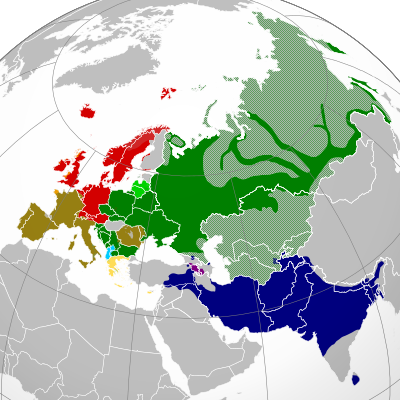


The Scope and Structure of the Indo-Iranian Language Family
The Indo-Iranian languages represent the most populous branch of the Indo-European language family, a testament to their historical spread and cultural impact. Comprising over 300 distinct languages, they are spoken by approximately 1.7 billion individuals, predominantly across South Asia, West Asia, and Central Asia. This vast linguistic group is traditionally categorized into three primary branches: Indo-Aryan, which includes languages like Hindi, Bengali, and Punjabi; Iranian, encompassing Persian, Pashto, and Kurdish; and the smaller, more geographically concentrated Nuristani languages of Afghanistan.
An interesting anomaly is the Badeshi language, which has yet to be definitively classified within this framework. The sheer diversity within Indo-Iranian languages, while sharing a common ancestral root, highlights the complex processes of linguistic evolution and diversification over millennia.
Historical Genesis and Divergence
The genesis of the Indo-Iranian languages can be traced back to a hypothetical Proto-Indo-Iranian language, believed to have been spoken thousands of years ago. The divergence into the Indo-Aryan and Iranian branches is a pivotal moment in their history, likely occurring around the 2nd millennium BCE. This split was driven by migrations and geographical separation.
The Indo-Aryan languages subsequently spread across the Indian subcontinent, undergoing further internal diversification and absorbing influences from indigenous Dravidian and Munda languages. The Iranian languages, meanwhile, developed across the Iranian plateau and surrounding regions, evolving into distinct linguistic traditions. The study of ancient texts, such as the Rigveda for Indo-Aryan and the Avesta for Iranian, provides invaluable insights into the early stages of these languages and their cultural contexts.
Cultural and Sociolinguistic Significance in a Global Context
The Indo-Iranian languages are not merely tools for communication; they are carriers of immense cultural, historical, and literary heritage. They form the linguistic bedrock for some of the world's oldest and most influential civilizations, contributing significantly to philosophy, religion, art, and science. The vast number of speakers means these languages play a critical role in global discourse, economics, and international relations.
Furthermore, the presence of Indo-Iranian languages in diaspora communities across Europe, North America, Oceania, and Africa underscores their enduring legacy and the adaptability of their speakers. Understanding these languages is key to comprehending the rich tapestry of human civilization and the interconnectedness of global cultures.
Geographic Spread and Linguistic Interconnections
The geographical footprint of Indo-Iranian languages is remarkably extensive, illustrating their historical migrations and the interconnectedness of human populations. While their core territories lie in South, West, and Central Asia, their influence extends far beyond. Examples include the Romani language spoken by the Roma people across Europe, Ossetian in the Caucasus, and Kurdish and Zaza in the Middle East.
Their reach even touches North Africa with Domari, and eastward into Xinjiang with Sarikoli. Further south, languages like Assamese in India, Sinhala in Sri Lanka, and Maldivian in the Maldives are part of this family. The presence of Fiji Hindi and Caribbean Hindustani in Oceania and the Caribbean highlights the impact of historical migration patterns and the enduring vitality of these languages in diverse global settings.
Key Linguistic Features and Classification Challenges
While grouped under the Indo-Iranian umbrella, the languages exhibit significant internal diversity. Indo-Aryan languages often feature complex inflectional systems and a rich array of grammatical cases, with significant phonetic shifts from their Proto-Indo-Iranian ancestors. Iranian languages, conversely, often display different sound changes and grammatical structures, with some, like Persian, having undergone considerable standardization.
The classification of certain languages, such as the Nuristani group, has been a subject of scholarly debate due to their unique features that set them apart from both mainstream Indo-Aryan and Iranian. The unclassified Badeshi language further illustrates the ongoing work in linguistic taxonomy and the challenges of mapping the full extent of this vast language family.
See also
Based on content from Wikipedia · Licensed under CC BY-SA 4.0