

Huldrych Zwingli
Images
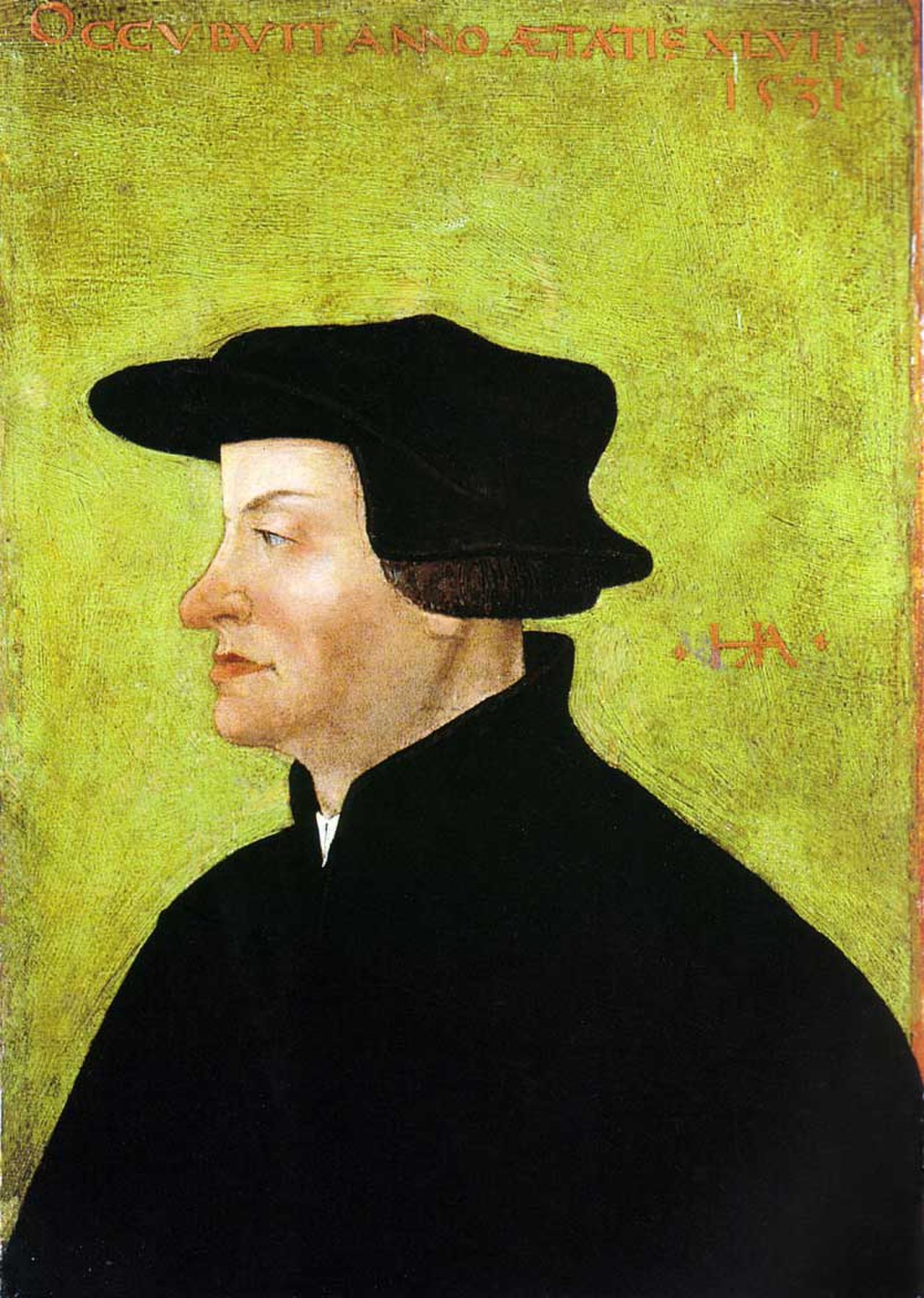
Huldrych Zwingli
Humanist Roots and Early Ministry
Huldrych Zwingli, born on January 1, 1484, in Wildhaus, Switzerland, emerged as a pivotal figure in the 16th-century Reformation. His early education at the University of Vienna and the University of Basel immersed him in Renaissance humanism, fostering a critical approach to texts and traditions. As a pastor in Glarus and later Einsiedeln, Zwingli was deeply influenced by Erasmus, whose emphasis on returning to the original sources of Christianity resonated with him.
During these formative years, Zwingli meticulously studied scripture, developing a theological framework that increasingly critiqued the perceived corruptions and deviations within the Catholic Church. His pastoral experience provided a firsthand view of the spiritual needs of his flock and the societal issues, such as the controversial Swiss mercenary system, that he would later address through his reforms.
The Zurich Reformation
Zwingli's appointment as the people's priest at the Grossmünster in Zurich in 1519 marked the beginning of a transformative era. He initiated a radical departure from traditional worship by adopting expository preaching, systematically working through the New Testament from 1519 onwards. This method, focusing on the direct interpretation of scripture, empowered the congregation and challenged the hierarchical authority of the church.
His first public challenge came in 1522 when he openly defied the Lenten fast, arguing it lacked biblical basis. Zwingli's subsequent publications attacked ecclesiastical corruption, advocated for clerical marriage, and questioned the veneration of images in worship. In 1525, he introduced a new communion liturgy, replacing the Catholic Mass, which he interpreted as a symbolic memorial rather than a literal presence of Christ, a key point of theological divergence.
Theological Debates and Political Ramifications
Zwingli's reforms were not universally accepted, leading to significant theological and political strife. His theological differences with Martin Luther, particularly concerning the Eucharist at the Marburg Colloquy in 1529, highlighted the developing diversity within the Reformation movement. While they agreed on many points, the 'Real Presence' doctrine remained a contentious issue.
Zwingli also clashed with the Anabaptists, a more radical reform group, leading to their persecution in Zurich. The religious divisions fractured the Swiss Confederation, with Zwingli forming an alliance of Reformed cantons. This alliance attempted to exert pressure on the Catholic cantons, including an unsuccessful food blockade in 1531, which ultimately provoked military retaliation.
Martyrdom and Enduring Legacy
The escalating tensions culminated in the Second War of Kappel in 1531. During this conflict, Zurich was ill-prepared, and Huldrych Zwingli, who had accompanied the troops as a chaplain, was killed on the battlefield on October 11, 1531, at the age of 47. His death was a profound blow to the Reformed cause in Switzerland.
Despite this tragic end, Zwingli's theological contributions and his model of reform left an indelible mark. His emphasis on biblical authority, his understanding of the sacraments, and his integration of religious and civic life influenced the development of Reformed theology and church structures. The confessions, liturgies, and church orders of many contemporary Reformed churches bear the imprint of his pioneering work, solidifying his status as a foundational figure of the Reformation.
Go deeper
Based on content from Wikipedia · Licensed under CC BY-SA 4.0