

History of Persian Egypt
Images

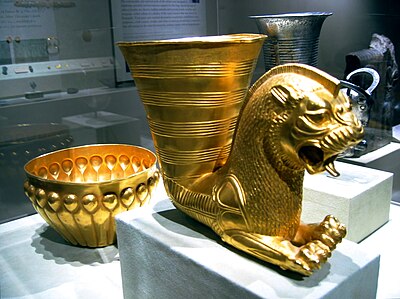
persia - achaemenian vessels




The First Persian Conquest
The initial Achaemenid conquest of Egypt in 525 BC, orchestrated by Cambyses II, marked the beginning of the Twenty-seventh Dynasty. This event integrated Egypt into one of the largest empires the ancient world had ever known. The Persians established a satrapy, a system of provincial governance, with Memphis often serving as a key administrative hub. While Persian officials held ultimate authority, the Achaemenids generally adopted a policy of religious tolerance and respect for local traditions, a strategy exemplified by Darius the Great.
Darius commissioned Egyptian-style inscriptions and supported the Egyptian priesthood, recognizing the importance of local buy-in for effective rule. This period saw Egypt contribute significantly to the empire's economy, particularly through its agricultural output, which was vital for sustaining the vast Persian population and military. The administrative language of the empire, Aramaic, began to be used alongside Egyptian, reflecting the imperial structure.
This era was characterized by a complex interplay between Persian imperial control and the enduring cultural identity of Egypt.
Interlude of Independence and the Second Persian Domination
Following the initial Persian rule, Egypt experienced a period of renewed independence from 404 BC to 343 BC. This interval allowed Egyptian rulers to reassert their sovereignty and continue their cultural development without direct foreign oversight. However, the Achaemenid Empire, under Artaxerxes III, launched a second conquest in 343 BC, re-establishing Persian control and initiating the Thirty-first Dynasty.
This second period of rule was more tumultuous and shorter-lived than the first. The Persian reconquest was brutal, aiming to firmly reassert imperial authority. Despite efforts to consolidate power, this period was marked by internal resistance and the eventual decline of Achaemenid influence, paving the way for the conquests of Alexander the Great.
The brief nature of this second dynasty highlights the challenges the vast Persian Empire faced in maintaining long-term stability across its diverse territories.
Economic and Administrative Integration
Egypt's strategic location and abundant resources made it an indispensable asset to the Achaemenid Empire. The fertile Nile Valley was the breadbasket of the empire, providing essential grain supplies that supported its massive population and military campaigns. Persian rulers invested in infrastructure, such as roads and canals, to facilitate trade and resource extraction.
They implemented standardized taxation systems, ensuring a steady flow of wealth into the imperial treasury. The introduction of Aramaic as an administrative language facilitated communication and record-keeping across the empire's vast expanse, though local Egyptian languages and scripts continued to be used in daily life and religious contexts. This economic integration, while beneficial for the empire, also meant that Egypt's prosperity was closely tied to the fortunes of the Achaemenid state.
Cultural Exchange and Enduring Legacy
The periods of Persian rule in Egypt were not merely about political domination; they also fostered a degree of cultural exchange. While the Persians generally respected Egyptian religious beliefs and practices, their presence introduced new administrative techniques and architectural influences. Egyptian art and religious motifs sometimes found their way into Persian imperial art.
Conversely, Persian administrative structures and the use of Aramaic left a lasting imprint on Egyptian governance. The concept of a vast, multi-ethnic empire, with its sophisticated bureaucracy and communication networks, was a significant development. Even after the Persian rule ended, the memory of these periods, particularly the reigns of rulers like Darius, contributed to the complex tapestry of Egyptian history, influencing later perceptions of foreign rule and imperial power.
Education and Knowledge Transmission
During the Persian periods, Egypt maintained its established educational traditions, primarily centered around temples and scribal schools. These institutions were crucial for training scribes, priests, and administrators who managed the complex religious, economic, and governmental affairs of Egypt. The curriculum would have included hieroglyphic and hieratic writing, mathematics, astronomy, medicine, and religious texts.
The Persian administration, with its reliance on written records and a standardized administrative language like Aramaic, likely influenced the educational system by introducing new forms of documentation and potentially expanding the scope of subjects taught, particularly in areas related to imperial administration and logistics. While formal Persian educational institutions may not have been widely established for the general populace, the interaction between Egyptian and Persian scribal traditions likely led to a cross-pollination of knowledge and administrative practices, contributing to the intellectual landscape of the time.
See also
Frequently Asked Questions
What happened when Persia first took over Egypt?+
How did the Persians treat Egyptian culture and religion?+
Why was Egypt important to the Persian Empire?+
What happened between the two Persian rules?+
How did the second Persian conquest differ from the first?+
Based on content from Wikipedia · Licensed under CC BY-SA 4.0