

Hatshepsut
Images
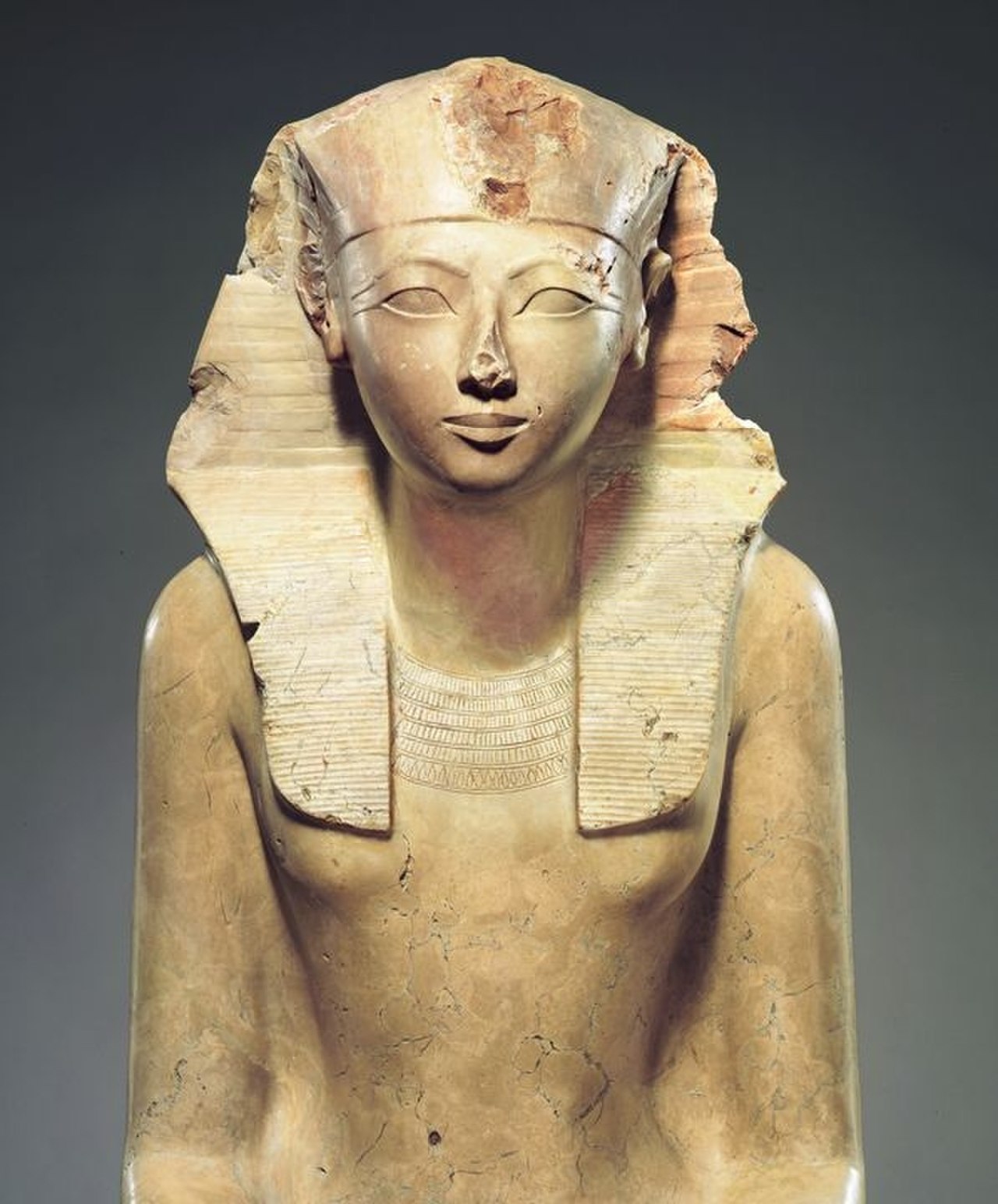
Hatshepsut
Navigating the Patriarchy
Hatshepsut, born circa 1505 BC, was the daughter of Thutmose I and Queen Ahmose. Her lineage positioned her for influence, but the Egyptian throne was traditionally a male domain. Upon the death of her husband and half-brother, Thutmose II, she initially served as regent for her young stepson, Thutmose III.
However, Hatshepsut's ambition and capability led her to transcend the role of regent. Around the fifth year of Thutmose III's reign (c. 1479 BC), she assumed the full titulary of a pharaoh, effectively becoming co-ruler. This bold move required careful political maneuvering and a sophisticated use of ideology.
To legitimize her rule in a patriarchal society, Hatshepsut adopted male pharaonic iconography, including the false beard and kilt, and was often depicted with masculine physical attributes. She strategically emphasized both masculine and feminine qualities, presenting herself as a divine offspring and a capable ruler who embodied the strength of a father and the nurturing care of a mother for her realm. This complex self-representation was crucial for gaining acceptance and asserting her authority.
A Reign of Unprecedented Peace and Economic Flourishing
Hatshepsut's approximately 22-year reign (c. 1479–1458 BC) is characterized by remarkable peace and prosperity, a stark contrast to the more militaristic ambitions of some of her predecessors and successors. Instead of focusing on extensive military campaigns, she prioritized internal development, trade, and monumental construction. A significant achievement was the re-establishment of trade routes, most notably the famous expedition to the Land of Punt.
This voyage brought back exotic goods like incense, ebony, ivory, gold, and live animals, enriching Egypt's economy and cultural landscape. The reliefs at her mortuary temple vividly depict this expedition, serving as both historical record and royal propaganda. This period of stability allowed for significant advancements in arts, architecture, and administration, solidifying Egypt's position as a major power in the ancient Near East without the drain of constant warfare.
Monumental Legacy
Hatshepsut was one of ancient Egypt's most prolific builders, commissioning numerous temples, obelisks, and statues that transformed the landscape. Her mortuary temple at Deir el-Bahari is considered a masterpiece of ancient architecture, a multi-terraced structure seamlessly integrated into the cliffs. It served not only as a place for her mortuary cult but also as a grand stage for religious festivals and a repository of her achievements, including reliefs detailing her divine birth and coronation.
She also made significant additions to the Karnak Temple Complex, including the magnificent Red Chapel and towering obelisks, and commissioned structures at other sites like Speos Artemidos. These monumental projects were not merely aesthetic endeavors; they were powerful statements of her divine right to rule, her piety, and her enduring legacy, designed to ensure her memory and influence would last for eternity.
The Politics of Memory
Despite her successful and prosperous reign, Hatshepsut's legacy faced a concerted effort at erasure following her death. Towards the end of Thutmose III's reign and into that of his son, Amenhotep II, her images and inscriptions were systematically defaced, her statues destroyed, and her name removed from many official records. Her monuments were often repurposed or attributed to Thutmose III or other male pharaohs.
The motivations behind this damnatio memoriae are complex and debated, likely involving a desire to reassert traditional male succession, perhaps fueled by resentment towards a female ruler, or to consolidate Thutmose III's own reign by emphasizing his sole achievements. This attempt to rewrite history underscores the perceived threat Hatshepsut's powerful female kingship posed to established norms. However, the sheer scale and durability of her constructions meant that her story could not be entirely obliterated, and modern archaeology has successfully reconstructed her remarkable reign.
Hatshepsut's Enduring Impact on History and Gender Studies
Hatshepsut's reign continues to fascinate scholars and the public alike, offering profound insights into ancient Egyptian politics, religion, and gender dynamics. As only the second confirmed female ruler in Egyptian history (after Sobekneferu), her success in claiming and maintaining the pharaonic title challenged deeply ingrained societal structures. Her strategic use of iconography and self-representation provides a rich case study for understanding how power is constructed and legitimized, particularly for marginalized groups.
The subsequent attempt to erase her memory highlights the anxieties surrounding female authority in ancient societies and the enduring power of historical narratives. In contemporary discussions, Hatshepsut stands as a powerful symbol of female leadership, resilience, and the ability to break barriers, demonstrating that historical figures can transcend their time to inspire modern understandings of gender roles and political agency.
Go deeper
Frequently Asked Questions
Who was Hatshepsut?+
How did Hatshepsut become a pharaoh?+
What did Hatshepsut build?+
What was special about Hatshepsut’s trade trip?+
Why were Hatshepsut’s pictures erased after her death?+
Based on content from Wikipedia · Licensed under CC BY-SA 4.0