

Grand Kremlin Palace
Images

The Grand Kremlin Palace




Konstantin Thon's Vision
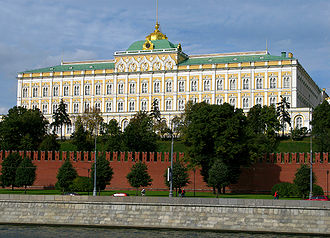
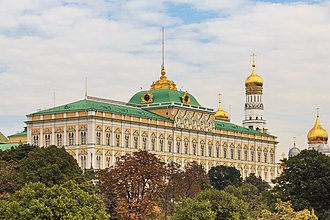
The Grand Kremlin Palace, completed in 1849, stands as a monumental testament to the architectural ambitions of 19th-century Russia and, more specifically, to the vision of its lead architect, Konstantin Thon. Thon, already renowned for his work on the Kremlin Armoury and the Cathedral of Christ the Saviour, was tasked with creating a structure that would not merely house the imperial court but would also serve as a potent symbol of Russian autocracy. The palace was conceived during a period when Moscow, though not the capital of the Russian Empire (which was St.
Petersburg), remained a city of immense historical and cultural significance. Thon's design was deliberately grand and imposing, intended to project an image of overwhelming power and stability. The architectural style, often described as Neo-Byzantine or Russian Revival, aimed to evoke a sense of historical continuity and national grandeur, reinforcing the legitimacy and might of the ruling Romanov dynasty.
Every facet of its design, from its sheer scale to its ornate interiors, was meticulously planned to impress upon visitors and subjects alike the greatness and authority of the Russian state and its sovereign.
From Imperial Seat to Presidential Command Center
The functional evolution of the Grand Kremlin Palace mirrors the dramatic shifts in Russian history. For much of the 19th century, it functioned as the official imperial residence in Moscow, a crucial site for state ceremonies, diplomatic receptions, and the emperor's administrative activities when in the ancient capital. It was a place where the machinery of empire was visibly at work, a stage for projecting royal power and influence.
However, with the tumultuous events of the early 20th century, including the Russian Revolution and the subsequent relocation of the capital back to Moscow, the palace's role transformed. While it ceased to be a primary imperial residence, its strategic location within the Kremlin and its inherent symbolism ensured its continued importance. Today, it serves as the official working residence of the President of Russia, a direct continuation of its legacy as a center of executive power.
This transition highlights the enduring significance of the Kremlin complex as the heart of Russian governance, seamlessly bridging the imperial past with the modern Russian Federation.
Architectural Language and Symbolic Resonance
The Grand Kremlin Palace is more than just a collection of rooms and corridors; it is a carefully constructed piece of architectural propaganda. Konstantin Thon's design choices were deeply rooted in the desire to visually articulate the concept of Russian autocracy. The palace's imposing facade and vast interiors were intended to inspire awe and a sense of deference.
The architectural style itself, drawing upon historical Russian precedents, aimed to connect the contemporary regime with a glorious and powerful past, thereby legitimizing its rule. This approach was common in the 19th century, where nationalistic sentiments often fueled the creation of monumental architecture designed to embody the spirit and strength of the nation and its leaders. The palace, therefore, functions as a physical manifestation of state ideology, a constant reminder of the power vested in the ruling authority and the historical depth of the Russian state.
Its very presence within the Kremlin complex amplifies this symbolic weight.
A Dual Legacy
The Grand Kremlin Palace embodies a fascinating duality: it is simultaneously a locus of contemporary political power and a vital repository of national heritage. As the official working residence of the President of Russia, it remains a critical hub for state affairs, hosting high-level meetings, international summits, and official ceremonies. This ongoing function ensures its relevance in the modern political landscape, cementing its status as a key institution of the Russian state.
Concurrently, the palace also functions as a museum, meticulously preserving its historical interiors and artifacts. This allows for public access, enabling citizens and international visitors to engage with Russia's imperial past. The preservation of its opulent halls, grand staircases, and richly decorated chambers offers a tangible connection to the era of the Russian emperors, providing invaluable insights into the country's history, culture, and artistic achievements.
This dual role ensures that the palace is not merely a relic but a dynamic entity that actively contributes to both the present and future of Russia.
Go deeper
Based on content from Wikipedia · Licensed under CC BY-SA 4.0