

Gothic Art: Castles, Cathedrals, and Cool Colors!
Images
Gothic art
The Genesis of Gothic
Emerging in the Île-de-France region of France around 1140, Gothic art represented a radical departure from the preceding Romanesque style. This shift was not merely aesthetic; it was deeply intertwined with evolving theological ideas and a desire to create spaces that facilitated a more profound spiritual experience. The development of the pointed arch, ribbed vault, and the flying buttress were crucial innovations.
The pointed arch allowed for greater height and flexibility in vaulting, enabling architects to span irregular spaces and direct thrust more efficiently. Ribbed vaults concentrated the ceiling's weight onto slender piers, liberating the walls from their load-bearing function. This liberation was key to the Gothic aesthetic, as it allowed for the insertion of vast expanses of stained glass, a hallmark of the style.
The flying buttress, an external support system, counteracted the outward pressure of the high vaults and thin walls, preventing collapse and allowing for unprecedented verticality and lightness in sacred architecture. This technical mastery was driven by a desire to build structures that symbolized the Heavenly Jerusalem, a city of light and divine presence.
Luminosity and Narrative
The extensive use of stained glass is perhaps the most iconic feature of Gothic art. These monumental windows, often covering entire walls, served multiple purposes. Visually, they flooded the interiors with colored light, transforming the somber stone structures into luminous, ethereal spaces that were meant to evoke divine presence.
Theologically, the light itself was symbolic, representing God's grace and the divine illumination of the soul. Narratively, stained glass served as a 'Bible for the illiterate,' depicting biblical stories, lives of saints, and theological concepts in vibrant detail. The creation of these windows was a complex craft, involving cutting colored glass into shapes, painting details onto the glass, and then assembling the pieces with lead came.
The scale and complexity of cathedral windows, such as those at Chartres or Sainte-Chapelle, represent a pinnacle of medieval artistic and technical achievement, offering a rich visual and spiritual experience to worshippers.
Sculptural Evolution
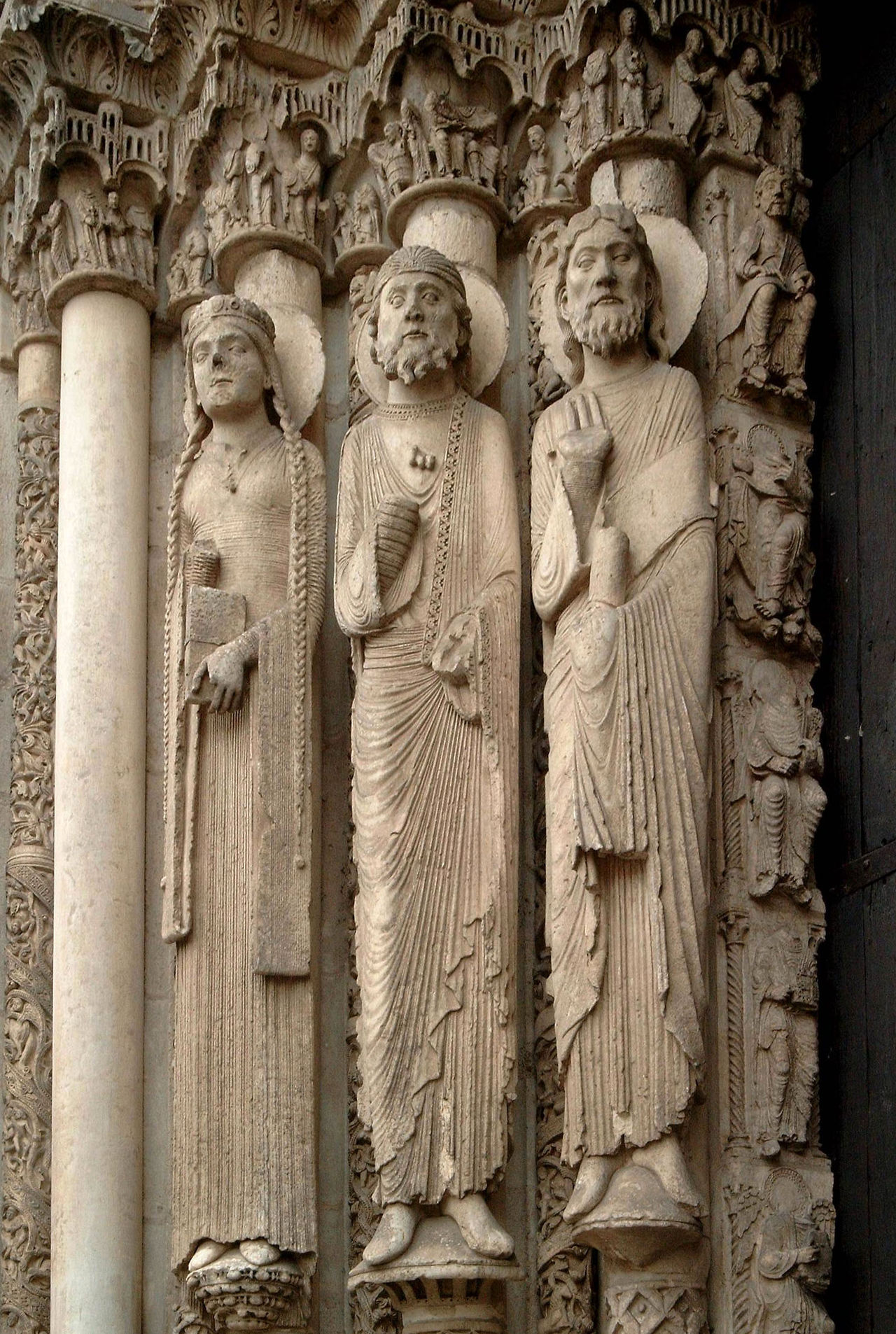
Gothic sculpture underwent a significant transformation, mirroring the broader stylistic changes. Initially, Gothic sculpture retained some of the stylized, elongated figures found in Romanesque art, particularly in early portals. However, over time, sculptors began to imbue their figures with greater naturalism and emotional depth.
Faces became more individualized, drapery fell in more realistic folds, and poses became more relaxed and lifelike. This increased realism was particularly evident in the jamb figures of cathedral portals, which gradually detached themselves from the architectural background to become more three-dimensional. The development of freestanding sculptures and tomb effigies further showcased this trend towards greater naturalism and psychological portrayal.
This evolution reflects a growing interest in humanism and a desire to represent religious figures in a more relatable and emotionally resonant manner.
Beyond Architecture
The Gothic sensibility extended beyond the realm of architecture and sculpture to profoundly influence other artistic media. Illuminated manuscripts reached new heights of sophistication during the Gothic period. Artists employed vibrant colors, intricate details, and often incorporated architectural elements, such as pointed arches and tracery, into their compositions.
The use of gold leaf, or 'illumination,' added a sense of divine radiance. Panel painting also began to gain prominence, particularly in the later Gothic period, with artists developing techniques for creating more nuanced compositions and richer color palettes. The International Gothic style, which emerged in the late 14th century, is characterized by its elegant linearity, rich colors, and courtly subject matter, demonstrating the pervasive influence of Gothic aesthetics across diverse artistic disciplines and its adaptation to evolving cultural tastes.
Enduring Legacy and Modern Resonance
The legacy of Gothic art is immense and continues to resonate today. The architectural principles pioneered during this era, particularly the emphasis on light, height, and structural innovation, laid the groundwork for subsequent architectural developments. Gothic cathedrals remain some of the most visited and admired structures in the world, inspiring awe with their scale, beauty, and historical significance.
Beyond their physical presence, Gothic art's emphasis on narrative, symbolism, and the integration of art and faith offers enduring insights into medieval culture and human aspirations. In contemporary times, Gothic revival architecture in the 19th century demonstrated the style's lasting appeal, while its influence can be seen in various forms of popular culture, from fantasy literature to film design, attesting to its powerful and enduring aesthetic impact.
Go deeper
Based on content from Wikipedia · Licensed under CC BY-SA 4.0