

The Amazing Golden Ratio!
Images
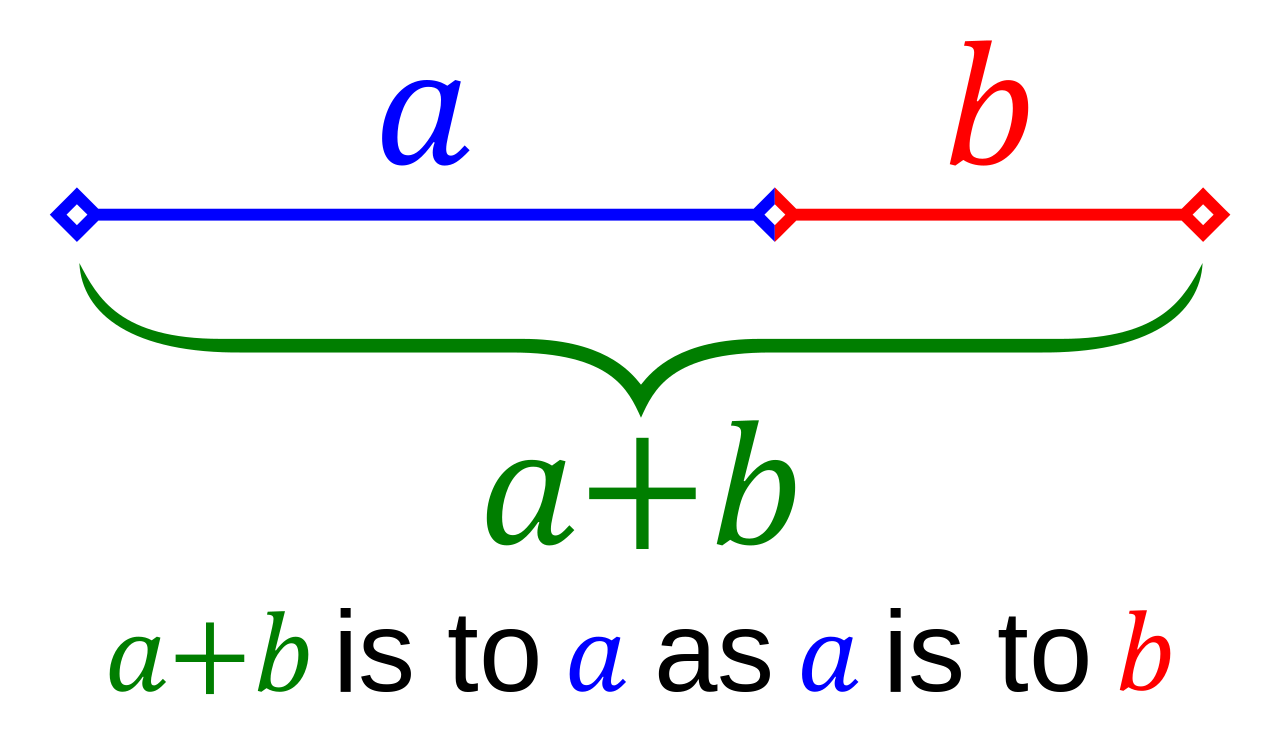
Golden ratio
Defining the Divine Proportion
The Golden Ratio, often denoted by the Greek letter phi (Φ), is an irrational number approximately equal to 1.6180339887. Mathematically, it is defined by the equation (a+b)/a = a/b = Φ, where 'a' is the longer segment and 'b' is the shorter segment of a line. This unique proportion is derived from the solution to the quadratic equation x² - x - 1 = 0.
Its significance lies in its inherent aesthetic appeal; when applied to geometric shapes, such as the Golden Rectangle, it creates proportions that are widely considered to be harmonious and visually satisfying. This mathematical constant has been a subject of fascination for mathematicians, artists, and scientists for centuries, not just for its numerical properties but for its perceived role in beauty and natural order.
Historical Trajectory of a Mathematical Ideal
While the term 'Golden Ratio' is relatively modern, the concept has been recognized and utilized for millennia. Ancient Greek mathematicians, including Euclid in his 'Elements' (circa 300 BCE), described the mathematical properties of this proportion, referring to it as 'extreme and mean ratio.' During the Renaissance, artists and scholars like Luca Pacioli, in his treatise 'De divina proportione' (1509), lauded its divine qualities and explored its application in art and architecture.
This period saw a conscious effort to integrate the Golden Ratio into compositions, believing it to be a fundamental principle of beauty and divine design. Its presence in classical art and architecture, though sometimes debated, underscores its enduring influence on Western aesthetics and intellectual thought.
The Golden Ratio's Pervasive Influence
The importance of the Golden Ratio stems from its remarkable ability to generate aesthetically pleasing results across diverse fields. In visual arts and design, it serves as a guideline for composition, layout, and proportion, contributing to artworks and products that resonate with viewers on a subconscious level. Architects have historically employed it to achieve balance and visual harmony in structures, from ancient monuments like the Parthenon to modern buildings.
Beyond human design, the Golden Ratio is frequently observed in natural phenomena, suggesting it is a fundamental principle governing growth and form. Its appearance in the spiral arrangements of seeds in a sunflower, the branching patterns of trees, the proportions of animal bodies, and even the structure of galaxies points to its deep connection with the underlying order of the universe and efficient biological development.
Manifestations in Nature and Human Creations
The Golden Ratio manifests in countless real-world examples, bridging the gap between abstract mathematics and tangible reality. In nature, the logarithmic spiral of a nautilus shell closely approximates a Golden Spiral, a spiral that grows outward by a factor of Φ for every quarter turn. The arrangement of leaves on a stem (phyllotaxis) often follows Fibonacci numbers, which are intimately linked to the Golden Ratio, optimizing sunlight exposure.
In human creations, the Golden Ratio can be found in the dimensions of famous paintings, the proportions of the human face, and the layout of websites and logos designed for maximum visual appeal. While some instances are deliberate applications, others are likely emergent properties of efficient growth or evolutionary processes, highlighting its fundamental role in both natural and artificial design.
Interconnections and Modern Relevance
The Golden Ratio is deeply intertwined with the Fibonacci sequence, where each number is the sum of the two preceding ones (0, 1, 1, 2, 3, 5, 8...). As the sequence progresses, the ratio of consecutive Fibonacci numbers approaches Φ. This connection allows for practical applications in fields like computer algorithms, financial market analysis (e.g., Fibonacci retracements), and even music composition.
In contemporary design, the Golden Ratio continues to be a reference point for creating balanced and appealing interfaces, branding, and product designs. Its enduring presence across disciplines, from pure mathematics to applied sciences and the arts, solidifies its status as a fundamental constant that continues to inform our understanding of beauty, order, and efficiency in the universe.
Go deeper
Based on content from Wikipedia · Licensed under CC BY-SA 4.0