

Gilgit-Baltistan: Land of Giants!
Images

Gull-billed Tern (Gelochelidon nilotica) Gilgit-Baltistan, Pakistan


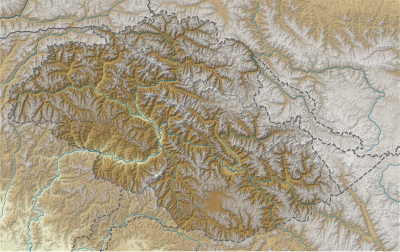


A Realm of Peaks
Gilgit-Baltistan is a geographical titan, occupying the northernmost reaches of Pakistan and forming a critical nexus with Afghanistan, China, and the disputed territories of Kashmir. Its landscape is defined by extreme topography, dominated by the Karakoram and Himalayan mountain ranges. This region is a global hotspot for mountaineering, hosting K2, the world's second-highest peak, and four other 'eight-thousanders' among its more than fifty summits exceeding 7,000 meters.
The sheer scale of these mountains is awe-inspiring, presenting formidable challenges to climbers and offering unparalleled vistas. Beyond the peaks, Gilgit-Baltistan is renowned for its massive glaciers, including the Biafo, Hispar, and Baltoro glaciers, which are among the longest outside the polar regions. These colossal ice flows are not merely static features; they are dynamic geological forces that have shaped and continue to shape the valleys.
The region's rivers, like the Indus, are fed by glacial meltwater, creating a vital water source but also posing risks of flash floods. The climate is characterized by harsh, long winters with heavy snowfall and short, intense summers, creating distinct ecological zones from alpine meadows to arid high-altitude deserts.
Historical Tapestry and Political Identity
The administrative history of Gilgit-Baltistan is relatively recent, yet its human history stretches back millennia. Formerly known as the Federally Administered Northern Areas (FANA), it was consolidated as a distinct administrative unit in 1972 by merging the Gilgit Agency and the Baltistan Agency. A pivotal moment occurred in 2009 with the Gilgit-Baltistan Empowerment and Self-Governance Order, which granted the region limited autonomy and renamed it.
This move was intended to empower the local population, though scholars note that significant power often remains concentrated with the federal government's appointed governor rather than the elected chief minister and assembly. The region's political identity is complex and deeply intertwined with the broader Kashmir dispute. Many residents aspire to full provincial status within Pakistan, seeking integration rather than association with the rest of Kashmir.
This aspiration is often contrasted with Pakistan's official stance on the Kashmir conflict, which hinges on UN resolutions, making the region's political future a delicate balancing act. Its strategic location has also made it a historical transit point for trade and cultural exchange.
Cultural Mosaic
Gilgit-Baltistan is a vibrant mosaic of cultures and ethnicities, a testament to its position as a historical crossroads. The linguistic landscape is diverse, with Urdu serving as the official language, but numerous indigenous languages like Shina, Balti, Burushaski, and Wakhi are widely spoken, each preserving unique oral traditions and cultural nuances. The people, often referred to as 'Baltis' or 'Gilgitis,' are known for their resilience, hospitality, and deep connection to their ancestral lands.
Their traditions are closely tied to the agricultural calendar and religious practices, with festivals marking harvests and significant religious events. The region's cultural heritage is rich, influenced by its proximity to Central Asia and Tibet, evident in its music, dance, and artisanal crafts. The strong sense of community is a defining characteristic, with social structures often prioritizing collective well-being and mutual support in the challenging mountain environment.
Economic Drivers
The economy of Gilgit-Baltistan is primarily driven by agriculture and a burgeoning tourism sector. Traditional farming practices are essential, with communities cultivating staple crops like wheat and barley, alongside high-value fruits such as apples, apricots, and cherries, which are significant exports. The unique climate and fertile valleys support these agricultural endeavors.
However, the region's unparalleled natural beauty has propelled tourism into a major economic force. It is a world-renowned destination for mountaineering, trekking, and adventure tourism, drawing international visitors eager to experience its dramatic landscapes and conquer its legendary peaks. This industry provides crucial employment opportunities and stimulates local businesses.
Furthermore, Gilgit-Baltistan's strategic location, bordering China and Afghanistan, makes it a point of geopolitical interest, particularly in relation to initiatives like the China-Pakistan Economic Corridor (CPEC), which aims to enhance infrastructure and trade routes through the region, potentially reshaping its economic future.
Governance and Aspirations
Gilgit-Baltistan operates as an administrative territory of Pakistan, governed by a system that grants it a degree of self-governance, established by the 2009 Self-Governance Order. This framework includes an elected Legislative Assembly and a Chief Minister, theoretically empowering local leadership. However, the extent of this autonomy is a subject of ongoing debate, with the federal government, particularly through the appointed Governor, retaining significant influence.
The region's political aspirations are complex. A substantial segment of the population advocates for Gilgit-Baltistan to be recognized as Pakistan's fifth province, seeking full integration and representation within the national political structure. This desire for provincial status is often articulated in opposition to the broader, unresolved Kashmir dispute, as many residents do not wish their territory to be subsumed under the larger conflict's political framework.
The Pakistani government's response to these calls for provincial status is cautious, partly due to concerns that it could complicate its international position on the Kashmir issue according to UN resolutions. This dynamic creates a unique political environment where local identity, aspirations for greater autonomy, and geopolitical considerations are constantly in play.
See also
Frequently Asked Questions
What are the tallest mountains in Gilgit-Baltistan?+
Why are the glaciers in Gilgit-Baltistan important?+
Where does Gilgit-Baltistan get its name and when did it become a separate region?+
How do the people of Gilgit-Baltistan keep their culture alive?+
Why is Gilgit-Baltistan strategically important?+
Based on content from Wikipedia · Licensed under CC BY-SA 4.0