

Giant Sequoia National Monument
Images

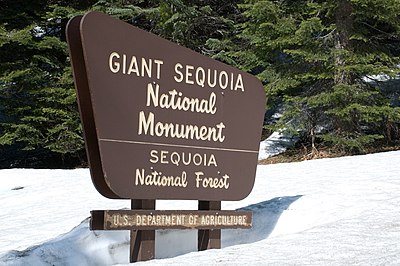
Entering Giant Sequoia National Monument, Sequoia National Forest, California





Geographic and Ecological Landscape of the Monument
Giant Sequoia National Monument, established in 2000, encompasses a significant portion of the southern Sierra Nevada mountain range in California, totaling 328,315 acres. This vast area is managed by the U.S. Forest Service as part of the Sequoia National Forest and is divided into two distinct sections. The northern section surrounds areas adjacent to Kings Canyon National Park, while the southern section lies directly south of Sequoia National Park.
This landscape is characterized by steep mountain slopes, diverse forest types ranging from mixed conifer to subalpine, and a Mediterranean climate with hot, dry summers and cool, wet winters. These climatic conditions, coupled with the granitic soils of the Sierra Nevada, create a unique environment that supports the growth of the Giant Sequoia (Sequoiadendron giganteum). The monument protects 38 of the approximately 70 remaining Giant Sequoia groves, representing a substantial portion of the species' global distribution and a critical reservoir for its genetic diversity.
The sheer scale of the monument underscores its importance in preserving not only these iconic trees but also the complex ecological processes they are part of.
Historical Context and Preservation Milestones
The establishment of Giant Sequoia National Monument marked a significant milestone in the conservation history of these ancient trees. While Giant Sequoias have been recognized for their grandeur for centuries, their protection has evolved over time. The monument's creation by presidential proclamation in April 2000 aimed to provide enhanced protection for 38 groves within the Sequoia National Forest, complementing existing national park protections.
This action was a response to growing concerns about habitat fragmentation, logging threats, and the need for comprehensive management strategies for these irreplaceable natural resources. Prior to the monument's designation, these groves were managed under different forest plans, and the proclamation consolidated their protection under a unified vision. The history of the monument is intertwined with the broader narrative of American conservation, highlighting the ongoing effort to balance resource use with the imperative to preserve natural wonders for future generations.
The inclusion of specific groves, like the Boole Tree, known for its immense size, emphasizes the monument's role in safeguarding exceptional natural features.
Biodiversity and Ecological Recovery
Beyond the towering sequoias, Giant Sequoia National Monument is a critical habitat for a diverse array of flora and fauna. The monument's ecological significance was dramatically underscored in August 2023 with the confirmed reappearance of gray wolves, marking their return after an absence of over 100 years. This event is a powerful indicator of ecological health and recovery.
Wolves, as apex predators, play a vital role in regulating prey populations, such as deer, which in turn influences vegetation dynamics. Their reintroduction suggests that the monument's ecosystem is becoming more robust and self-sustaining. The presence of wolves signifies a step towards restoring a more complete and natural ecological balance within the Sierra Nevada.
The monument's varied terrain and extensive forest cover provide essential resources and refuge for numerous species, making its continued protection crucial for maintaining biodiversity in the region.
The Monument's Role in Environmental Education and Stewardship
Giant Sequoia National Monument serves as an invaluable outdoor classroom and a focal point for environmental education and stewardship. The sheer scale and age of the Giant Sequoias inspire awe and foster a deep appreciation for the natural world. Educational programs within the monument, often run by the U.S.
Forest Service, aim to teach visitors about the unique biology of sequoias, the importance of forest ecosystems, and the challenges of conservation. These programs connect people to the land, encouraging responsible behavior and a sense of guardianship. The monument provides opportunities for scientific research, allowing experts to study tree physiology, forest ecology, and wildlife dynamics, contributing to our broader understanding of natural systems.
By experiencing the monument firsthand, visitors gain a tangible connection to conservation efforts and are motivated to support the protection of natural landscapes beyond their visit, reinforcing the monument's role in cultivating environmental awareness and action.
Management, Governance, and Future Challenges
The Giant Sequoia National Monument is administered by the U.S. Forest Service, a division of the U.S. Department of Agriculture.
This federal oversight ensures a consistent management approach across the monument's vast acreage, balancing conservation goals with public access and recreational opportunities. The monument's governance involves complex decision-making processes that consider ecological health, historical preservation, and the needs of local communities. Key challenges facing the monument include managing wildfire risk, which is exacerbated by climate change and historical forest management practices, and addressing invasive species.
Protecting the Giant Sequoias also involves understanding and mitigating the impacts of climate change on these long-lived trees. The ongoing presence of wildlife, like the returning wolves, adds another layer to management considerations, requiring adaptive strategies to ensure coexistence. The monument's future hinges on continued scientific research, effective land management, and public support for its preservation.
See also
Frequently Asked Questions
What is the Giant Sequoia National Monument?+
How big is the Giant Sequoia National Monument?+
Why were the giant sequoia groves protected in 2000?+
Where are the giant sequoias located in the monument?+
What special animals returned to the monument in 2023?+
Based on content from Wikipedia · Licensed under CC BY-SA 4.0