

Georgian People: Land of Mountains and Legends!
Images

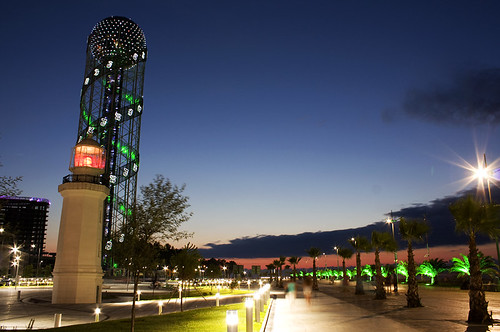
Batumi



Defining 'Kartveli'
The Georgian people, or 'Kartvelebi,' represent a distinct ethnolinguistic group whose identity is intrinsically linked to the territory of Georgia, a nation strategically positioned in the Caucasus. Their unique language, Georgian, is the sole surviving member of the Kartvelian language family, a linguistic isolate that has resisted assimilation for millennia. This linguistic distinctiveness is a powerful marker of their enduring cultural heritage.
The Georgian alphabet, a beautiful and ancient script, is another vital component of their national consciousness, with its origins debated but certainly dating back to at least the 5th century CE. The historical narrative of the Georgian people is one of continuous settlement and the formation of sophisticated kingdoms, such as Colchis and Iberia, which engaged with the wider ancient world, as evidenced by Greek and Roman accounts. Their homeland, characterized by its diverse geography from the high peaks of the Caucasus to the Black Sea coast, has profoundly shaped their history and culture, fostering both resilience and a deep connection to the land.
A Chronicle of Resilience
The history of the Georgian people is a testament to their remarkable ability to preserve their identity amidst centuries of external pressures and invasions. From the Hellenistic period through Roman, Byzantine, Persian, Arab, Mongol, Ottoman, and Russian dominations, Georgia has been a contested territory. Despite these challenges, the Georgian Orthodox Church emerged as a crucial unifying force, safeguarding religious and cultural practices, particularly during periods of foreign rule.
The Golden Age of Georgia in the 12th and 13th centuries, under monarchs like David the Builder and Queen Tamar, saw a flourishing of political power, territorial expansion, and cultural achievement, solidifying a sense of national pride. The brief interlude of independence following the collapse of the Russian Empire in 1917, followed by incorporation into the Soviet Union, and finally the re-establishment of sovereignty in 1991, has further shaped the modern Georgian psyche, emphasizing self-determination and the preservation of their unique heritage against historical odds.
The Supra and the Qvevri
Georgian cuisine and its associated traditions, particularly the 'supra' and the ancient art of winemaking, are central to the Georgian people's cultural expression and social fabric. The supra, a traditional feast, is a highly ritualized event where the 'tamada' (toastmaster) guides guests through a series of toasts, elevating the meal to a profound communal experience celebrating life, family, and nationhood. This practice underscores the paramount importance of hospitality in Georgian culture.
The winemaking tradition, recognized by UNESCO as an Intangible Cultural Heritage, is particularly noteworthy. Georgia is one of the world's oldest wine regions, with evidence of viticulture dating back 8,000 years. The use of qvevri, large earthenware vessels buried underground for fermentation and aging, represents an ancestral method that continues to be practiced today, linking modern Georgians directly to their ancient agricultural past and producing wines with unique characteristics.
Artistic Expressions
The Georgian people have cultivated a rich tapestry of artistic and intellectual traditions that serve as powerful vehicles for their cultural identity. The Georgian language, with its distinctive script, is more than a means of communication; it is a repository of history, literature, and national sentiment. Georgian literature, from medieval chronicles to modern poetry, reflects the nation's struggles, triumphs, and spiritual depth.
The country's architectural heritage is equally impressive, featuring a wealth of medieval churches and monasteries, such as those at Gelati and Svaneti, renowned for their harmonious integration with the landscape and their exquisite fresco paintings. Perhaps most globally recognized is Georgia's tradition of polyphonic singing. This complex vocal art form, often performed by male ensembles, features intricate harmonies and a unique vocal timbre that evokes the rugged beauty of the Georgian mountains and the depth of its spiritual traditions.
These artistic forms are not mere historical artifacts but living, evolving expressions of Georgian identity that continue to resonate internationally.
See also
Frequently Asked Questions
What is the Georgian language and why is it special?+
How do Georgians celebrate a feast called supra?+
Why is winemaking important in Georgia?+
Where does the Georgian alphabet come from?+
What role did the Georgian Orthodox Church play in history?+
Based on content from Wikipedia · Licensed under CC BY-SA 4.0