

General Rafael Urdaneta Bridge
Images

Puente y lago de maracaibo recorte




The Strategic Importance of the Urdaneta Bridge
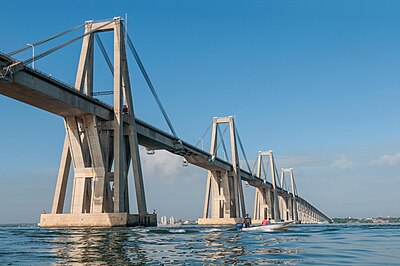
The General Rafael Urdaneta Bridge is a colossal concrete and steel structure that spans the Tablazo Strait, serving as the primary land link between Maracaibo, Venezuela's second-largest city, and the rest of the nation. Its construction in the early 1960s was a monumental undertaking, designed to overcome the geographical isolation of the Maracaibo Peninsula. Prior to its completion, Maracaibo was largely dependent on maritime transport, significantly hindering economic development and logistical efficiency.
The bridge's strategic location at the outlet of Lake Maracaibo, a vital waterway for oil exports and regional trade, underscores its critical role in Venezuela's economy. It facilitates the movement of goods, services, and people, supporting industries ranging from oil and gas to agriculture and tourism. The bridge is not merely a transportation route; it is an artery that pumps lifeblood into the region's economy and fosters national cohesion by integrating Maracaibo more fully into the Venezuelan fabric.
Architectural Prowess and Structural Integrity
The engineering behind the General Rafael Urdaneta Bridge is a testament to mid-20th-century civil engineering capabilities. The bridge is characterized by its extensive use of prestressed concrete, a technique that significantly enhances the strength and durability of concrete structures. It rests upon numerous massive concrete piers, some extending deep into the lakebed to provide a stable foundation in the challenging marine environment.
The design incorporates multiple spans, including a central section that allows for the passage of large maritime vessels navigating Lake Maracaibo. This clearance is crucial for maintaining the lake's role as a commercial port. The bridge's overall length and the robust construction methods employed ensure its resilience against environmental factors like strong winds, seismic activity, and the corrosive effects of saltwater, making it a durable and reliable piece of infrastructure.
Socio-Economic Impact and National Identity
The socio-economic impact of the General Rafael Urdaneta Bridge cannot be overstated. It dramatically reduced travel times and transportation costs, making Maracaibo more accessible and fostering economic growth. The bridge facilitated the expansion of businesses, encouraged tourism, and improved access to education and healthcare for residents.
It has become a powerful symbol of national progress and engineering achievement for Venezuela. Furthermore, the bridge is named in honor of General Rafael Urdaneta, a distinguished military leader and statesman who played a crucial role in Venezuela's independence struggle. This naming imbues the bridge with historical and patriotic significance, transforming it from a mere piece of infrastructure into a national monument that commemorates a key figure in Venezuelan history and identity.
Historical Context and Legacy
The conception and construction of the General Rafael Urdaneta Bridge were part of Venezuela's broader modernization efforts in the mid-20th century, particularly during the oil boom era. The project was initiated to address the logistical challenges posed by Maracaibo's geographical position and to integrate the region more effectively into the national economy. Completed in 1962, it was one of the longest bridges in the world at the time of its construction, showcasing Venezuela's ambition and capacity for large-scale development.
The bridge's enduring presence and continued functionality over decades speak to the quality of its design and construction. It stands as a lasting legacy of engineering excellence and a tangible link to the nation's heroes, continuing to serve millions of Venezuelans daily and remaining a proud icon of the country.
Modern Relevance and Future Considerations
In contemporary Venezuela, the General Rafael Urdaneta Bridge remains an indispensable component of the nation's transportation network. Despite economic challenges, the bridge continues to facilitate vital trade and movement, underscoring its fundamental importance. Its ongoing maintenance and potential upgrades are critical for ensuring its long-term viability and safety.
As Venezuela navigates its future, the bridge serves as a reminder of past achievements in engineering and national development. It represents a crucial asset that supports economic activity and connectivity, highlighting the enduring value of robust infrastructure. The bridge’s continued operation is essential for the economic health and social well-being of western Venezuela, making it a subject of ongoing interest for civil engineers, urban planners, and historians alike.
See also
Frequently Asked Questions
What is the General Rafael Urdaneta Bridge?+
Why was the bridge built?+
How long did it take to build?+
Who is the bridge named after?+
What makes the bridge strong?+
Based on content from Wikipedia · Licensed under CC BY-SA 4.0