

Gansu: China's Amazing Land of Wonders!
Images

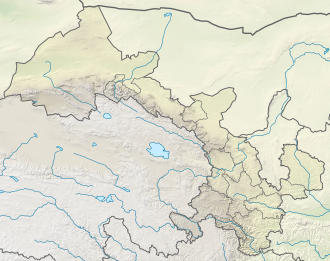
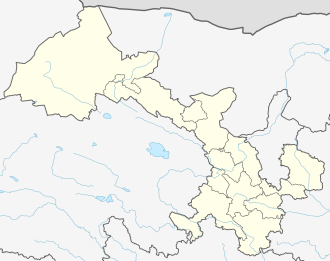
Location of Lanzhou Prefecture within Gansu (China)




Geopolitical Nexus and Ecological Extremes
Gansu province occupies a commanding position in northwestern China, serving as a critical geographical and geopolitical nexus. Its immense area of 453,700 square kilometers makes it the seventh-largest provincial-level administrative division in China, a sprawling territory that bridges disparate ecological zones. Situated between the elevated Tibetan Plateau to the west and the ancient Loess Plateau to the east, Gansu's topography is characterized by dramatic transitions.
The northern reaches are dominated by arid landscapes, including a significant portion of the Gobi Desert, bordering Mongolia's Govi-Altai Province and Inner Mongolia. Conversely, the southern regions are defined by the imposing Qilian Mountains, a majestic range that forms a natural barrier and a vital watershed. The Yellow River, China's second-longest river and the cradle of its civilization, flows through the southern part of the province, providing essential water resources.
This geographical diversity results in a wide spectrum of climates, from extreme continental aridity in the north to more temperate conditions influenced by altitude and the river in the south. This varied terrain has historically dictated settlement patterns, agricultural viability, and strategic importance.
Gansu's Historical Trajectory
Gansu's historical significance is deeply interwoven with the rise of Chinese civilization and its interactions with the outside world. It is the ancestral homeland of the Qin state, which, under Qin Shi Huang, unified China in 221 BCE and established the first imperial dynasty. This foundational role in Chinese history is immense.
However, Gansu's most enduring historical legacy is its central role in the Northern Silk Road. The Hexi Corridor, a vital geographical feature within Gansu, served as the primary route for trade and cultural exchange between China, Central Asia, and the Mediterranean for over a millennium. This corridor facilitated the movement of goods like silk, spices, and precious metals, as well as the transmission of religions, technologies, and artistic styles.
The province was thus a crucial strategic outpost and communications link for successive Chinese empires, necessitating the construction of defensive fortifications. The city of Jiayuguan, with its iconic Great Wall section and the imposing Jiayu Pass fortress, stands as a powerful symbol of this historical era, representing the frontier of Chinese imperial influence and a gateway to the West.
Cultural Dynamics and Ethnic Diversity
Gansu is home to a population of 26 million, a diverse demographic that reflects its long history as a crossroads of cultures. While the Han Chinese constitute the majority, the province is also home to significant ethnic minority groups, including the Hui, Dongxiang, and Tibetan peoples. Each group contributes its unique linguistic, religious, and cultural heritage, creating a rich tapestry of traditions. Mandarin Chinese is the lingua franca, facilitating communication across these diverse communities.
The historical interactions along the Silk Road have fostered a unique cultural synthesis, evident in Gansu's art, architecture, cuisine, and religious practices. The province has been a site of both cultural exchange and occasional tension, shaping a complex and resilient regional identity. Understanding Gansu's cultural landscape requires appreciating the interplay between its dominant Han culture and the distinct traditions of its minority populations, all influenced by centuries of interaction with neighboring cultures.
Economic Realities and Educational Imperatives
In contemporary China, Gansu faces significant economic challenges, consistently ranking among the poorer administrative divisions in terms of GDP per capita. Historically, its economy has been reliant on agriculture, particularly in the more fertile river valleys, and on its rich mineral resources. However, the province is actively pursuing strategies for economic development and poverty alleviation.
A key focus is on leveraging its historical legacy by developing tourism centered around its Silk Road heritage and natural landscapes. Modern infrastructure projects, including transportation networks, are being implemented to improve connectivity and facilitate trade, aiming to revitalize the spirit of the ancient Silk Road in a contemporary context. Education is a critical component of Gansu's development strategy.
The provincial capital, Lanzhou, serves as an educational hub with several universities and research institutions. Efforts are concentrated on improving educational access, quality, and relevance to equip the population with the skills needed for a changing economy and to foster innovation within the province. The success of these endeavors is crucial for Gansu's long-term prosperity and its integration into China's broader economic landscape.
Go deeper
Frequently Asked Questions
What is Gansu and why is it special?+
Where does the Yellow River flow in Gansu?+
Why is Jiayuguan famous?+
How many people live in Gansu and who are they?+
What kinds of goods were traded on the Silk Road in Gansu?+
Based on content from Wikipedia · Licensed under CC BY-SA 4.0