

Francisco Goya: The Painter Who Saw the World Differently!
Images
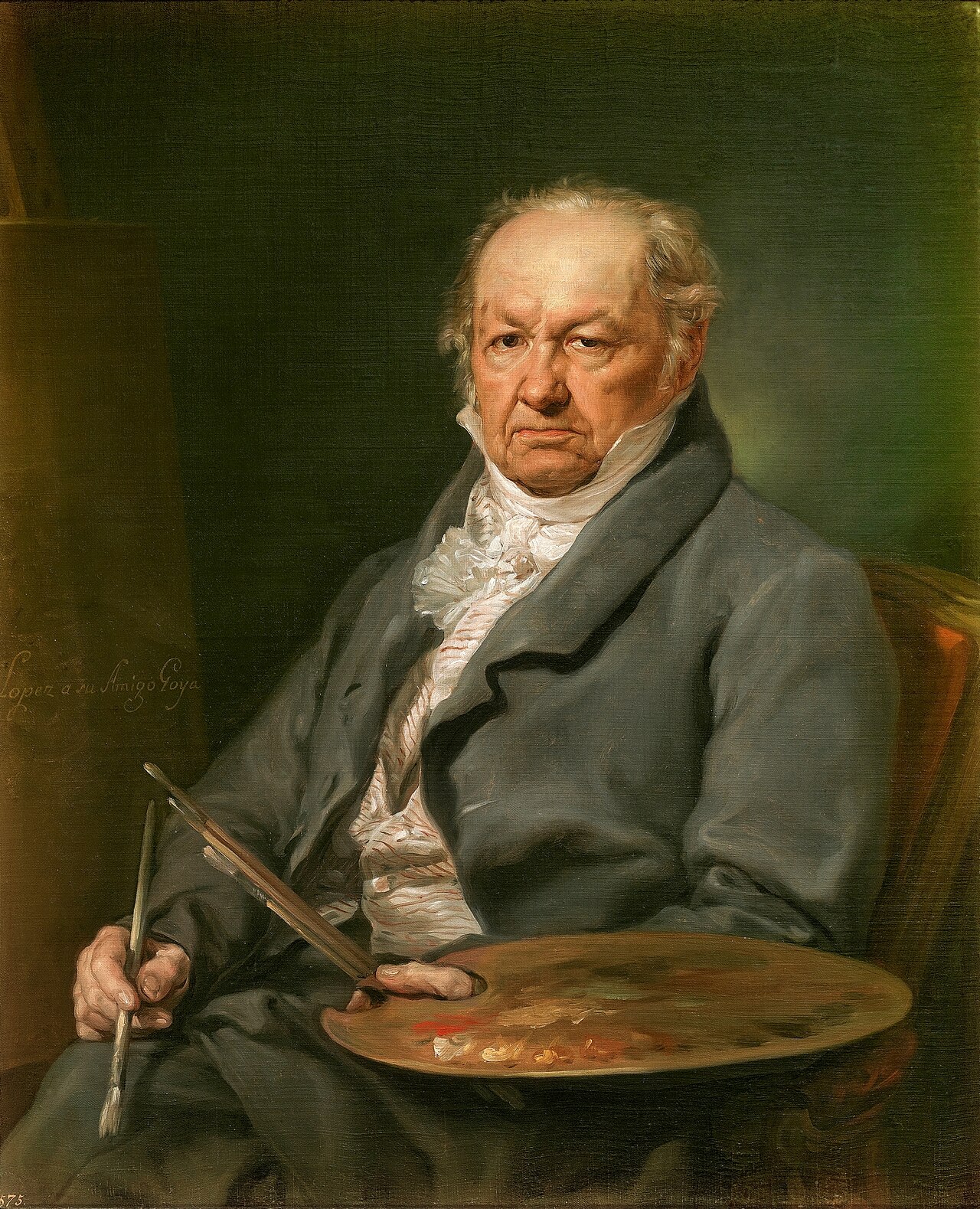
Francisco Goya
Ascension Through the Spanish Art Establishment
Francisco José de Goya y Lucientes (1746-1828) emerged as a dominant force in Spanish art, transitioning from a middle-class background to the pinnacle of royal patronage. His early career was marked by commissions for tapestry cartoons, vibrant and Rococo-inspired designs intended for the royal palace, showcasing his mastery of color and composition. This led to his appointment as court painter in 1786, a position that brought him into close contact with the Spanish monarchy and aristocracy.
His portraits from this period, such as 'Charles IV of Spain and His Family,' reveal a keen eye for character and social standing, often influenced by the grand tradition of Velázquez, yet infused with a developing psychological depth that hinted at the complexities beneath the surface of his subjects.
The Deafness and the Descent into Darkness
A pivotal moment in Goya's life and artistic trajectory was a severe, undiagnosed illness in 1793 that resulted in profound deafness. This sensory deprivation profoundly altered his perception and creative output. Freed from the constraints of pleasing patrons and perhaps more attuned to his inner world, Goya's art began to explore darker, more unsettling themes.
His series 'Los Caprichos' (1799) satirized societal follies and superstitions with a fantastical and often grotesque imagery. This period marked a significant departure from his earlier, more conventional work, signaling a shift towards a deeply personal and critical artistic voice that would define his later masterpieces.
Bearing Witness to War and Human Atrocity
Goya's artistic output became inextricably linked with the tumultuous political landscape of Spain, particularly during the Peninsular War (1807-1814). Remaining in Madrid amidst the French occupation, he witnessed firsthand the brutal realities of conflict. This experience fueled his creation of 'The Disasters of War' etchings, a harrowing and unflinching documentation of violence, famine, and suffering, published posthumously.
His monumental paintings, 'The Second of May 1808' and 'The Third of May 1808,' are powerful anti-war statements, depicting the raw terror and injustice of the Spanish uprising against Napoleon's forces. These works moved beyond mere historical representation to become profound explorations of human cruelty and resilience.
The Black Paintings and the Dawn of Modern Art
Goya's final period, culminating in the 'Black Paintings' (1819-1823), represents the zenith of his expressive power and his most radical departure from artistic convention. Applied directly onto the plaster walls of his country house, Quinta del Sordo ('House of the Deaf Man'), these fourteen murals are intensely personal and deeply disturbing. Works like 'Saturn Devouring His Son' and 'Witches' Sabbath' delve into themes of madness, despair, and the darker aspects of the human psyche.
Living in self-imposed isolation, disillusioned by political and social developments, Goya created art that was raw, visceral, and devoid of sentimentality. This unvarnished exploration of the human condition, coupled with his innovative techniques and willingness to confront uncomfortable truths, firmly establishes Goya as a precursor to modern art movements like Expressionism.
Enduring Influence and Artistic Legacy
Francisco Goya's impact on the art world is immeasurable. He is celebrated not only for his technical brilliance but for his courage in using art as a vehicle for social commentary and emotional expression. His ability to capture the psychological complexity of his subjects, his unflinching portrayal of the horrors of war, and his exploration of the darker aspects of human nature laid the groundwork for subsequent generations of artists.
From Romanticism to Realism and beyond, Goya's influence can be seen in the works of artists who sought to convey profound emotional truths and engage with the social and political realities of their time. His legacy continues to challenge and inspire, solidifying his position as a pivotal figure bridging the Old Masters and the modern era.
Go deeper
Based on content from Wikipedia · Licensed under CC BY-SA 4.0