

The Story of the Republic of China Flag
Images

2025.01.21 Coast Guard flags of the Republic of China


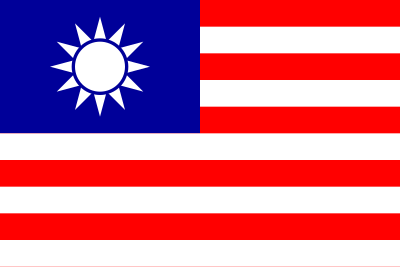


Genesis of a Revolution
The flag of the Republic of China (ROC) is far more than a simple banner; it is a potent symbol deeply intertwined with China's tumultuous modern history and Taiwan's distinct identity. Its origins trace back to the late 19th century, specifically to the Revive China Society, an anti-Qing Dynasty organization that envisioned a new era for China. In 1895, this group conceived of a flag that would represent their revolutionary ideals.
The iconic red field, a color rich with symbolism in Chinese culture representing vitality, celebration, and sacrifice, was added in 1906 by Sun Yat-sen, a pivotal figure in the Chinese Revolution and the founder of the ROC. This addition transformed the flag into the 'Blue Sky, White Sun, and Red Earth' design that is recognized today. Initially adopted as the Navy flag in 1912, it was formally established as the national flag of the Republic of China in 1928 by the Nationalist government, solidifying its status as the emblem of a unified China.
Its journey continued through the Second Sino-Japanese War and was enshrined in the ROC Constitution in 1947, underscoring its constitutional importance.
Symbolism and Shifting Meanings
The visual elements of the ROC flag are laden with meaning, reflecting the aspirations of its creators. The dominant red field is a powerful representation of the land and the blood shed by revolutionaries fighting for a new China. The canton, a blue rectangle in the upper hoist-side corner, contains a white disk surrounded by twelve triangular rays.
This emblem, known as the 'Blue Sky, White Sun,' is particularly rich in symbolism. The blue sky signifies purity and the vastness of opportunity, while the white sun embodies progress, enlightenment, and the dawn of a new era. The twelve rays of the sun are often interpreted in multiple ways: they can represent the twelve months of the year, the twelve two-hour periods of the traditional Chinese day (known as 'shichen'), or even the twelve divisions of the zodiac.
This multifaceted symbolism speaks to concepts of completeness, order, and the relentless march of time towards a brighter future. Together, these components form a cohesive narrative of national identity, revolutionary spirit, and forward-looking ambition.
Geopolitical Crossroads
The ROC flag's current status is a direct consequence of the Chinese Civil War and the subsequent political division of China. Following the Nationalist government's defeat by the Communist Party in 1949, the ROC government retreated to Taiwan, bringing the national flag with them. Since then, the flag has remained the official symbol of the Republic of China, which now primarily governs Taiwan and its surrounding islands.
In mainland China, the flag is no longer in official use and its public display is largely prohibited due to its historical association with the Nationalist Party (Kuomintang) and its opposition to communism. While it may appear in historical contexts, its contemporary use is restricted. This divergence in usage highlights the complex political realities and the ongoing debate surrounding Taiwan's sovereignty and its relationship with mainland China.
The flag thus serves as a constant reminder of this unresolved historical and political situation.
Contemporary Interpretations and Identity Debates
In contemporary Taiwan, the ROC flag evokes a spectrum of reactions and interpretations, deeply tied to the island's evolving identity. For many, it remains a symbol of their national heritage, representing the Republic of China and its democratic governance. This perspective is often held by those who identify with the ROC's historical narrative or who support closer ties with China.
However, a significant portion of Taiwan's population, particularly younger generations and supporters of Taiwanese independence, view the flag with ambivalence or outright rejection. They associate it with Chinese nationalism and the Kuomintang's historical authoritarian rule, preferring symbols that exclusively represent Taiwan as a distinct entity, free from historical Chinese claims. This division in perception underscores the ongoing debate about national identity in Taiwan, where the flag is not just a piece of cloth but a focal point for discussions about history, sovereignty, and the future direction of the island.
Its continued use by some political factions, while rejected by others, illustrates the deep-seated political and cultural divides within Taiwanese society.
Geographic and Demographic Context of the ROC Flag's Use
The Republic of China flag is primarily associated with the territory of Taiwan, an island nation situated off the southeastern coast of mainland China in East Asia. Taiwan is characterized by its mountainous interior, fertile plains, and a subtropical to tropical climate. The capital and largest city is Taipei, a global hub for technology, finance, and culture.
The population of Taiwan is approximately 23.9 million people, predominantly of Han Chinese descent, with indigenous Austronesian peoples also forming a significant part of the cultural mosaic. The official language is Mandarin Chinese, though Taiwanese Hokkien and Hakka are widely spoken, alongside various indigenous languages. The ROC flag's continued use in this context is a crucial element in understanding Taiwan's unique geopolitical position and its distinct cultural and political trajectory, separate from the People's Republic of China.
See also
Frequently Asked Questions
What does the red color on the Republic of China flag mean?+
Who added the red field to the flag and when?+
What does the white sun with twelve rays represent?+
Why is the Republic of China flag only used in Taiwan now?+
Who first designed the flag and what was its original purpose?+
Based on content from Wikipedia · Licensed under CC BY-SA 4.0