

The Awesome Chinese Flag!
Images

Two flags of China on the road of Suzhou


A Tapestry of Flags
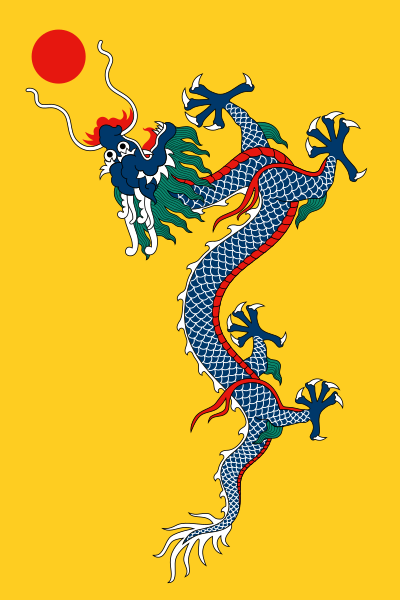
The current national flag of the People's Republic of China, the Five-star Red Flag, is the culmination of a rich history of national emblems. Prior to its adoption in 1949, China's imperial past was represented by the 'Yellow Dragon Flag' of the Qing Dynasty, a powerful symbol of monarchical authority featuring the mythical Azure Dragon. The early 20th century ushered in republicanism, marked by the adoption of the 'Five-Colored Flag' in 1912.
This flag, with its horizontal stripes of red, yellow, blue, white, and black, was intended to represent the five major ethnic groups of the Republic of China: the Han, Manchu, Mongol, Hui, and Tibetan peoples. Following the Northern Expedition and the rise of the Kuomintang, a new flag was adopted, featuring a red field with a blue canton containing a white sun symbol, reflecting Sun Yat-sen's revolutionary ideals. Each of these preceding flags served as a distinct marker of China's political transitions and evolving national consciousness, setting the stage for the ideological representation embodied by the Five-star Red Flag.
The Ideological Blueprint
The design of the Five-star Red Flag, conceived by Zeng Liansong, is a deliberate and potent visual manifesto of the People's Republic of China's founding ideology. The dominant crimson field is a direct and powerful allusion to the blood shed during the Chinese Communist Revolution, signifying the sacrifices made to establish the new state. The five golden stars are meticulously arranged to convey a specific political message.
The large, central star represents the Chinese Communist Party (CCP), positioning it as the vanguard and guiding force of the nation. The four smaller stars, arrayed in an arc to the right of the larger one, symbolize the unity of the four principal social classes: the working class, the peasantry, the urban petty bourgeoisie, and the national bourgeoisie. Their proximity and arrangement underscore the concept of a united front under the leadership of the CCP, a core tenet of Mao Zedong Thought.
This design is not merely aesthetic; it is a profound statement of political structure and national solidarity.
A Momentous Unveiling
The official inauguration of the People's Republic of China on October 1, 1949, was inextricably linked to the ceremonial raising of its new national flag. In a pivotal ceremony held in Beijing's expansive Tiananmen Square, the Five-star Red Flag was hoisted for the first time. This act was more than a symbolic gesture; it was a declaration of sovereignty and the formal establishment of a new political order.
The flag, elevated on a prominent flagpole, served as the focal point of the celebration, witnessed by thousands of soldiers and citizens. This singular event cemented the flag's status as the paramount symbol of the People's Republic, instantly associating it with the nation's birth and its revolutionary origins. The image of the flag rising over Tiananmen Square became an enduring icon of modern Chinese history.
The Flag as a Modern Icon
Beyond its historical and ideological underpinnings, the Five-star Red Flag functions as a critical element of contemporary Chinese national identity and international representation. Its ubiquitous presence in official capacities-adorning government buildings, military installations, and diplomatic missions-reinforces state authority and national unity. During national holidays and significant public events, the flag's display evokes widespread patriotism and collective pride.
On the global stage, it serves as the primary visual identifier for the People's Republic of China, representing the nation in international forums, sporting events, and diplomatic exchanges. The flag's enduring design continues to embody the narrative of China's revolutionary past and its aspirations for continued national development and global standing, acting as a constant reminder of the nation's journey and its place in the world.
See also
Frequently Asked Questions
What does the red color on the Chinese flag mean?+
Why are there five stars on the flag?+
When was the Chinese flag first raised in Tiananmen Square?+
What flag did China use before the current one?+
Where can we see the Chinese flag today?+
Based on content from Wikipedia · Licensed under CC BY-SA 4.0